Protecting Your Home from Heavy Rain: A Practical Guide for Expats and Locals
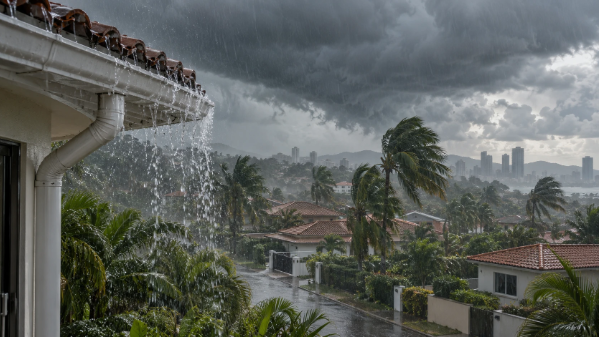
Anyone who has spent a full rainy season in Panama knows the sound: an afternoon sky that turns slate gray by 2 p.m., then an hour of rain so dense you lose sight of the building across the street. Panama City averages around 75 inches of rainfall a year, and most of it arrives between May and December in short, violent bursts. Houses here either manage that water or slowly lose to it.
Expats from the United States often arrive with useful habits, since parts of the East Coast deal with serious storm runoff too. The standards behind gutter installation New Jersey contractors follow, with oversized downspouts and seamless aluminum channels, translate surprisingly well to tropical conditions. What changes in Panama is the volume and the speed at which water arrives.
Why Panama Rain Behaves Differently
New Jersey spreads roughly 47 inches of precipitation across twelve months. Panama compresses a much larger total into seven or eight, and a single afternoon storm can drop two inches in under an hour. Drainage systems designed for drizzle fail fast here. The Panama Canal Authority monitors Gatun Lake levels obsessively for the same reason every homeowner should watch their property: water arrives in surges, and capacity decides everything.
Gutters: Size Matters More Than Material
A standard 5-inch K-style gutter handles most North American rainfall. For tropical downpours, contractors in wet climates recommend 6-inch profiles with 3×4-inch downspouts, which move nearly double the water of the common 2×3 size. Aluminum resists rust and costs $8 to $14 per linear foot installed in the US; expect comparable or lower labor rates in Panama, though imported materials can push prices up.
Placement matters as much as size. One downspout should serve no more than 35 feet of gutter run in heavy-rain regions. Skimp here and water sheets over the edges, carving trenches next to your foundation by August.
Get the Water Away from the Foundation
Gutters only win half the battle. Downspouts that dump water at the base of a wall concentrate the problem instead of solving it. Extensions should carry discharge at least 6 feet from the foundation, and the soil itself needs to slope away from the house, dropping roughly 6 inches over the first 10 feet. I have seen expat renovations in Coronado where beautiful new gutters fed water straight into a flat garden bed against the house. The tile floors inside told the story within a year.
The Roof Check That Saves a Season
April is inspection month. Once daily storms begin, small problems become interior damage within weeks. A basic pre-season review covers the points below, and a local handyman completes it in two or three hours for $50 to $150.
| Check | What to Look For | Typical Fix Cost (US ranges) |
| Roof surface | Cracked tiles, rusted metal panels, lifted seams | $150 to $600 for spot repairs |
| Flashing | Gaps around chimneys, vents, wall joints | $200 to $500 |
| Gutters | Debris, sagging sections, loose hangers | $100 to $250 for cleaning and refastening |
| Downspouts | Clogs, disconnected extensions | $50 to $150 |
| Sealants | Cracked caulk at windows and penetrations | $30 to $100 DIY |
Humidity: The Slower Enemy
Rain you can see. The moisture that hangs in the air at 85 percent humidity works quieter damage: mold behind furniture, swollen wooden doors, corroded electronics. Cross-ventilation helps, and a dehumidifier in closed rooms earns its $150 to $300 price within one season. Locals learned generations ago to leave space between furniture and exterior walls; expats tend to discover the black spots on the back of a bookshelf around October.
Mistakes Newcomers Keep Making
Certain errors repeat so often among new arrivals that property managers can predict them. The pattern looks like this:
- Waiting until the first leak to think about the roof
- Installing undersized gutters because the quote was cheaper
- Ignoring the grading around the house entirely
- Sealing a house tight against rain and creating a mold box
- Assuming a dry January means the system works
That last one deserves emphasis. The dry season from January to April proves nothing about your drainage. Every system looks fine when nothing tests it.
Working with Contractors Here
Panama has skilled tradespeople, and prices for labor run well below US rates, often 30 to 50 percent less for comparable work. The challenge sits in specification. Ask for details in writing: gutter profile size, downspout dimensions, hanger spacing, discharge distance. A contractor who answers those questions precisely will likely deliver precise work. Vague answers before the contract become vague workmanship after it.
Neighbors remain the best referral network in the country, both among Panamanian families who have maintained homes through fifty rainy seasons and among long-term expats who already paid for their education in mistakes. Ask who handled their last roof repair and whether it survived a September.
Water finds every weakness eventually, and in Panama it gets seven months a year to search. A weekend of preparation in April, a few hundred dollars in maintenance, and correctly sized drainage buy you the luxury of enjoying the rain from a dry living room, which is honestly one of the finest experiences this country offers.