

Hydrofoil Surfing: What It Is, How It Works, and How Riders Learn It
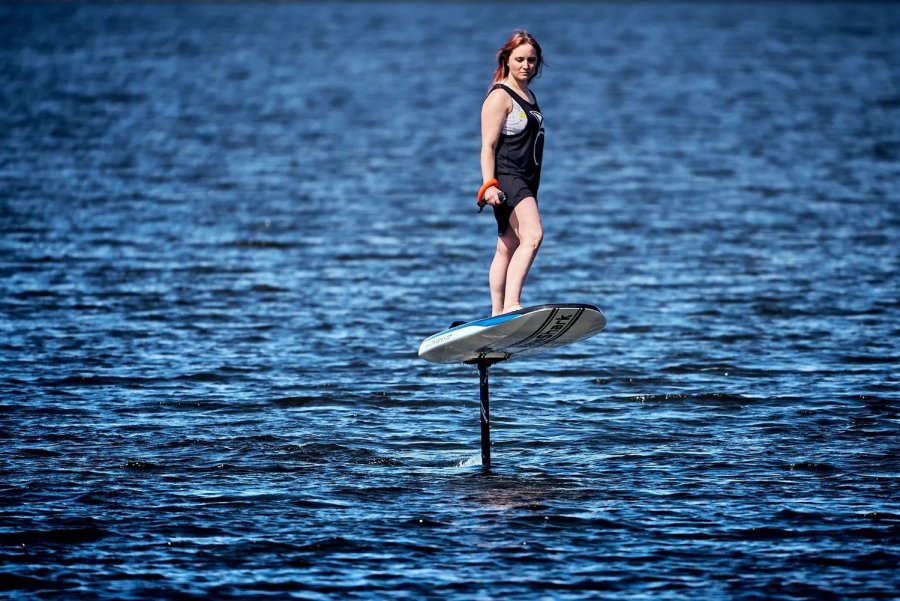
Hydrofoil boards have transformed wave riding and downwind paddling. Here’s a clear introduction to the technology, the disciplines, and what learning to foil actually involves.
Hydrofoil surfing — riding a board mounted on an underwater foil that lifts the board out of the water — has gone from a niche engineering curiosity to one of the fastest-growing segments of water sports in a period of roughly five years. The technology isn’t new: hydrofoil principles have been applied to boats, ferries, and competitive sailing for decades. But its application to surfboards, kiteboard systems, stand-up paddleboards, and prone paddle boards has created disciplines that are genuinely new and that have attracted participants from surfing, kiteboarding, windsurfing, and paddle sports.
Understanding what hydrofoil technology is, why riders find it appealing, and what the different foil disciplines involve provides context for anyone curious about this growing segment of water sports — whether they’re a seasoned water sports participant considering adding foiling to their skills or someone encountering the technology for the first time.
The Physics of Hydrofoil Lift
A hydrofoil works on the same aerodynamic principles as an airplane wing — specifically, the generation of lift through pressure differential. The foil wing (mast and front wing assembly, mounted below the board on a mast) has an asymmetric cross-section that causes water flowing over the upper surface to accelerate relative to the lower surface. This velocity difference creates lower pressure above the wing than below it, generating upward lift.
As the rider’s speed increases, the lift generated by the wing increases until the lift equals the weight of the rider and board, at which point the board lifts out of the water. The mast and fuselage assembly keep the foil wing at the appropriate depth, and the rear stabilizer wing provides pitch stability. The rider controls the pitch (nose up/down angle) through their weight distribution, which changes the angle of attack of the foil wing and adjusts the lift generated.
Foil Disciplines: Different Ways to Fly
The hydrofoil concept has been applied across multiple water sports disciplines, each with different equipment and technique requirements. Kite foiling uses kite power (instead of wave or wind power) to generate the speed needed to fly, and has produced extraordinary performance — competitive kite foilers reach speeds over 50 mph. Wing foiling uses a hand-held inflatable wing similar to a kite sail to generate both lift and propulsion, allowing riding in lighter wind conditions than kiteboarding requires. Surf foiling uses wave energy — with the foil generating lift from the wave’s orbital velocity rather than requiring breaking wave face contact. Downwind foiling — prone on a prone board with a foil, or on a SUP with a foil — uses ocean swell energy to propel the rider for extended distances without paddling. Specific foil board designs vary significantly by discipline.
Each discipline has a different learning curve, equipment cost, and prerequisite skill set. Kite foiling requires established kiteboarding skills before adding the foil complexity. Wing foiling has the advantage of being learnable from scratch without prior water sports background, which has made it the fastest-growing foil discipline. Surf foiling benefits enormously from prior surfing skill because the water reading and balance skills transfer directly.
Equipment: The Foil Assembly
The foil assembly typically consists of a mast (a vertical strut that attaches to the board and extends below the water surface), a fuselage (horizontal spine that connects the front and rear wings), a front wing (the primary lift-generating surface), and a rear stabilizer wing. This assembly bolts to the underside of the board through a standardized mounting system (though compatibility between brands varies).
Front wing size is the primary variable that determines the foil’s performance character. Larger wings generate lift at lower speeds (good for learning) but have a lower maximum speed ceiling. Smaller, higher-aspect wings generate lift only at higher speeds but can reach higher velocities with less drag. Beginners should start with larger, lower-aspect wings that fly at lower speeds and are more forgiving of pitch control errors — the goal is learning stability and control before seeking performance.
The Learning Curve
Learning to foil is consistently described as one of the more challenging water sports skills to acquire, primarily because the balance demands of riding a foil — particularly managing the pitch axis — are entirely different from any prior water sports experience. The foil can fly the board dramatically nose-up or dive nose-down much faster than any conventional board situation, and the consequence of losing control (catapulting over the nose or elevator-dropping into the water) involves more speed and more impact force than falling off a conventional board.
The typical learning progression: learn on larger foil wings that fly at lower speeds; start in shallow water with soft conditions; practice getting the feel of the foil touching the water (‘mowing the lawn’ — touching down and relifting the board while maintaining direction) before attempting sustained flight; build flight time incrementally before attempting to maneuver in flight. Lessons from experienced foil instructors compress the learning curve significantly by providing immediate feedback on the specific mistakes beginners make.
Safety Considerations
Hydrofoil equipment presents specific safety considerations that conventional surfboards and kiteboards don’t. The mast and foil wing assembly is rigid metal that moves through the water and air at speed — contact with the foil assembly during a fall carries higher injury risk than falling on a conventional board. Helmets are considered standard safety equipment for foil sports; impact vests reduce the consequence of water impacts at speed. Learning in uncrowded conditions — where there’s no risk of foil contact with other water users — is an important consideration given the hazard the equipment presents to others.
Efoils (electric-powered hydrofoil boards) have an additional safety consideration: the electric motor and propeller that provide propulsion for riders who aren’t using kite, wing, or wave power. The propeller must be guarded or stopped during falls to prevent contact with the rider or bystanders. Most efoil systems have automatic motor cutoff systems that stop the motor when the rider loses the handheld controller, but understanding and verifying these safety systems before riding is important.
The Appeal: What Makes Foiling Different
Riders who’ve transitioned to foil disciplines consistently describe the experience as a genuinely new sensation — the smooth, frictionless glide of a board lifted from the water surface, the ability to ride in light wind or small swell conditions that conventional boards can’t use, and the extension of rideable conditions in terms of both wind/wave size and the duration of waves that can be ridden (foils allow riding far ahead of the wave face, extending the ride duration dramatically for surf foilers).
The sport is also evolving rapidly — new foil designs, new disciplines, and new riding techniques are emerging faster than most established water sports evolve. This dynamic quality, combined with the genuine novelty of the flight sensation, has attracted innovative participants from across the water sports community and created a scene that’s notably collaborative in knowledge-sharing as the collective learning accelerates.
Wrapping Up
Hydrofoil surfing represents a genuine evolution in water sports — not just a refinement of existing disciplines but a fundamentally different interaction with the water surface that creates new sensations and new possibilities. The learning curve is real and the equipment investment is significant, but the participants who commit to it consistently describe it as one of the most rewarding skills they’ve developed in water sports. For anyone drawn to the technology from a background in surfing, kiteboarding, SUP, or any other water sport, it represents a compelling frontier that’s accessible with appropriate equipment, instruction, and progression.
Frequently Asked Questions
What’s the minimum wind needed for wing foiling?
Wing foiling has one of the broader wind range capabilities among foil disciplines. Most wing foilers can get riding in 12-15 knots of wind with appropriate wing and foil sizing, and some experienced riders with high-performance setups foil in as little as 10 knots. Upper wind limits depend on the rider’s skill and comfort — the wing can be used in quite strong wind by skilled riders who manage it effectively. This broad wind window is one of the practical advantages of wing foiling over kite foiling, which typically requires at least 12-15 knots for lighter riders and more for heavier ones.
How expensive is getting started with foiling?
Complete beginner foil setups — board, foil assembly, and discipline-specific additions like a wing for wing foiling — typically range from $2,000 to $5,000 for quality entry-level to mid-range equipment. Second-hand markets for foil equipment are active as the technology evolves rapidly and riders upgrade frequently, providing lower-cost entry points. Lesson costs vary by location and instructor. The total investment to learn to foil comfortably is generally comparable to other high-performance water sports — higher than conventional surfing, lower than high-end kiteboarding with full equipment and lessons.