How Trading Education Can Improve Your Trading Performance
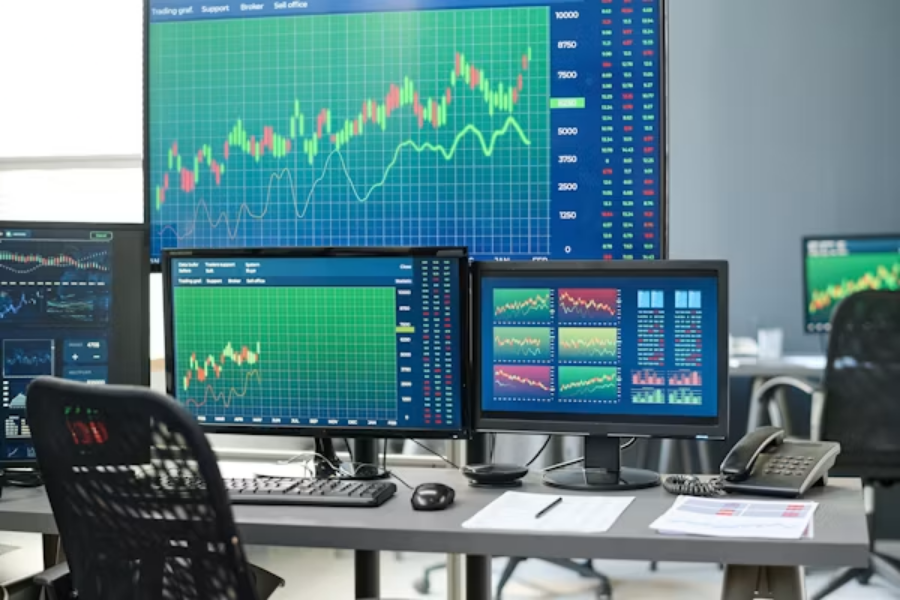
The whole point of trading is to be ready to act swiftly when the right opportunity presents itself. Even though timing may well play an important role in trading success, the key to profitability lies in knowledge, preparation, discipline, and continuous learning.
Trading education has the power to revolutionize the world of trading. Regardless of whether you are just starting out or already are a seasoned trader looking to perfect your skills, education will help you to make more intelligent decisions and perform better as a trader.
Unlike those who try to take advantage of short-term opportunities and market hype, educated traders can think logically and analyze trends and risks that might affect their actions. To be a successful trader, one needs to stay up to date with the constantly changing world of finance.
Here is how trading education can improve your trading performance.
- Builds a Strong Foundation of Market Knowledge
A benefit of trading education is that it helps traders understand the financial market. Before making any trade, it is vital to learn about market structure, price movements, supply and demand, volatility, and liquidity, among other factors. If this is not done, trading becomes merely a guessing game.
Additionally, education enables traders to become acquainted with various financial products. This means that traders will be able to determine which markets are suited for their trading purposes.
Furthermore, education instills confidence among traders because, instead of panicking each time there is a price change, they can analyze what is happening from an informed perspective.
- Enhances Technical and Fundamental Analysis Skills
Trading education also equips traders with the skills to analyze the market using techniques such as fundamental and technical analysis. Technical and fundamental analysis complement each other and offer insight into trading situations.
Technical analysis involves analyzing price charts, trends, indicators, support and resistance, and chart patterns. This type of analysis helps develop the ability to identify potential entry and exit points. Meanwhile, indicators should assist traders in making decisions, but they should not promise anything.
In turn, fundamental analysis covers economic events, the company’s financial performance, interest rates, inflation, unemployment figures, and the political situation. It helps anticipate market behavior in relation to certain events and a changing economic situation.
Through these types of analysis, traders gain a better understanding of the market and make better decisions. Trading education often encourages the mastery of both these techniques as an essential part of being a well-rounded trader.

- Improves Risk Management Practices
Even the most profitable trading strategies can go wrong without effective risk management. Thankfully, trading education emphasizes protecting capital before profits.
First of all, traders understand how to choose the appropriate position size and acceptable risk level for each trade. Traders also realize the value of stop-loss orders. Moreover, traders understand the need for a proper risk-to-reward ratio to ensure profitability over time despite occasional losses.
Also, traders understand that losses are a natural part of trading, and one should not try to avoid them at all costs. This approach saves traders from unnecessary emotions, which could lead to even bigger problems.
- Develops Emotional Discipline
Many traders fail to realize the importance of psychology in trading. Yet emotions such as fear, greed, impatience, and overconfidence often affect trading decisions rather than market analysis.
Education in trading helps people cope with psychological issues through discipline. Rather than reacting to every event, educated traders exercise patience and wait for setups that align with their trading strategies.
In addition, it is advisable to keep a trading journal during the education period. Keeping track of every transaction enables traders to analyze their decisions, identify common mistakes, and observe improvements over time.

- Encourages the Development of a Trading Plan
Another significant advantage a trader may gain from trading education is the ability to develop a trading plan. Unlike random traders, successful traders follow a set of specific rules.
A good trading plan usually defines the choice of markets to trade, entry and exit rules, position size, risk level, trading sessions, and performance evaluation techniques. It allows one to avoid uncertainties and be consistent.
Besides, a trader develops an understanding of the need to test any trading technique before applying it in live markets. This can be done via historical backtesting or by simulating a strategy.
- Promotes Continuous Learning and Adaptability
It is important to note that financial markets change regularly due to new economic factors, innovations, regulations, and shifts in investor attitudes. In this regard, traders who do not engage in education are unlikely to stay competitive.
Education for traders promotes development by introducing them to new approaches, market analysis methods, and different trading instruments. Moreover, continuous education is especially useful for traders when market conditions shift from trending to ranging, or from low to high volatility.
In addition, the educational material introduces the trader to concepts such as algorithmic trading, the economic calendar, portfolio diversification, and performance evaluation. This broadening of knowledge will allow traders to make better judgments in changing markets. It goes without saying that education is considered a crucial component of trading development.

Conclusion
Success in trading, however, is seldom based on luck. Rather, it is achieved through solid educational foundations, proper execution, continuous improvement, and smart risk management. No matter how useful any educational material may be, it cannot eliminate market unpredictability or guarantee traders’ profits.
However, education equips traders with the tools and skills to analyze situations effectively and make necessary decisions. This includes not only understanding technical and fundamental analysis but also developing personal qualities such as psychological strength and the ability to create effective trading plans.