As a thirteen-year colon cancer survivor and conqueror, I am passionate about advocating for early detection of colorectal cancer.
Written by Cheryl L. Alston.
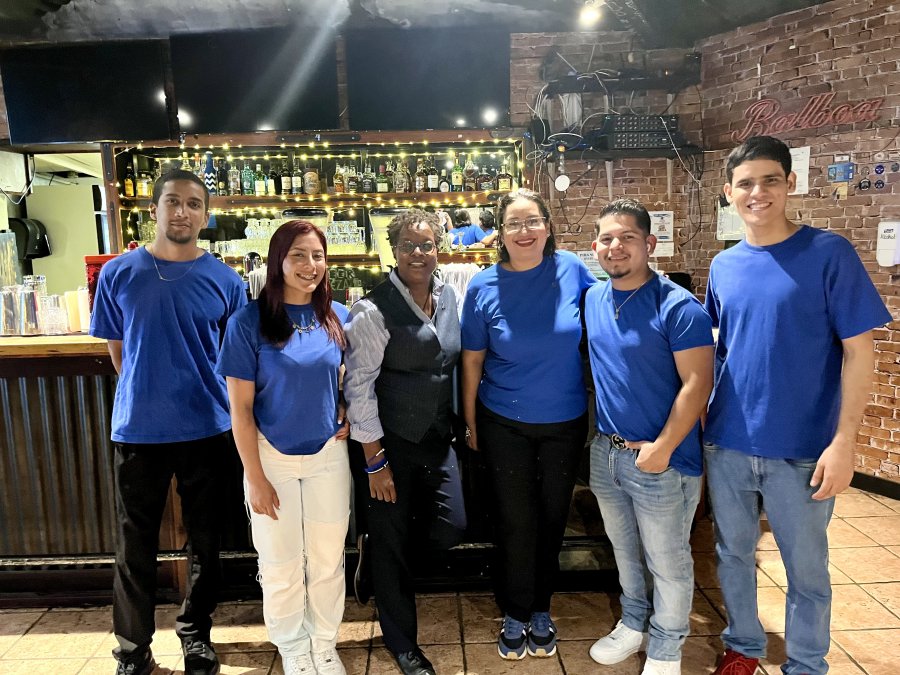
Initially, I was misdiagnosed by my primary care physician as being lactose intolerant and having G.E.R.D (Gastro-Esophageal Reflux Disease). If I had listened to my doctor and only taken sodium bicarbonate, instead of getting a colonoscopy, it’s likely that I would not be here to tell my story. Each year since my healing in 2013, I have been active in organizations and communities, advocating for colorectal cancer awareness and hosting Dress In Blue parties each year.
Early detection is key in finding out that you do not have colorectal cancer. However, if you do have polyps, they can be removed during the colonoscopy, which prevents them from causing cancer. That is why colorectal cancer screening is important, and the disease is treatable, curable, and preventable. In my case, during my first colonoscopy at fifty-six years old, a tumor was found and identified as cancerous. I was devastated to hear those three words, “You have cancer.” Yet I was hopeful. After surgery, recovery, and oral chemo, here I am thirteen years later, still advocating for early detection of this disease. Many people, including those under the age of forty, are dying from colorectal cancer. This does not have to happen!
Since moving to Panama December 29, 2024, I felt a loss as to what I could do to continue advocating for individuals being seen and screened for this disease in another country. Then, I had a great idea! The fact is, colorectal cancer is everywhere and my voice still has a place outside of the United States of America! I researched and found that, “In Panama, colorectal cancer ranks as one of the most common malignancies, with roughly 800 new diagnoses and 300 deaths occurring nationwide each year. High-risk regional concentrations appear outside the capital, particularly in the Azuero Peninsula (provinces of Herrera and Los Santos), which experiences elevated local incidence rates.
In Panama, colorectal cancer maintains an incidence rate of approximately 10.9 per 100,000 inhabitants. Recent epidemiological findings highlight a notable concentration of cases in densely populated urban centers like Panama City and Panama Oeste, as well as high regional variations with elevated prevalence reported in the Azuero Peninsula (Herrera and Los Santos) and Chiriquí [0.6.1, 0.6.4, 0.6.12]. [1, 2, 3]
- Urban Centers: Panama City and Panama Oeste account for the highest absolute volume of diagnoses due to population density. [1]
- High-Prevalence Hotspots: Provinces like Herrera and Los Santos historically record some of the highest regional incidence rates in the country for colorectal tumors. [1]
- Chiriquí Province: Represents a significant share of western regional cases, comprising roughly 13% of specific national young-adult cohort studies. [1]
My goal is to join with organizations, GI doctors, and communities to bring awareness to the early detection of colorectal cancer. The current screening age for colonoscopies is forty-five years old. However, we have a lot of cases and deaths in younger individuals, proving that most people are not getting colonoscopies at forty-five. If we don’t focus on early detection and screening, we will continue to hear of deaths from this disease and by the year 2030, we will have more deaths in individuals under the age of forty-nine. Doctors often refuse to refer young people for colonoscopies, because of their age. But, if a person has symptoms, that should not be ignored. We must advocate for ourselves and for others who are not familiar with advocating for themselves. Our voices must be heard. And until we are heard, we will not keep quiet.
I am asking that:
- President Mulino makes a proclamation that March 2027 is Colorectal Cancer Awareness Month. I will gladly come to Panama City to pick the proclamation up from someone at the office.
- We turn Panama BLUE by displaying blue lights on the Palacio Justo Arosemena, (also known as the Legislative Palace), in Panama City; displaying blue lights in David at the Municipio de David; displaying blue lights in Boquete at Parque Central, where the fountain is, for the month of March. This will show solidarity in proclaiming March as Colorectal Cancer Awareness Month in Panama!
Thank you for listening.
Data obtained from medrxiv.org to include contributions from medical other medical studies.