When Organized Crime in Panama Penetrates the Institutions – From the Police to the Assembly.
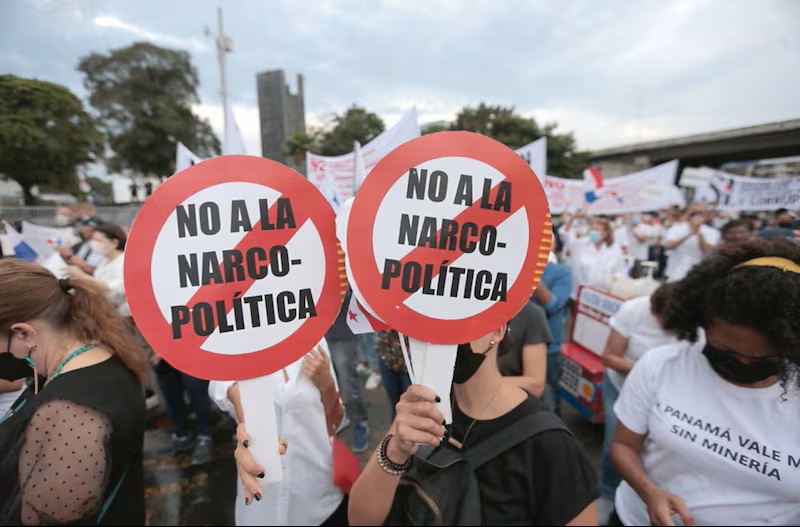
Citizens have protested in the streets of Panama against the infiltration of drug trafficking into politics. Police Chief Jaime Fernández admits he dismissed officers recruited by organized crime, while the Court investigates two congressional representatives.
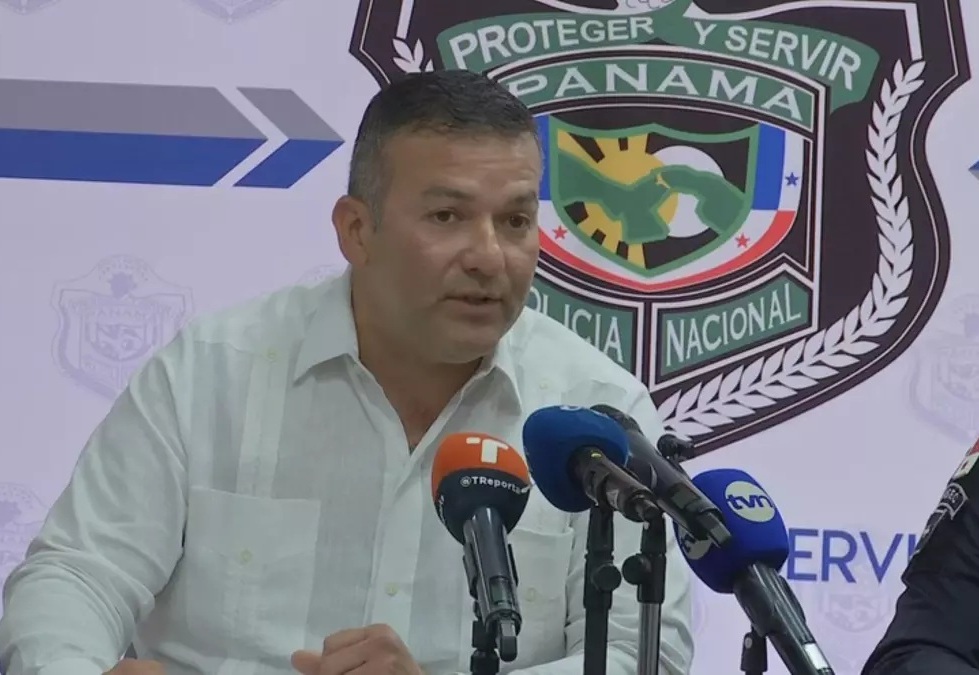
The director of the National Police, Jaime Fernández, pictured below, admitted that the institution has dismissed officers recruited by organized crime. “We have even dismissed many officers and placed them under the jurisdiction of the Public Prosecutor’s Office, some of whom, unfortunately, have been infiltrated by organized crime,” he stated. In the police force, this vetting process is handled by the Directorate of Professional Responsibility (DRP). “We conduct a review of all our personnel, all our uniformed officers,” Fernández said. He specified that the internal operations targeted individuals implicated in some cases. The director spoke about the scale of the problem. “Organized crime has had decades to strengthen itself. That is the reality,” he acknowledged.
At the same time, he defended the majority of the force, which numbers over 25,000 people, including sworn officers and non-sworn personnel. “We shouldn’t tarnish the reputation of the work and sacrifice of so many units because of a few,” he added. Fernández provided a figure: the Police received more than 900 complaints against its members last year. The number, he clarified, includes complaints of all kinds. “A traffic stop where someone felt uncomfortable, that’s one complaint, for example,” he explained. The institution has not disclosed how many of these complaints point to links with organized crime.
Mulino’s Warning.
The director’s statements stemmed from the warning issued by President José Raúl Mulino on August 12, at the Forum of the Coalition of the Americas against the Cartels, before delegates from 19 countries. “There is no negotiation or compromise with drug trafficking,” the president declared to U.S. Secretary of War Pete Hegseth and the heads of defense and security ministries of the participating countries.
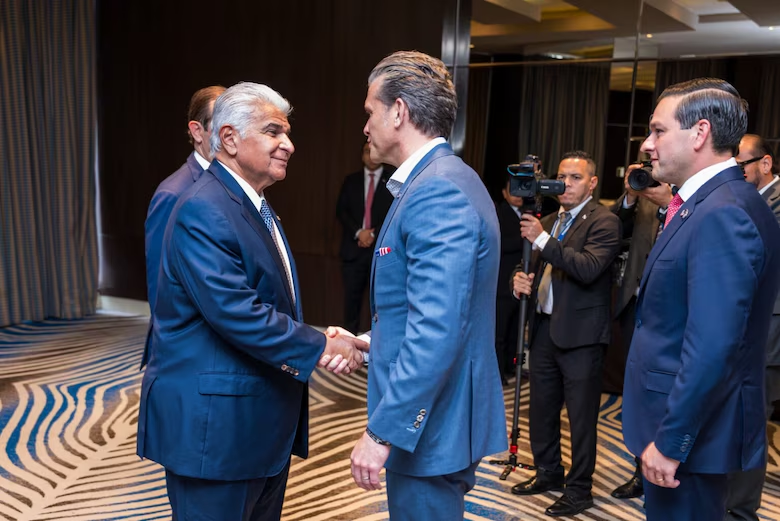
President José Raúl Mulino with the United States Secretary of War, Pete Hegseth, during the closing activities of PANAMAX 2026 in Panama.
The cartels, he added, “have infiltrated governments, the justice system, and international organizations” and finance “law firms, media professionals” and organizations that appear to defend social causes. “There will be no sustainable peace and security if this enemy advances,” the president warned in that speech. When asked about that premise, Fernández responded: “Indeed, we have said so as a national coalition.” He added: “We have a very large task ahead of us, which we have been effectively carrying out with record seizures during this administration.”
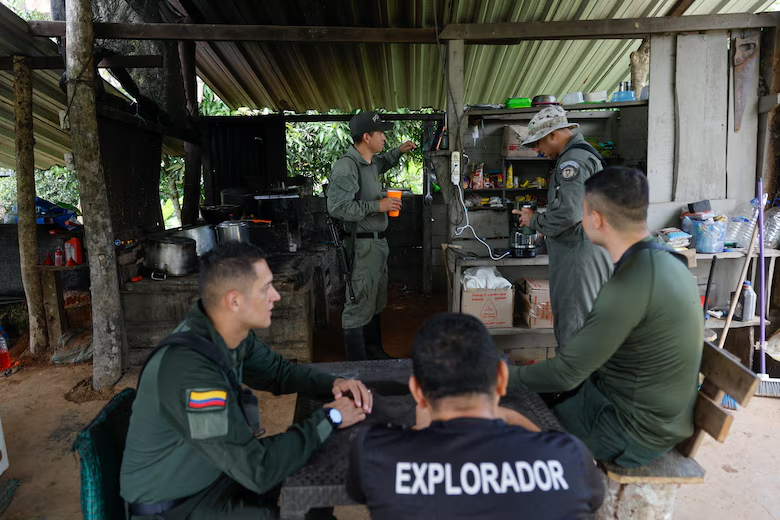
Colombian National Police and Senafront agents are in dialogue at the Alto Limón Binational Base, on the border between Panama and Colombia.
The institutional response, according to the director, also involves the staff’s working conditions. “We have to continue equipping the units, we have to continue providing them with a much better environment and quality of life,” he said, to “counteract any situations that might arise” when faced with third parties seeking to take advantage.
Two Cases in the Legislature.
If we examine the legislative branch closely, for example, there are specific cases. For the 2024-2029 term, two members of parliament are linked to investigations related to drug trafficking. One of them is even linked to money laundering. The Supreme Court of Justice is investigating Raúl Pined a, a member of the leadership of the Democratic Revolutionary Party (PRD), for Operation Jericho , an operation by the Public Ministry and the National Police that in 2024 dismantled an organization dedicated to international drug trafficking and money laundering.
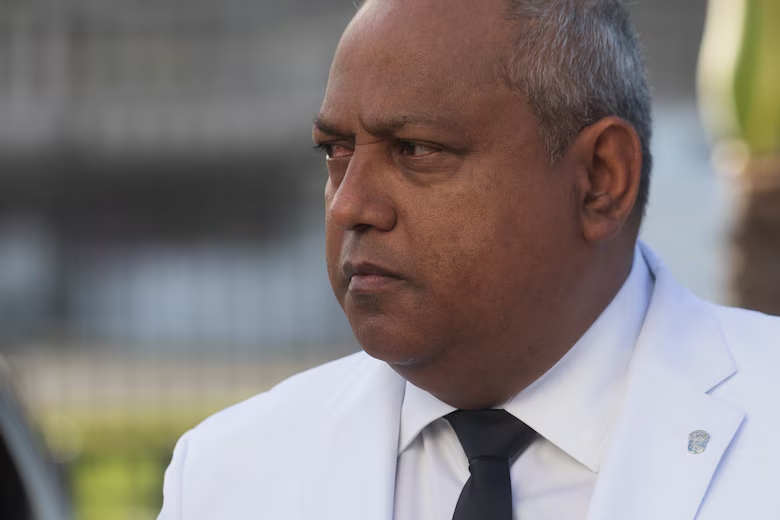
Raúl Pineda pictured above, PRD deputy.
The Public Prosecutor’s Office sent to the Court, the body that investigates the deputies, telephone intercepts that would prove that his son, Abraham Rico Pineda Tejada, allegedly laundered money for the group investigated by Jericó. Pineda Tejada, who is under house arrest, is being investigated for the alleged commission of money laundering, as he is linked to the delivery of almost $90,000 to Colombian Jonathan Parra, who confessed that the money was the product of money laundering. There is also a case before the court against Representative Isaac Mosquera, of the Nationalist Republican Liberal Movement. The First Criminal Court has referred the proceedings against him to the full court for the alleged commission of a drug-related crime against public safety. The case originated in April 2011, when the Drug Prosecutor’s Office dismantled an alleged drug trafficking network linked to the demobilized Revolutionary Armed Forces of Colombia (FARC) that used the Albrook Flight School to transport drugs, and accused Mosquera of being one of its alleged leaders. In 2024, a court acquitted him along with eight other people, but the Drug Prosecutor’s Office appealed that ruling.
Arrests in Colombia and Extradition from Spain.
The international component gained strength at the forum itself. Hegseth announced that Colombia “has already requested that the Department of Defense join it in its fight against narcoterrorism, authorizing joint military operations,” and that the country will join as the 19th member of the Shield of the Americas initiative, which emerged from the summit convened by the United States last March.
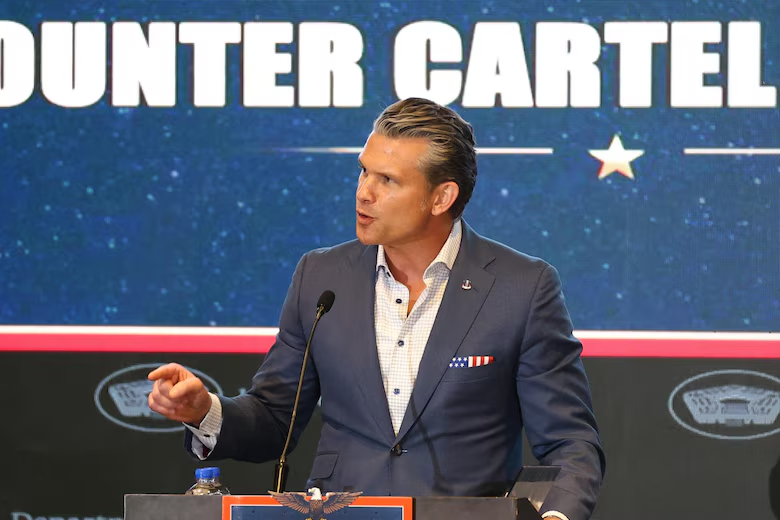
Pete Hegseth pictured above, U.S. Secretary of War.
Since August 7, the president of Colombia, Abelardo De la Espriella Fernández welcomed the announcement. “It’s very positive, because we as police officers have carried out many joint operations, both from Colombia to Panama, and from Panama to Colombia,” he said. The director also revealed that these operations have been running in both directions since the beginning of this administration.
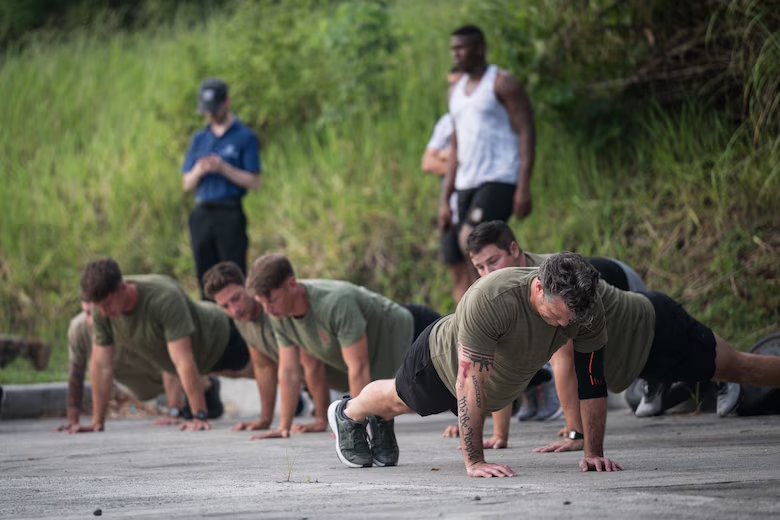
Pete Hegseth, the US Secretary of War, pictured above, is training on Panamanian soil.
Two leaders of criminal groups who were hiding in Colombia have already been brought to the country, he said. Spain recently finalized the extradition of another “high-profile” individual for Panamanian authorities.
The Canal’s ‘First Shield’.
The forum against cartels was held in parallel with the multinational Panamax 2026 exercises, focused on the defense of the Panama Canal. “We are the Canal’s first line of defense. That’s the reality,” Fernández stated. He explained that the security forces rehearse potential threat scenarios and act “as a unified force” under the coordination of the Ministry of Security, “while providing all necessary support from other countries in the event of a real threat.”
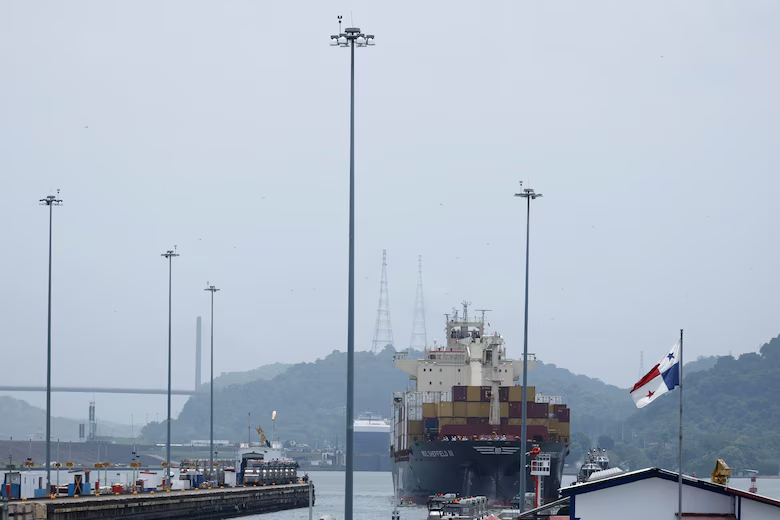
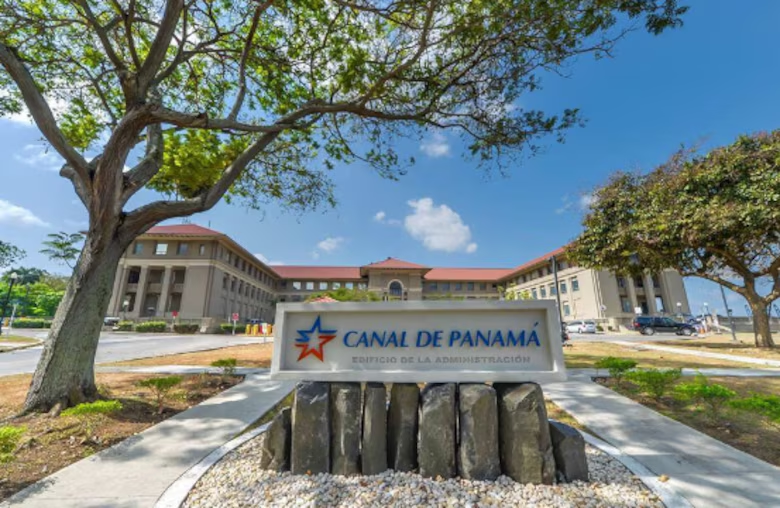
The Panama Canal.
At the forum’s closing, Hegseth unveiled the coalition’s emblem: “We do bad things against bad people,” said the Secretary of War, who warned that “it’s a bad time to get on a drug-trafficking boat in the Western Hemisphere” because “there’s a new sheriff in town.” The head of the War Department also cited Panama as a regional example. “President Mulino has resisted pressure tactics from other countries, adopted deterrent measures, and rejected threats to his sovereignty,” he stated, describing the country as “a good example of the kind of society we seek.”
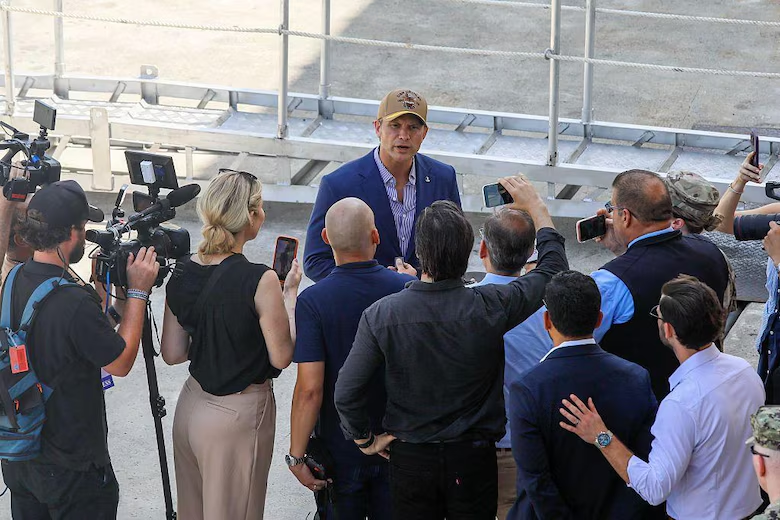
Defense Secretary Pete Hegseth pictured above, denied that there is a bad situation.
The defense of the hemisphere, he added, encompasses “external threats to our national sovereignty, whether from drug trafficking or other aligned foreign actors.”