How Panama’s Small Businesses Are Riding the Creator Economy Wave
By Ethan Brooks — Editorial Contributor | Social Media Growth & Content Strategy
Walk through Casco Viejo on a Saturday morning and you can watch two economies operating at once. The visible one is familiar: coffee shops pulling espresso, boutiques opening their shutters, tour guides gathering groups by the plaza. The invisible one lives on phones — the cafe owner filming a fifteen-second clip of a pour-over for Instagram, the guide answering a WhatsApp voice note from a traveler who found him through TikTok, the boutique tagging a local designer whose dresses sold out twice this year without a single dollar of traditional advertising.
That second economy has a name now. The creator economy — the ecosystem of individuals and small brands earning income through social content — was long treated as a story about California influencers and Seoul streamers. In 2026, it is increasingly a story about places like Panama: small, connected, bilingual markets where a phone camera and a consistent posting habit can compete with marketing budgets a hundred times larger.
Why Panama Is Unusually Well Positioned
Panama’s small-business sector has three advantages that most markets would envy. The first is connectivity: smartphone penetration is among the highest in Central America, and the customer a Panamanian business wants to reach — local professionals, tourists, the large expat community — is already scrolling Instagram and TikTok daily.
The second is bilingualism. A Boquete coffee farm or a Casco Viejo boutique can publish in Spanish for the local market and English for tourists and expats in the same week, doubling its reachable audience at zero extra cost. Few small-business communities can address North American visitors and Latin American neighbors with equal ease.
The third is WhatsApp. In most of Latin America, the platform is not a messaging app so much as the front counter of the entire small-business economy — menus, orders, reservations, payment confirmations. This matters because it solves the problem that stalls many small creators elsewhere: converting attention into transactions. A viral Reel in Panama City does not end at a like; it ends in a WhatsApp thread that closes a sale the same afternoon.
What the Global Playbook Looks Like in 2026
The rules of this game shifted meaningfully over the past two years, and the businesses winning in Panama are the ones that noticed. Discovery has moved inside the platforms: younger customers now search TikTok and Instagram directly — “brunch Ciudad de Panamá,” “Boquete coffee tour” — the way an older generation used Google. That turns every well-captioned video into a small, permanent piece of search real estate rather than a post that dies in 48 hours.
Algorithms, meanwhile, have tilted decisively toward consistency over polish. A business that posts three honest videos a week, every week, earns more cumulative reach than one that produces a single cinematic advertisement per quarter. For a family-run operation without a marketing department, that is genuinely good news: the required skill is discipline, not production value.
Anyone who wants the fuller picture of where this is heading — from platform payout programs to the rise of micro-influencer partnerships over celebrity endorsements — can find a useful breakdown of the 2026 creator economy trends shaping how small brands compete online. The short version: the tools keep getting cheaper, the discovery keeps getting more local, and the advantage keeps shifting toward businesses willing to show up authentically and often.
The Micro-Influencer Turn
Perhaps the most consequential shift for a market Panama’s size is the collapse of the celebrity-endorsement model. Brands measured the numbers and reached an uncomfortable conclusion: a million distant followers convert worse than five thousand nearby ones. The industry’s money has followed, moving toward micro-influencers — creators with small but genuinely engaged local audiences.
For Panama this is a structural gift. The country will never produce many global celebrities, but it has a deep bench of local voices: the food blogger whose restaurant recommendations actually fill tables, the fitness coach whose followers live within driving distance of the gym, the travel creator whose Boquete videos put real tourists on real shuttles. When a hotel or restaurant partners with these creators, the audience is not an abstraction — it is the customer base itself.
The practical implication for a small business is that influencer marketing is no longer something only corporations can buy. A collaboration with a 8,000-follower Panamanian foodie might cost a free dinner and a modest fee, and outperform a radio spot several times over — with the receipts visible in the analytics the next morning.
What Still Trips Businesses Up
The failure patterns are as consistent as the success ones. The most common is treating social media as a billboard — posting only promotions, prices, and product shots. Platforms suppress content that looks like advertising, and audiences skip it; the businesses that grow are the ones showing process, people, and place, letting the selling happen in the comments and the DMs.
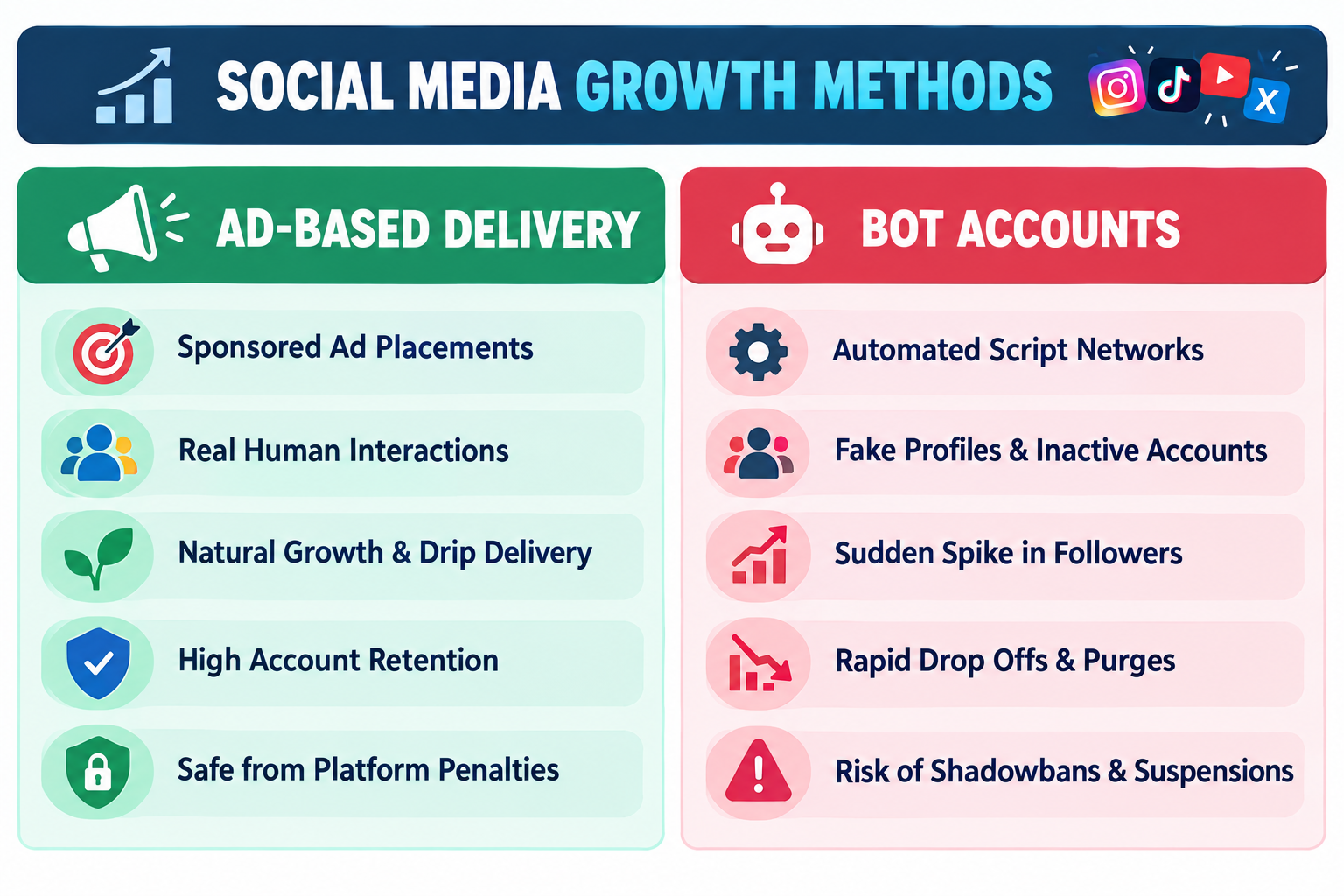
The second trap is chasing follower counts. A Panama City salon with two thousand real local followers books more appointments than one with twenty thousand purchased ghosts — and inflated accounts are visibly fake to exactly the community a local business depends on. Engagement from real, nearby people is the only metric that pays rent.
The third is inconsistency. The account that posts daily for two enthusiastic weeks and then goes silent for a month teaches the algorithm — and its audience — to forget it. A sustainable rhythm, even a modest one, beats sprints every time.
A Realistic Outlook
None of this makes social media a lottery ticket. What it has become, for a small business in Panama in 2026, is something more valuable: a fair fight. The tools are free, the distribution is meritocratic in a way traditional media never was, and the local knowledge that a small operator has in abundance — the neighborhood, the language, the faces — is precisely what the platforms now reward.
The businesses treating their phones as storefronts are already pulling ahead, quietly, one Reel and one WhatsApp order at a time. The creator economy stopped being a foreign story some time ago. In Panama, it is simply how business gets done now — and the window for joining it early, before every competitor does, is still open.