The Rise of Some Terminals in Panama Compensates for the Decline of Balboa and Cristóbal
Between January and June 2026, Panamanian ports handled 4.9 million TEUs, 1.8% more than in the same period of 2025. The growth of SSA Marine MIT, Colón Container Terminal and PSA offset the declines of 11.9% in Balboa and 34.9% in Cristóbal.
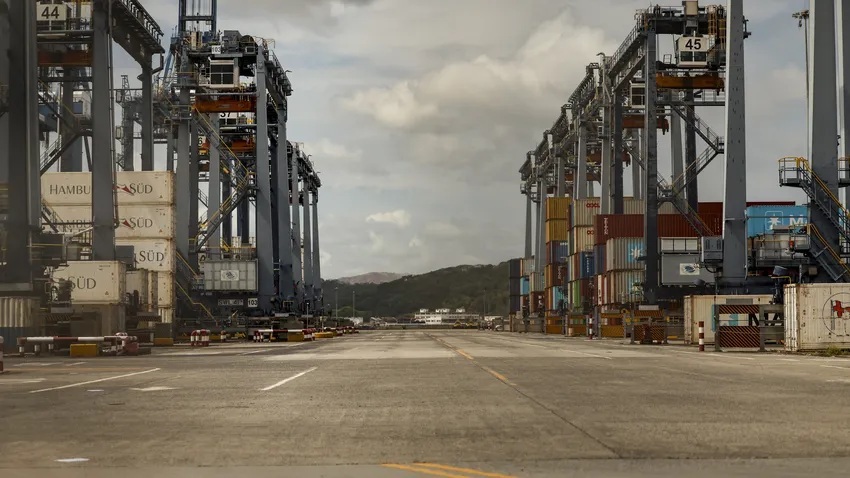
The decline at the Balboa and Cristóbal terminals is directly tied to a major political and legal dispute, allowing other Panamanian hubs to absorb diverted cargo and drive overall national growth.
The Decline of Balboa and Cristóbal
In late January 2026, the Supreme Court of Panama declared the concession contracts held by the Panama Ports Company (a subsidiary of Hong Kong’s CK Hutchison) unconstitutional. Following the state’s physical takeover of the facilities, a transitional period caused severe drops in container throughput as operations were reorganized.
- Balboa: Handled 1,143,984 TEUs, a drop of 11.9%.
- Cristóbal: Handled 409,685 TEUs, a sharp decline of 34.9%.
To maintain continuous service, the Panamanian government appointed interim operators: APM Terminals took over the Balboa terminal, while Terminal Investment Limited (TiL) took over Cristóbal.
The Rise of Competing Terminals
Despite the massive disruption at the former PPC facilities, total container movements in Panama actually grew by 1.8% during the first half of the year. Other terminals successfully absorbed the diverted transshipment cargo.
- Manzanillo International Terminal (MIT): Operated by SSA Marine in the Caribbean, MIT led the nation’s volume with 1,610,841 TEUs, representing a massive year-on-year growth of 23.1%.
- Colon Container Terminal (CCT): Evergreen’s Caribbean terminal experienced a 19.8% increase, handling 981,246 TEUs.
- PSA Panama International Terminal: Located on the Pacific side, it handled 742,238 TEUs, a 5.4% growth. Together, the surge in volume at MIT, CCT, and PSA easily offset the traffic lost at Balboa and Cristóbal, reinforcing the resilience of the Panamanian maritime transshipment hub.
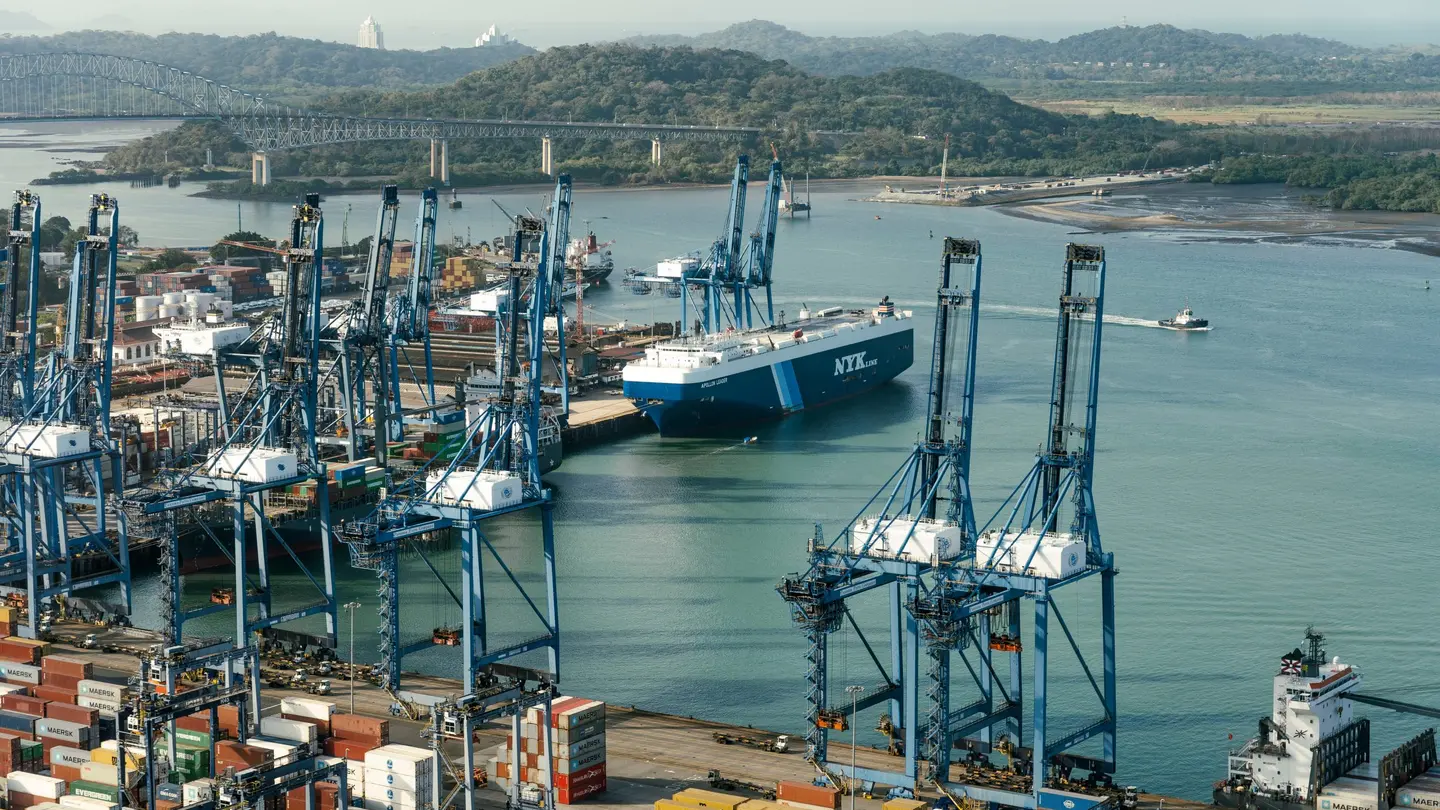
Container traffic at Panamanian ports shows mixed dynamics, with sharp declines at the Balboa and Cristóbal terminals, while a reorganization and notable increases at SSA Marine MIT, Colón Container Terminal and PSA compensated for the contractions. Until May, port activity had been accumulating a timid growth, a product of the transition in the ports of Balboa and Cristóbal, after the decision of the Supreme Court of Justice to declare unconstitutional the contract between the State and Panama Ports Company that administered these terminals.