The Panama Financial Advisor Linked to the Handling of $23 Million: Operation Pandora
The Specialized Prosecutor’s Office against Organized Crime attributes to José Miguel Jurado Rovira an active participation in the fraudulent scheme carried out by DGI officials.
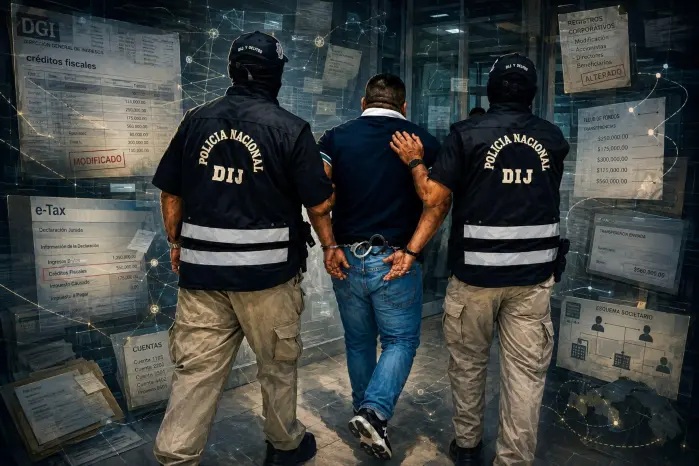
Bank tax credits are legitimate financial instruments issued by the government, often through the Dirección General de Ingresos (DGI), which companies can use to pay future taxes. Recent context regarding BAC and the DGI concerns Operation Pandora, a major investigation into an alleged organized criminal network that manipulated the DGI’s digital E-Tax platform to generate and sell illegitimate tax credits.
What are Bank Tax Credits in Panama?
In Panama, tax credits are certificates or balances recognized by the DGI (the tax authority). They are often issued as part of government incentive programs for specific industries like tourism, agriculture, or infrastructure. Legally, these credits are tradeable assets; companies that earn them (or investors who legally acquire them) can transfer them or use them directly to offset their own tax liabilities. Banks, such as BAC, often act as buyers and beneficiaries of these credits to offset their corporate tax obligations.
The BAC and DGI Controversy (Operation Pandora)
The specific situation involving BAC International Bank (Panamá) and the DGI relates to a massive, multimillion-dollar fraud scheme. The incident unfolded as follows:
- The Fraud: An internal audit by the DGI discovered that a criminal ring (allegedly consisting of lawyers, businesses, and corrupt tax officials) used unauthorized access to manipulate the DGI’s online E-Tax portal.
- The Scale: Illegitimate tax credits valued at over $42 million were created within the state’s digital system and allegedly transferred to shell companies, which then sold them to various buyers, including BAC.
- The Bank’s Stance: BAC International Bank publicly confirmed that it acquired these tax credits. However, the bank maintains that it acted in “good faith,” stating the credits appeared as fully validated and approved in the official DGI systems and had passed the bank’s internal compliance and legal reviews before being used to pay taxes.
- The Investigation: The Public Ministry and organized crime prosecutors are actively investigating the manipulation of the DGI platform, with multiple individuals and former officials detained.
The Panama Banking Association (ABP) has defended the general legality of tax credits as standard financial instruments, while emphasizing that the issue at hand is the alleged corruption and digital forgery within the DGI’s system.
José Miguel Jurado Rovira, the last person charged -so far…- as part of Operation Pandora, allegedly played a key role in the structure investigated for the alleged tax credit fraud that developed from within the General Directorate of Revenue (DGI), between 2024 and 2025. Of the $23 million that circulated through the accounts of these two companies, $2.3 million ended up deposited into personal accounts in the name of Jurado, a 56-year-old from Chiriquí who presents himself as a “financial advisor”.
During a multiple-request hearing, a judge charged José Miguel Jurado with the alleged crimes of money laundering, forgery, corruption of officials, and organized crime.
Judge Meylín Jaén ordered the arrest of José Miguel Jurado Rovira, whose companies negotiated 23,188,560.99 in the transfer of tax credits that were sold to BAC bank. Jurado, 56, originally from Chiriquí, conducted his operations through eight companies, including Servicios de Asesoría y Administración Jurado and Inmobiliaria Riverside. These companies received tax credits from the network that manipulated tax records in the DGI’s e-Tax 2.0 system to generate fraudulent or unclaimed tax credits and divert them to third parties. He was charged with corruption, forgery, money laundering, and organized crime.
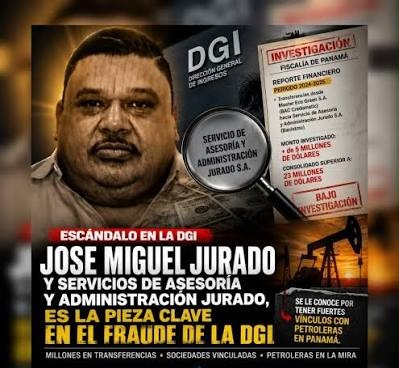
The hearing referenced fund transfers at Banco General, Saint George Bank, and Banistmo. The prosecution highlighted names such as Dagoberto Segundo Díaz and René Ponzuano (a Spanish national), individuals who are not currently in the country, who allegedly had transfer agreements with Jurado Rovira. A settlement was suggested at the hearing, but it did not materialize. The defense argued that Jurado emphasized the charges should not proceed because his client was not a government official but merely a facilitator. He also stated that he did not know the DGI officials Eduardo Silvestre, Rina Arza, and Betsy Rodríguez.