From the Lottery Window to the Phone Screen: How Scratch-and-Win Went Digital
Guest Contribution – Walk down any busy street in Panama City on a Saturday and you will pass them without even noticing, because they are simply part of the furniture of the country. The billeteros, with their boards of lottery tickets clipped in neat rows, calling out numbers to office workers and abuelas and taxi drivers who each have their own theory about which digits are due. The Lotería Nacional de Beneficencia has been running draws here for over a century, and in that time the Sunday draw has become something way bigger than a game of chance. It is a national ritual, a nieghborhood conversation, a reason to hold onto the same numbers for thirty years because they came from a dream your grandmother had once.
And tucked in among the traditional billetes and chances, most vendors also carry the humbler cousin of the big draw, the scratch ticket. No waiting for Sunday, no listening to the radio. Coin against latex, a few seconds of scraping, and you know. That little ritual, it turns out, has travelled a really long way from the street corner. These days the scratch card lives on phone screens all over the world, and the story of how it got there is honestly more interesting than you may expect.
A Country That Takes Its Lottery Seriously
First, some context for readers who are new to Panama, because the lottery here is not a side show. The Lotería Nacional de Beneficencia is a public institution, its proceeds are directed toward social welfare, and its draws are broadcast like small national events. There are the regular Sunday and Wednesday draws, the special editions around holidays, and the famous Gordito del Zodíaco that people plan their month around. Expats are often really surprised by how visible it all is. The tickets are sold on the street, in front of supermarkets, outside banks, by licensed vendors for whom this is a proper livelihood, occassionally passed down within the same family for generations.
There is also a lovely bit of social mathematics in the system. A full billete is a real investment for most people, so tickets are split into fractions, the chances, which let somebody play the same number for pocket change. It is a lottery designed for everyone to take part at their own level, and people definately do. Ask around your building or your local fonda and you will find that almost everyone has numbers they consider theirs.
The point is, Panama already understands something that the rest of this story depends on. Games of chance are not really about the maths. They are about ritual, hope, and the tiny theatre of finding out.
The Scratch Card Is Younger Than You Think
Here is a fact that surprises nearly everyone. The paper scratch card, that thing that feels like it has existed forever, was only invented in the 1970s. American computer scientists working with a company called Scientific Games worked out how to mass-produce randomised tickets that could not be tampered with, and the Massachusetts state lottery put the first modern instant ticket on sale in 1974. Before that, an instant lottery basically did not exist anywhere, imagine that! The wholehistory of the scratchcard is genuinely a fun read, a proper little pulp-industrial story about latex, ink, and applied mathematics.
The idea spread fast because it solved the one weakness of the classic lottery, the waiting. The UK got its national scratchcards in the mid-1990s and they became a fixture of every corner shop practically overnight. Latin American lotteries added their own versions, Panama included, where the raspadito sits right there on the billetero’s board next to the traditional tickets. Different countries, same discovery. Give people the result now and the game changes character completely. It stops being an appointment and becomes an impulse, a little three-second holiday from whatever you were doing.
Why Scratching Feels So Good
Somebody in a lab coat could explain this with the proper pyschology terms, but any lottery player already knows the truth of it. The scratch card works because your own hand reveals the outcome. You are not watching balls tumble on television. You are doing the thing, milimeter by milimeter, and you can slow down or speed up or scratch the corners first to tease yourself. The card is a tiny machine for manufacturing suspense, and you are the operator!
People even have equipment opinions, which tells you everything. Ask a room of players what the correct scratching tool is and you will get a proper argument, the ten-cent coin faction, the car-key people, the fingernail purists who consider anything else to be cheating. Vendors here keep a little dish of coins by the board for exactly this reason. A game that takes three seconds has somehow accumulated etiquette, superstition and prefered instruments, which is usually the sign of something that really matters to people.
There is a reason vendors will tell you some customers scratch right there at the stand while others carry the ticket home unscratched like a live grenade. The reveal is the product. The prize, statistically speaking, mostly is not coming, and everybody knows it, and it does not matter one bit. What you bought was the moment. Anyone who has ever watched a friend scratch a ticket at a bus stop, doing the slow reveal one panel at a time while everyone leans in, knows the whole thing is a little piece of street theatre that money can actually buy.
The Card Goes Digital
So of course the internet came for it. Once lotteries and gaming companies realised the scratch card was really a suspense machine rather than a piece of paper, moving it to a screen was the obvious next step, and online scratch cards arrived quietly through the 2000s and 2010s alongside everything else that moved onto our phones.
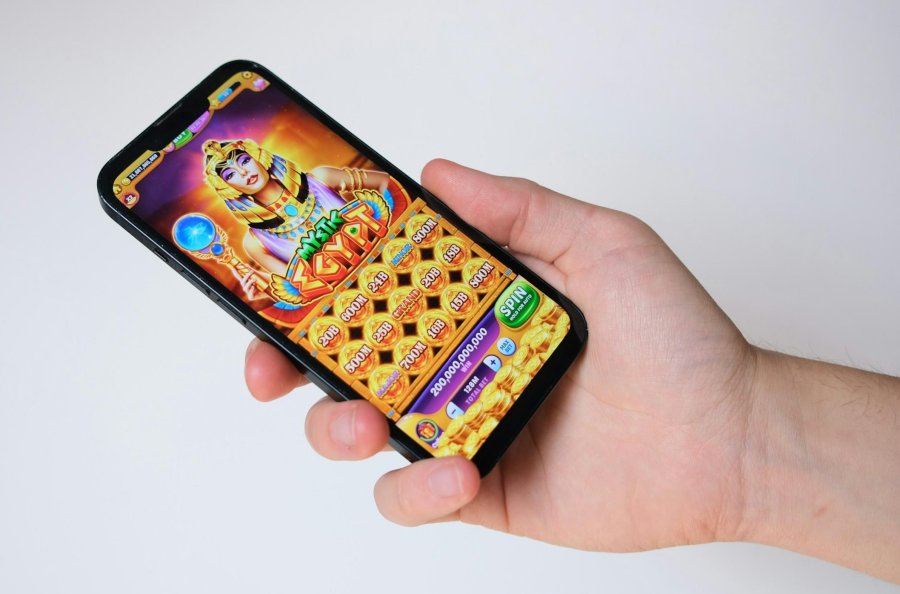
A digital scratch card works on the same principle as its paper parent, just with a random number generator standing in for the printing press. You buy a card, a covered grid appears, and you swipe your thumb across the screen to clear away the virtual latex. The animation is honestly the whole trick. The developers could just show you the result instantly, it is all decided the moment you click buy, but they learned the same lesson Massachusetts learned in 1974. Nobody wants the answer. Everybody wants the reveal. So the foil scrapes away under your finger in curls, sometimes with the little scratching sound included, and the three-second holiday survives the move to glass completely intact.
The digital versions do bring some genuinely new things to the table. Themes, for one, since a virtual card can be about anything from ancient Egypt to fishing trips. Flexible prices, from pennies to whatever you like. And published payout percentages, which paper tickets rarely advertise, so a curious player stands a chance to actually compare games before buying. It is the same street-corner impulse, but with a spec sheet attached.
Where the Online Version Lives Now
Now, online scratch cards mostly do not live at official lottery sites. It found its real home inside online casinos, usually in its own little section alongside the slots and the table games. For the many British expats and visitors here in Panama, this will be familiar territory from home. UK-licensed sites such as The Online Casino carry whole libraries of online scratch cards in every theme you can think of, instant games that hold the potential to recreate that billetero-board moment on a phone screen from anywhere. The sensible route, as always, is the licensed one. Operators regulated by the UK’s Gambling Commission are required to build in player protection tools, deposit limits, time-outs, self-exclusion and the like, and the regulator publishes plain-English guidance on using them. The Online Casino and its licensed peers have those controls available right in the account settings, so use them upfront. Treat the spend exactly the way a Panamanian treats their weekly chances, a small fixed entertainment amount, decided in advance, never chased. The billeteros have been modelling healthy play for a hundred years, honestly. Nobody remortgages the house for a chance; they buy their fraction, enjoy the ritual, and get on with Sunday.
One more practical note for expats, since it comes up a lot. Licensing is territorial, so a UK site serves its UK-facing market under UK rules, and whether you can play from abroad depends on the operator’s own terms and your circumstances. Check before you deposit, not after. Boring advice, but the boring advice is usually the money-saving kind!
The Ritual Survives Everything
Here is the thing this whole story keeps proving. Formats change, the ritual does not. The Lotería has been through a century of upheaval, dictatorships, invasions, currency dramas, a canal handover, and every Sunday the numbers still come out and half the country still checks a slip of paper against them. The scratch card jumped from Massachusetts printing presses to Panamanian street boards to British corner shops to touchscreens, and at every stop it stayed exactly what it was. A tiny purchased moment of maybe.
That may possibly be the real lesson the billeteros could teach the app developers, if anyone thought to ask. People do not really buy tickets, paper or digital. They buy the three seconds before they know. Everything else, the latex, the foil, the swipe animation, the numbers from your grandmother’s dream, is just packaging around that little heartbeat of hope. And that product, honestly, has never once needed a redesign.
18+. Please gamble responsibly. BeGambleAware.org.
________________________________________________________________________________________________________________
Advertisements placed in our Guest Contribution sections are in no way intended as endorsements of the advertised products, services, or related advertiser claims by NewsroomPanama.com, the website’s owners, affiliated societies, or the editors. Read more here.