Panama Rejects the Use of the Strait of Hormuz for “Geopolitical Objectives”
Martínez-Acha added that Chinese authorities have not informed Panama about the detention of Panamanian-flagged vessels.
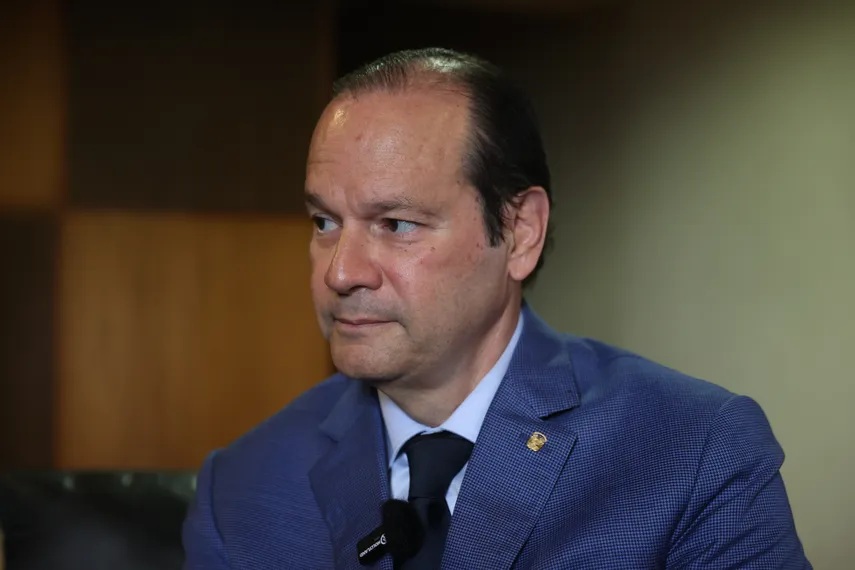
Panama’s Foreign Minister, Javier Martínez-Acha, rejected the use of the Strait of Hormuz for geopolitical purposes, while expressing hope that the temporary truce reached between the US and Iran would become a permanent solution to end the war and normalize traffic in the important maritime route.
Panama’s Position
“That cannot be allowed,” the diplomat said during an interview with reporters in Asunción, the capital of Paraguay, regarding Iran’s closure of the Strait of Hormuz as a pressure tactic following the offensive launched by the United States and Israel at the end of February. “We believe that a permanent solution will be found within the framework of safety for all parties, that the Strait of Hormuz will always be open to the free and safe passage of all ships, and that these points of importance for world trade will not be used for geopolitical purposes,” the diplomat added. According to the International Maritime Organization (IMO), 13% of chemicals and fertilizers, 9% of new cars, and 20% of the world’s crude oil pass through the Strait of Hormuz, so its blockage has caused the price of oil and its derivatives to rise in the international market.
“The effects of this conflict are already being seen globally in the price of energy, beyond where you import (the fuel),” added Martínez-Acha, who has served as head of Panama’s Ministry of Foreign Affairs since July 2024. Similarly, he indicated that Panama does not have problems with the supply of oil or fuels because it imports them from the United States, although it does have problems with prices given the general increase in the resource. That is why, he said, the government of José Raúl Mulino launched a partial fuel subsidy program to “address the situation” and “mitigate the impact” on consumers. After experiencing drastic drops in vessel traffic of up to 97% following the start of the war in the Middle East, movement in the Strait of Hormuz cautiously began to resume on Wednesday after the US and Iran agreed to a two-week truce that will allow “safe passage” through the waterway.
Panama, an Important Mercosur Partner
Panama, associated with Mercosur since December 2024, is the first nation outside of South America to join the bloc created in Asunción in 1991 by Argentina, Brazil, Paraguay and Uruguay. “There are benefits on both sides,” the Panamanian foreign minister said about this relationship, although he acknowledged that it is “in its early stages.” “We have the most efficient port on the continent, a very important air hub, and we have the Panama Canal,” he added, referring to the advantages his country has in its relationship with Mercosur.
Martínez-Acha also noted that Panama worked this week on proposals for bilateral cooperation with Paraguay, a country he visited -between Wednesday and Friday- on a working visit that he described as “very successful”. “We are fully committed to being open partners, attracting Paraguayan investment to Panama, learning from Paraguay’s production processes in agriculture and industry, and eventually collaborating to develop industries together. Currently, Paraguay has the production capacity and Panama has the connectivity; we are a perfect complement,” he asserted.
Respect for “Legal Sovereignty”
The Panamanian foreign minister insisted on demanding respect for his country’s “legal sovereignty” in the face of the detentions and inspections of Panamanian-flagged ships in Chinese ports, following a Supreme Court ruling that annulled the concession granted to a Hong Kong-based company to manage two ports near the Panama Canal. “What worries us is the increase in the number of applications and the fact that they don’t meet those technical criteria, because then they could be part of a political pressure strategy. We hope that this situation will be resolved and that we can have a respectful bilateral relationship with the People’s Republic of China,” he said.
Panamanian sources told reporters that three out of every four ships that dock at Chinese ports are inspected. At the beginning of the month, Mulino’s government acknowledged an increase in the detention of Panamanian-flagged ships in Chinese ports following the Supreme Court’s decision amid pressure from the United States. These detentions do not necessarily imply the confiscation of the vessels or their cargo, but rather delays in departures, or additional inspections, by the Chinese port authorities. Martínez-Acha added that Chinese authorities have not informed Panama about the detention of Panamanian-flagged vessels, but the country has become aware of the phenomenon through its own merchant marine communication channels.