Online Scams Could Become Panama’s Biggest Crime Threat

Computer System Hacked. Virus Software Screen On Monitor
For most of us that live here in Panama, the standard safety advice was simple: do not flash your phone on the bus, do not walk alone at night, and watch your pockets in the downtown areas. But authorities are now delivering a different warning. The most dangerous place to be robbed is no longer a dimly lit street corner. It may be your own home, sitting in front of a screen. In nearby Costa Rica “The Organismo de Investigación Judicial (OIJ)” recorded 10,027 cases of online fraud in 2025 alone, a 41% increase from the previous year.

If current growth trends continue, digital scams are on pace to become Panama’s single largest category of crime before the end of the year, overtaking robberies, thefts, and traditional fraud, which until recently occupied the top spots in Costa Rica’s crime rankings. Cell phones, one analyst noted, are getting closer to being more dangerous than walking at night in a dangerous neighborhood. Complaints of online fraud rose from 19 to 27 per day between 2024 and 2025. A report from the National University, confirms what many experts have been warning: what once appeared to be isolated incidents has become a structural problem affecting both institutional stability and the national economy.

More than 40,000 cybercrimes were recorded in Costa Rica from 2018 through August 2025, with cases nearly doubling between 2023 and 2024, a 96.7% increase. Annual reports climbed from roughly 1,600 in 2018 to more than 10,000 per year. Computer fraud accounts for 62.1% of cases, while identity theft ranks second at 21.7%. The most affected demographic is people between 30 and 39 years old, and 79% of cases are concentrated in the Greater Metropolitan Area. Authorities say the COVID-19 pandemic marked a major turning point. As health restrictions pushed more people toward digital tools, criminals adapted quickly.
Traditional street robberies gave way to phishing emails, fraudulent phone calls, and scams carried out through social media. OIJ investigator Randall Zúñiga said criminals realized it was easier to scam people remotely through a call or an email. Officials have also detected that many common street criminals have shifted into digital fraud because it is easier to carry out and involves less personal risk. In 2024, about $8.3 million was stolen from victims’ bank accounts. In just the first half of 2025, losses had already surpassed $4.8 million.
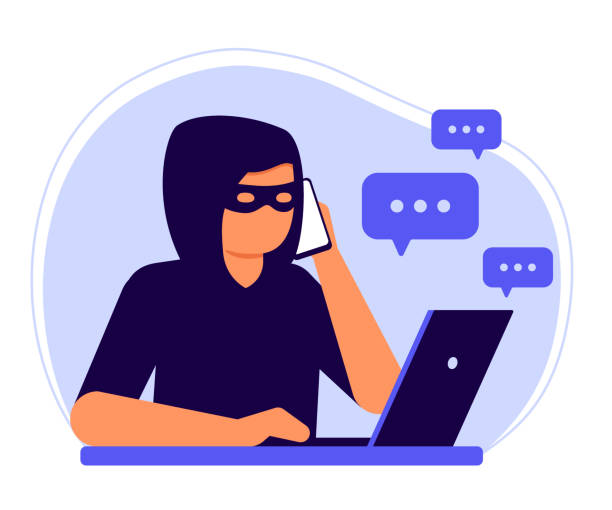
Artificial intelligence has added another layer to the threat. AI tools can now generate convincing phishing emails, fake identities, and even voice simulations that make scams harder to detect. Cybersecurity expert Esteban Jiménez, founder of ATTI Cyber, described the problem in blunt terms, saying it is organized crime and that what Costa Rica is seeing is a professionalized form of criminal activity with local actors deeply rooted in the country. Behind many of these operations are global criminal networks with specialized roles.

Some groups steal and sell personal data, while others use that information to carry out the fraud. In Costa Rica, phishing campaigns increasingly mimic local communication styles, suggesting growing domestic participation in the schemes. Costa Rica’s legislature recently approved a bill that would effectively free citizens from responsibility for illegal transactions and place greater accountability on banks and financial institutions for fraud-related losses. Experts are also calling for specialized cybercrime police units, mandatory attack reporting, and large-scale public education campaigns.

Jiménez warned that the issue is no longer simply a matter of information technology but a matter of national security. Authorities are urging Costa Ricans to take simple but immediate precautions: never click suspicious links or download attachments from unknown sources, avoid public Wi-Fi for banking or other sensitive transactions, use strong and unique passwords, enable two-factor authentication, verify anyone asking for personal or financial information, and report incidents immediately to both the OIJ and the bank involved. The old advice still matters. Lock your doors and stay aware of your surroundings. But in 2026, that warning comes with an update: think twice before you click.