Arriving in Panama on March 29 will be the U.S. Destroyer USS Gridley and the Aircraft Carrier USS Nimitz
The US aircraft carrier USS Nimitz and the destroyer USS Gridley, from the United States, will arrive in Panama on March 29 as part of their tour of the region, the Ministry of Public Security reported this Sunday.
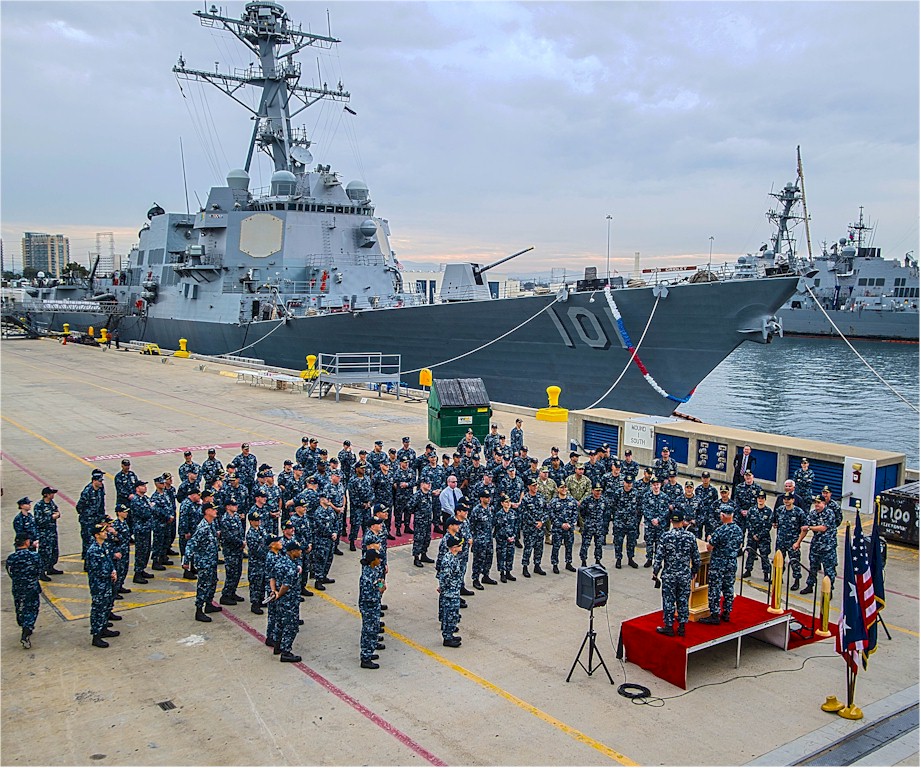
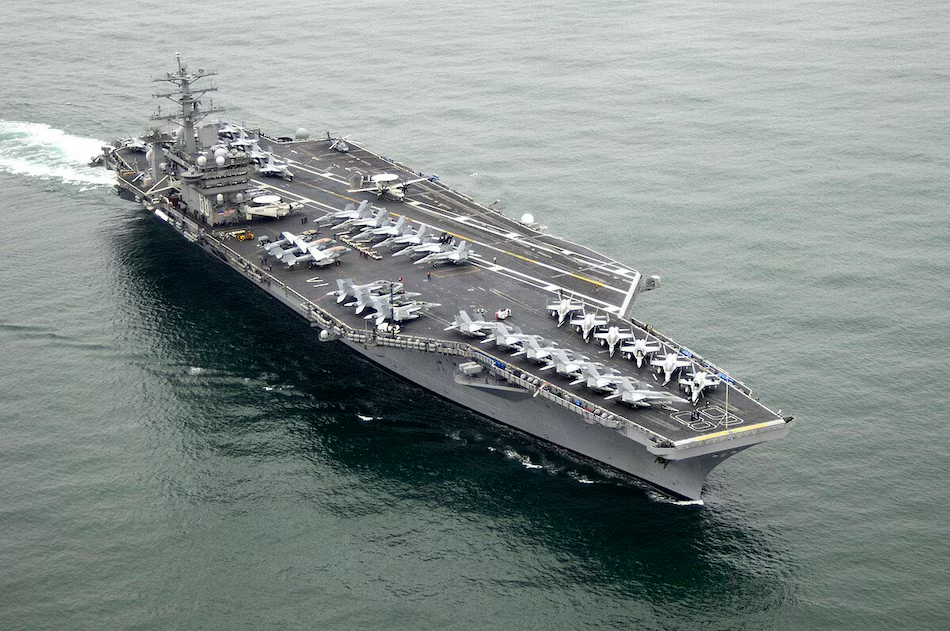
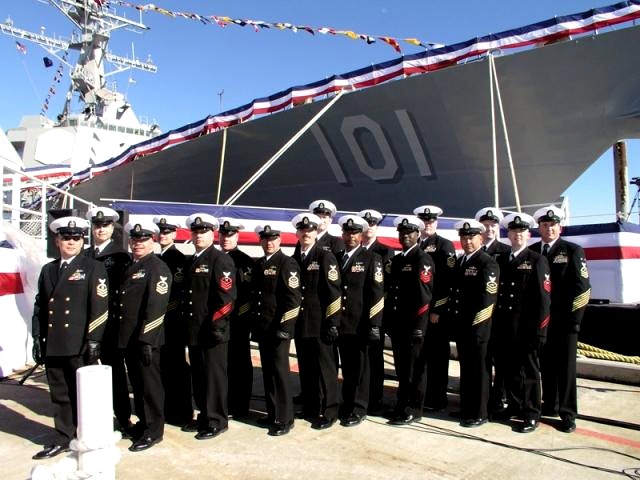
The USS Nimitz aircraft carrier pictured below, and the USS Gridley destroyer pictured above, from the United States, will arrive in Panama on March 29 as part of their tour of the region, the Ministry of Public Security reported this Sunday. Both ships began their voyage through the Americas on March 12, after departing from the west coast of the United States and sailing through the Strait of Magellan. They are expected to reach the east coast of the country on June 20. The continental itinerary includes stops in Panama, Peru, Chile, and Brazil.
Charles Vernon Gridley, pictured below, was born 24 November 1844 in Logansport, Ind., and was appointed to the Naval Academy in 1860. Reporting for duty with his class in September 1863, Gridley joined the sloop-of-war Oneida with the West Gulf Blockading Squadron and distinguished himself with Farragut at the Battle of Mobile Bay 5 August 1864. Promoted to Lieutenant in 1867 and Commander in 1882, he spent the next 30 years at various stations around the world, including a tour as instructor at the Naval Academy.
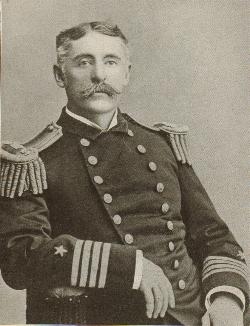
Captain Gridley took command of Olympia, Admiral Dewey’s famous flagship, 27 April 1898, a post which he held despite failing health during the Battle of Manila Bay 1 May 1898. It was that morning that Dewey gave his famous command: “You may fire when you are ready, Gridley,” immortalizing the doughty captain. After the destruction of the Spanish squadron and the capture of Manila, Gridley was obliged to leave his command because of his health, and died en route to the United States at Kobe, Japan, 25 May 1898. The USS Gridley destroyer is pictured below.
Chester William Nimitz, pictured below, (24 February 1885 – 20 February 1966) was a fleet admiral in the United States Navy. He played a major role in the naval history of World War II as Commander in Chief, US Pacific Fleet, and Commander in Chief, Pacific Ocean Areas, commanding Allied air, land, and sea forces during World War II. Nimitz was the leading U.S. Navy authority on submarines.
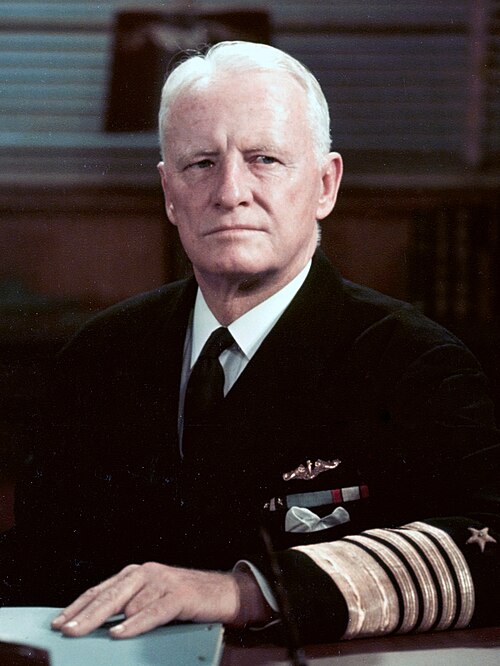
Qualified in submarines during his early years, Nimitz later oversaw the conversion of these vessels’ propulsion from gasoline to diesel, and then later was key in acquiring approval to build the world’s first nuclear powered submarine, USS USS Nautilus, whose propulsion system later completely superseded diesel-powered submarines in the United States.
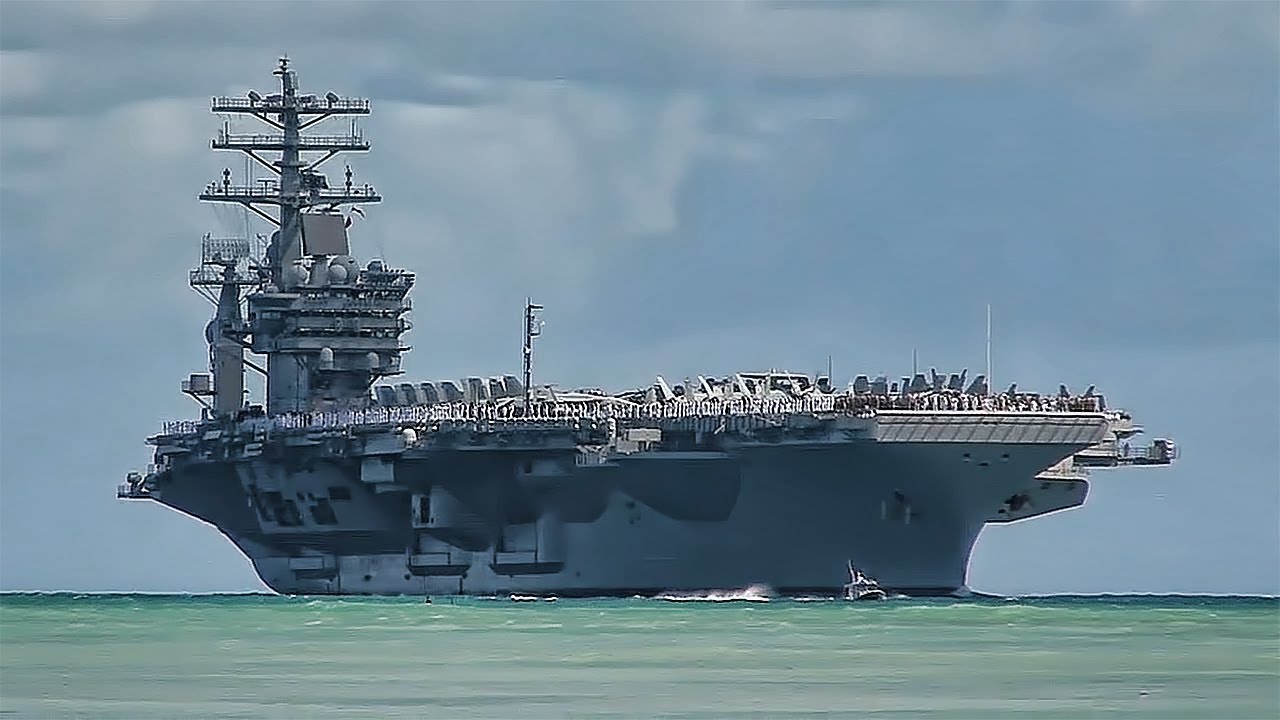
Beginning in 1917, Nimitz was the Navy’s leading developer of underway replenishment techniques, the tool which during the Pacific war would allow the American fleet to operate away from port almost indefinitely. The chief of the Navy’s Bureau of Navigation from 1939 to 1942, Nimitz served as the chief of naval operations from 1945 until 1947. He was the United States’ last surviving officer who served in the rank of fleet admiral. The USS Nimitz supercarrier pictured above, the lead ship of her class, is named after Nimitz.