The Use of the Pinta’o Hat as a Woman’s Handbag is Rejected by the Municipality of La Pintada
Warnings are that if these types of practices persist, a formal complaint could be filed.
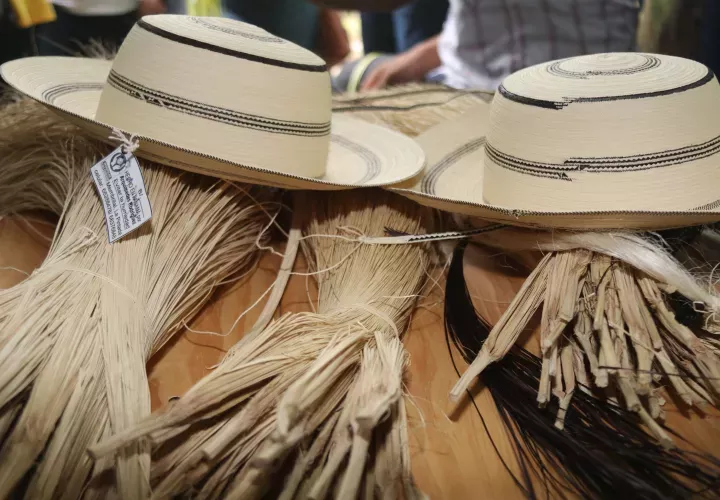
The Municipality of La Pintada expressed its concern about the use of the pinta’o hat as a women’s handbag, highlighting that it is a handcrafted piece that represents the identity, history and work of generations of artisans from La Pintada. “As the Municipality of La Pintada, we express our concern and rejection of any use that distorts or degrades this important cultural heritage,” the press release stated. Furthermore, they warned that if these practices persist, a formal complaint could be filed.
The pintao hat was recognized as an Intangible Cultural Heritage of Humanity by UNESCO in 2027. “These types of actions can be considered cultural appropriation or misuse of heritage, directly affecting our artisans and a tradition that has been passed down for generations,” the statement adds….. “From La Pintada, the birthplace of the pinta’o hat, we will continue to firmly defend respect for our culture, our traditions and the dignified work of our artisans.”
The Real Panama Hat
For centuries, Panamanian artists have been weaving “pinta’o” from natural fibers. The pinta’o originated in the province of Coclé southwest of Panama City, where the hats are still made today. The Panama hat is infamously misnamed. The handmade straw headgear actually hails from Ecuador. Construction workers building the Panama Canal wore the hats, though, as their wide brims protected them from the harsh hot sun. In 1906, President Theodore Roosevelt inspected the construction of the canal in a white linen suit topped off with one of the Ecuadorian hats. Photos of Roosevelt unintentionally launched a fashion trend, and the name stuck. The real Panama hat is the sombrero pintando (“painted hat”), also known as the pinta’o.

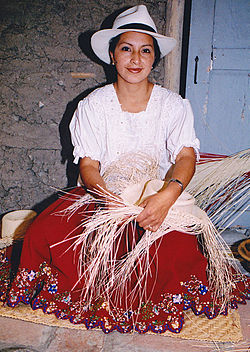
The pinta’o originated in the province of Coclé southwest of Panama City, where the hats are still made today. Like the Panama hat, the pinta’o is also handwoven with natural fibers, but it is defined by intricate dark patterns that are woven throughout the hat. Exquisite artisanship is required to craft the sombrero from the fibers of several local plants—bellota for the white part of the hat, chonta for decoration, chisná for dying fiber, junco to make the ornate tarco stripe, and pita for stitching the hat. The bellota fibers are boiled before being sun-dried for about a week, as the whiter the fiber, the more valuable the hat. After the fiber has dried to the desired shade, it’s woven into braids.
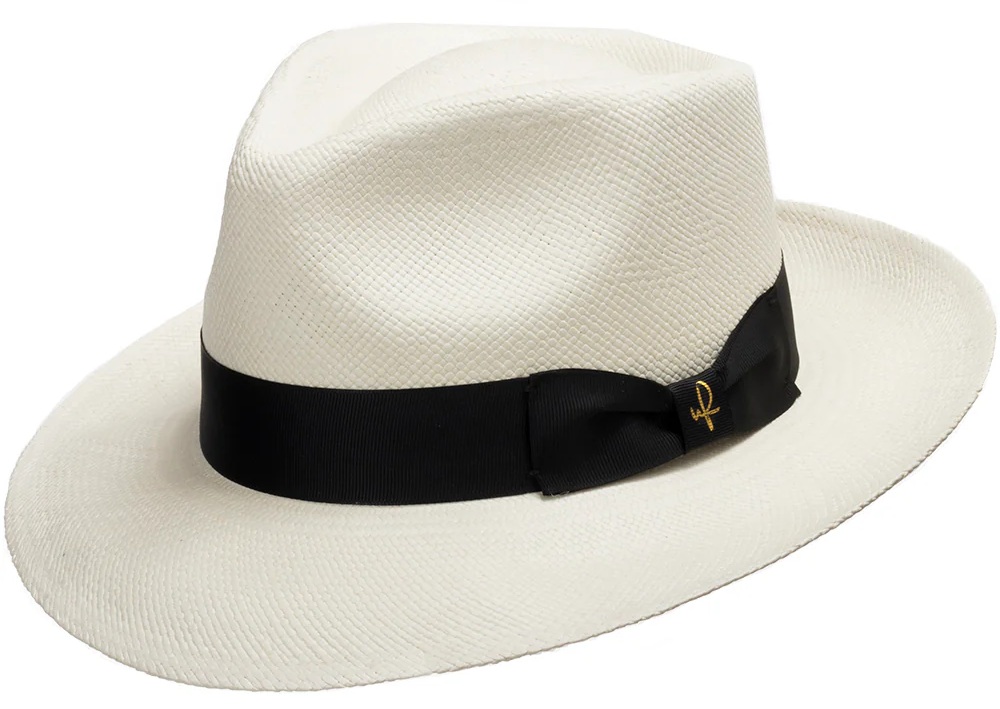
Portofino Retro
To form the hat, braids are wrapped around a wooden block and carefully sewn together by hand. Intricate geometric motifs—straight lines, waves and zig-zags—are formed from bands of chonta fiber dyed with chisná leaves. The design creates the appearance of a “painted hat.” “The pinta’o tradition goes back 200 years,” says Marelys Montero de Monteza, artisan coordinator of Coclé-Ministry of Culture, which works on preserving and conserving the country’s cultural heritage through the promotion of art and culture. “The hat highlights techniques, ancestral expressions, plant care and creativity in the designs that have been transmitted from generation to generation. It’s an important cultural motif that’s ingrained with the customs of the people and a symbol of pride for any Panamanian.”
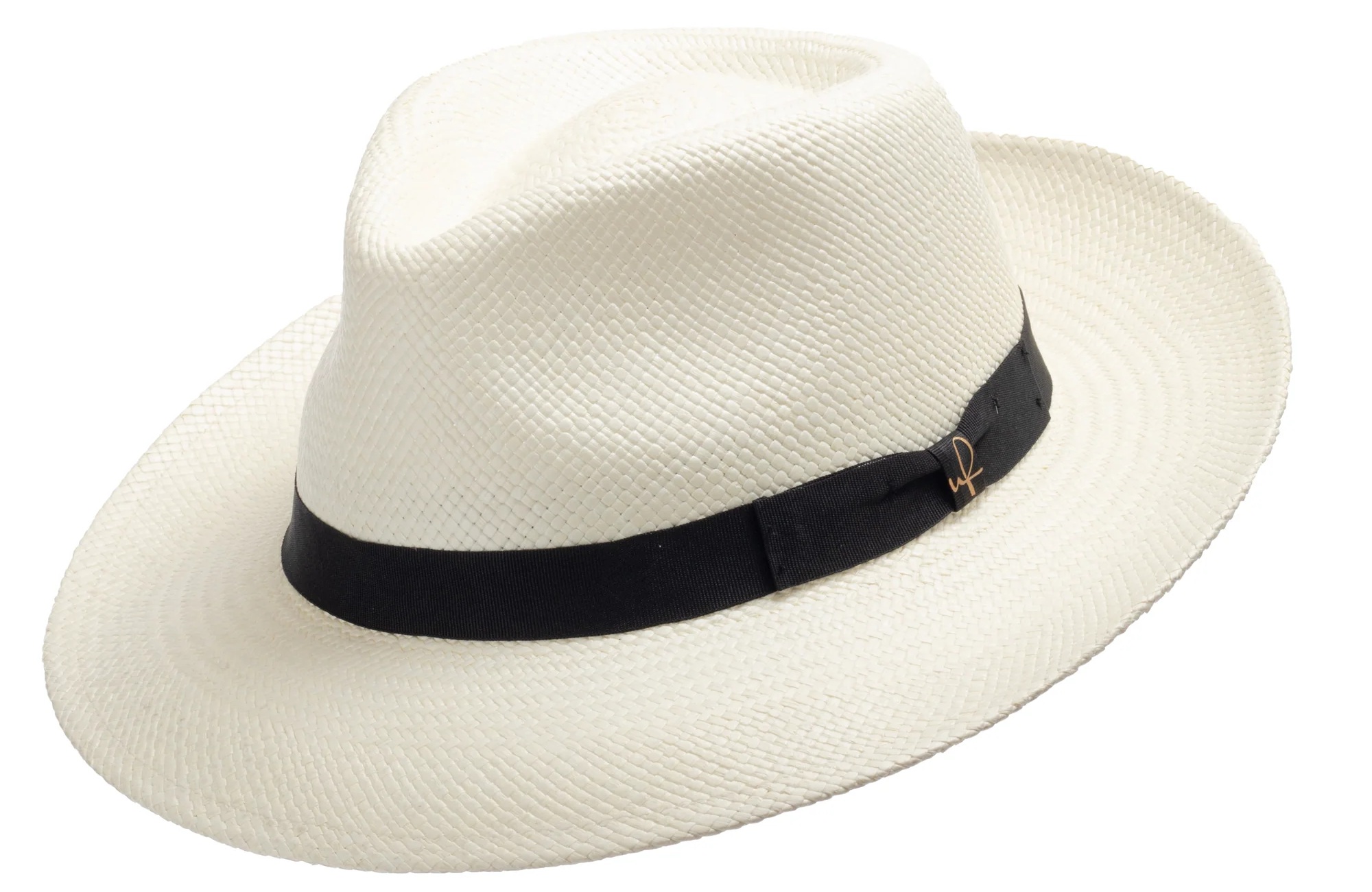
Havana Retro
The pinta’o hat is part of the typical attire of Panama for men, women and children. “Anyone can wear the pinta’o hat. The farmer uses it to protect themselves from the sun and a singer uses it for folk ensemble performances,” says Silvia Rodríguez, a master weaver of pinta’o based in Las Pozas, Penonomé, Coclé Province. In fact, many rural Panamanians have two pinta’o hats. “The daily use hat has up to ten turns [every time a circle lap is completed on the hat] and the other is more detailed with around 20 turns,” says Alex Santiago Tuñón, a pinta’o milliner in La Pintada, Coclé. The more elaborate version is donned for special occasions including Sunday mass, folkloric dances, weddings, birthdays and community celebrations. “Where there is some type of activity, the painted hat is worn,” says Juan Carlos Figueroa Quirós, a hat cobbler in La Pintada.

“The hat is more than a symbol—it’s our identity.” According to a Ministry of Industry & Commerce of Panama report, the Artisan Registry database lists 341 pinta’o makers. Most of the artisans are related, as hat-making is a household affair. “I was born into a family dedicated to making hats,” Rodríguez says. Hat-making has been her family’s business for five generations. “As a child, I saw my grandparents, parents and brothers do this work. All of us dedicate ourselves to making the hats. My mom taught me when I was six to weave with three threads of fiber,” she says. “The art is inherited from our ancestors. It’s our legacy to make pinta’o hats.” It can take weeks or months to complete a pinta’o, the majority of which are made by request to match the customer’s taste.
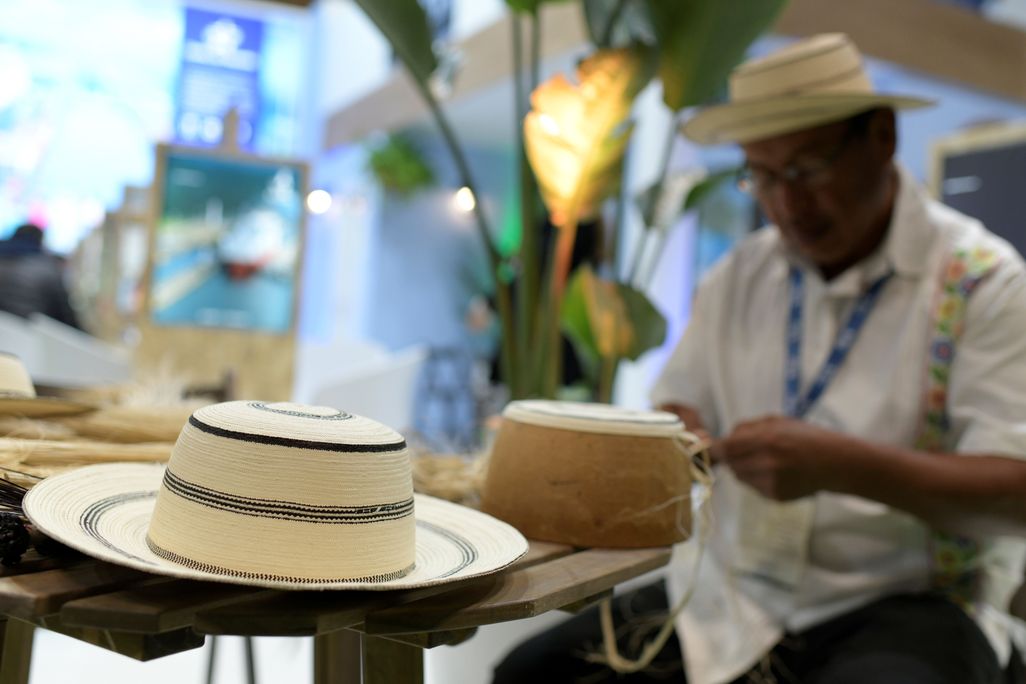
“The finest hat I made had 22 turns and took almost two months,” Rodríguez says. The more intricately woven a pinta’o, the more expensive it is. A hat with less than 15 turns takes approximately ten days to make and costs under $100 while a more intricate design with upwards of 24 turns can take 90 days to make and cost over $1,000. In 2017, UNESCO inscribed the pinta’o to its List of the Intangible Cultural Heritage of Humanity, which honors knowledge, tradition and rituals that are an intrinsic part of a culture. “The artisans cultivate the plants, work the raw materials, braid the fibers and make this hat with them, which is part of a clothing of all the regions of the country in folkloric dances and community festivals,” UNESCO noted in its ruling.

After making the decision at a meeting of its Intergovernmental Committee for the Safeguarding of Heritage, the agency said, “This artisanal practice fosters social solidarity, given that the creation of cooperatives and groups of hatters and growers is encouraged.” “The declaration was an international recognition that there’s an intangible cultural heritage being lost,” says Ariana Curtis, an African American and Panamanian anthropologist. “The pinta’o isn’t mechanized, it’s made by hand. There’s reverence for the knowledge bearers and deep respect for how it’s passed from generation to generation. We see the pinta’o everywhere, so endangerment wasn’t on people’s radar until the declaration.” Rodríguez worries that the hat may disappear as younger generations are indifferent about learning the craft.
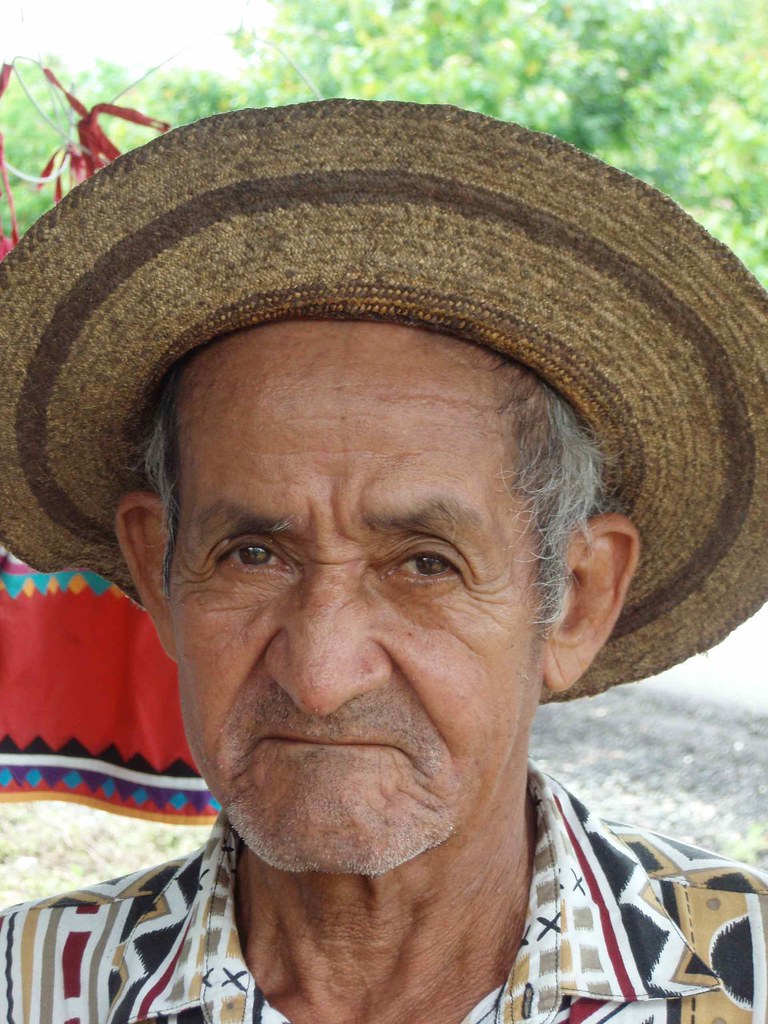
Montero agrees, reflecting that “fewer young people are interested in making hats and preventing the tradition from being lost.” Quirós, a seventh-generation hat cobbler, is encouraging his children to carry on the custom. “There can be an extinction of this tradition if the artisans and the local governments don’t employ in the schools to be part of the teachings,” he says. Another challenge is the depletion of raw materials, like Carludovica palmata and eleocharis. Many artisans are buying fibers from commercial suppliers, as opposed to farmers, some of whom sold their land only for it to be deforested into fields, destroying the raw materials in the process. Montero believes that conserving the plant species used to make the hats is necessary to saving the craft. “

Turkish President Mustafa Kemal Atatürk with his Panama hat in 1925
We must reinforce the cultivation and protection of the areas where the raw material is produced,” Tuñón says. Tourism is also a key factor in preserving the pinta’o. The area most famous for the pinta’o is La Pintada, a town in Coclé. On October 19, the annual Civic and Commemorative Day of the Sombrero Pinta’o is held in La Pintada with parades, live music and vendors selling pinta’o hats. Ivan Eskildsen, Panama’s Minister of Tourism, says the festival started in 2011 as a way to safeguard the technique of the pinta’o. Travelers can watch artisans in action and support the traditional craft by purchasing a genuine hat at La Pintada Handicraft Market as a wearable souvenir. “A hat might seem superfluous, but cultural traditions deeply rooted in our identity are very important to safeguard for the future,” says Eskildsen.