In Favor of Ricardo Martinelli: MINREX Certifies the Validity of the Principle of Specialty
A certification from the Ministry of Foreign Affairs (MINREX) confirms that the former president remains protected by the principle of specialty, which would prevent him from being tried for crimes not included in the extradition request.
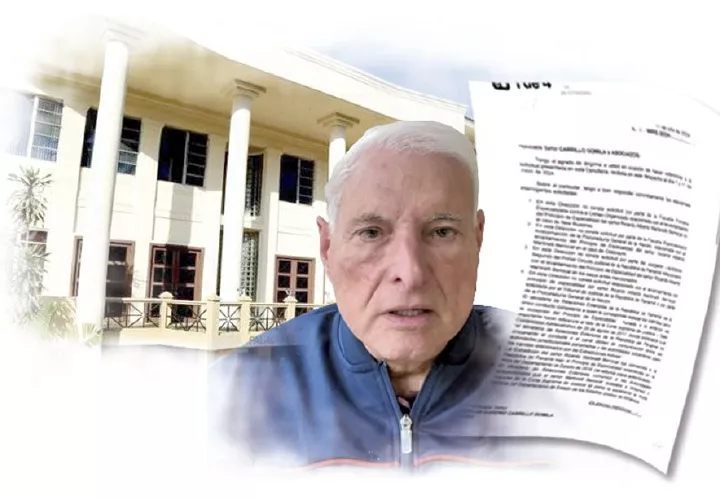
The principle of specialty in favor of former President Ricardo Martinelli, contained in Article VIII of the Extradition Treaty between Panama and the United States (USA) of 1904, remains in force and this is confirmed in a recent certification from the Ministry of Foreign Affairs of Panama (MINREX). Because he was protected by the principle of specialty, the former president could not and cannot be prosecuted, detained or punished for a crime or crimes other than those for which extradition was granted.
When the US authorities handed Martinelli over to their Panamanian counterparts, they did so under the aforementioned principle, as stated in a note dated June 8, 2018, from the Embassy of Panama in the United States of America. The aforementioned note states that the United States Department of State authorized Martinelli’s extradition only for him to be tried for the crimes of breach of secrecy and embezzlement, of which he was acquitted. However, the former president has been brought to court in cases (New Business and Odebrecht) unrelated to the crimes for which his extradition was granted.
This situation has been denounced on numerous occasions by the former president’s legal team. During the pleading phase, lawyer Carlos Carrillo Gomila presented the note issued by the Ministry of Foreign Affairs on July 11, 2024, in which the entity specifically details that it did not receive any request from the Anti-Corruption Prosecutor’s Office of the Attorney General’s Office or from the First Specialized Prosecutor’s Office against Organized Crime, with the purpose of lifting the principle of specialty for Martinelli in the Odebrecht and New Business cases, respectively.
But the matter goes further, as the Ministry of Foreign Affairs reiterated that it is the only competent channel to process exceptions to the principle of specialty, as stated in a ruling by the Administrative Litigation Chamber of the Supreme Court of Justice, dated August 29, 2017, which reinforces the defense’s argument at the hearing: Ricardo Martinelli could not and cannot be part of a trial that prosecutes a crime unrelated to those contained within the extradition agreement.
The aforementioned ruling formally establishes that the Ministry of Foreign Affairs (MINREX) is the “only conduit or the appropriate channel of communication” between the judicial authorities of Panama and foreign authorities.
Carrillo pointed out that the confusion surrounding this protection stems from the fact that, when Martinelli was declared “not guilty” in the Wiretapping case, former Attorney General Kenia Porcell and her team interpreted his departure from the country as grounds for losing it; however, the protection afforded by this principle of specialty is only lost if the former president voluntarily waived it, traveled to the United States, or if the judge who granted it withdrew it—situations that, to date, have not occurred. “The then Attorney General could not usurp the functions of the Ministry of Foreign Affairs and interpret that the right of specialty, which was notified to the Panamanian State by the United States, did not exist,” he stated.
They Point out that the Judge must Respect the Powers of the Ministry of Foreign Affairs.
According to the jurist, this principle must be respected by Judge Baloisa Marquínez, because she cannot override the powers of the Ministry of Foreign Affairs in issuing the ruling in the Odebrecht case. He argued that the authorities cannot interpret the issue to issue a judgment without validation from those who established the parameters of the treaty; otherwise, they would be disrespecting what was agreed between both nations (United States and Panama). “What is the point of having a treaty if it is not going to be applied to its literal meaning by the authorities? This is unacceptable and damages the image of the Republic,” he stated.
Extradition did not Include Money Laundering, According to the Defense
The extradition request submitted by Panama does not include money laundering among the charges; therefore, trying Ricardo Martinelli for a different crime would violate the principle of specialty. Furthermore, no formal approval has been received from the United States to waive the existing specialty. The former president also addressed the issue, stating that two cases have been fabricated and invented against him to politically disqualify him and keep him out of the country. He hopes that the Supreme Court of Justice of Panama (CSJ) will do him justice, since the lower courts have denied it, misrepresenting the protection to which he is entitled and which the authorities accessed after his extradition.
MINREX certifies the validity of the principle of specialty in favor of Martinelli