Avoid the War Zone: The International Maritime Organization Urges Shipping Companies
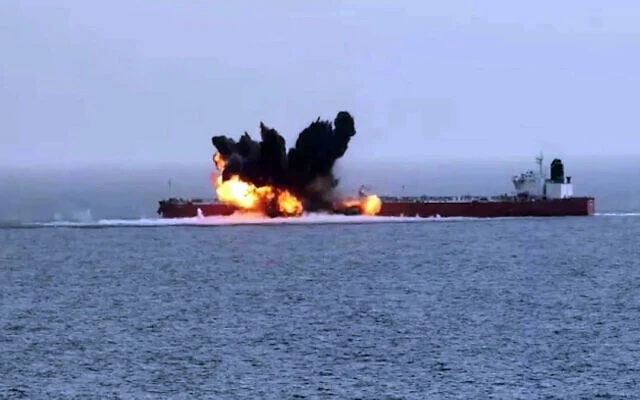
The International Maritime Organization (IMO), a UN agency, urged shipping companies on Monday to “avoid transit through the region” of the Persian Gulf “until conditions improve,” in a statement by its Secretary-General Arsenio Domínguez. Dominguez echoed the news he was receiving of attacks on merchant ships in the area, which have left at least one dead and several injured, and lamented that the victims are “crews who are simply doing their job and should be protected from the broader geopolitical tensions.” The UKMTO, the UK agency responsible for maritime traffic safety, recorded three attacks on different ships yesterday, two in UAE waters (Sharjah and Mina Saqr) and one in Oman (Muscat). This morning they reported another attack on a ship docked in the port of Bahrain.
While the UKMTO does not attribute the attacks to anyone, they follow the pattern of those launched yesterday by Iran against neighboring Arab countries that host US military bases. Given the extremely fragile situation, shipping companies Maersk and Mediterranean Shipping Company (MSC) announced yesterday the temporary suspension of traffic through the Strait of Hormuz. They were followed by a similar suspension from the three main Japanese shipping companies (Mitsui OSK Lines, Nippon Yusen, and Kawasaki Kisen). Although traffic in the Strait of Hormuz (which separates Iran in the north from the Emirates and Oman in the south, just 30 kilometers away) is practically nonexistent, no official body has yet decreed its closure. The IMO Secretary-General urged people to disregard rumors: “I urge all stakeholders to remain vigilant against misinformation and rely solely on verified and reliable sources when making navigational decisions.”
Based on reports from March 2, 2026, a U.S.-flagged tanker, the Stena Imperative, was struck by two projectiles while docked in the Port of Bahrain, resulting in a fire. This incident was part of a series of retaliatory strikes by Iran against U.S. and Israeli actions in the region.
Key Details of the Incident:
- Vessel Struck: Stena Imperative (U.S.-flagged tanker).
- Location: Port of Bahrain (Salman Industrial City).
- Time: Early morning, Monday, March 2, 2026 (approx. 02:57 GMT).
- Damage: The vessel caught fire, but the blaze was extinguished.
- Casualties: One Asian worker was killed and two others were seriously injured due to debris from an intercepted missile.
- Status: The crew evacuated safely, and the vessel remained in port for investigation.
Context and Impact:
- Iranian Retaliation: The strike was part of a larger retaliatory campaign by Iran, with the Islamic Revolutionary Guard Corps (IRGC) targeting the U.S. Navy’s Fifth Fleet headquarters in Bahrain and other locations in the Gulf.
- Missile Debris: Bahrain’s Ministry of Interior reported that the fire was caused by debris from a missile that was intercepted by defense systems.
- Regional Tensions: The incident occurred amidst intense military action between Iran, the U.S., and Israel, leading to increased maritime risk in the Persian Gulf, with insurers canceling war risk coverage.
Visual Evidence:
- Social media and news reports showed images of smoke rising from the Salman Industrial City/Mina Salman port area following the attack.
- Satellite imagery from March 1 showed damage and smoke at the U.S. Fifth Fleet naval base in Bahrain.
- The Stena Imperative had previously been involved in a tense encounter with Iranian boats in the Strait of Hormuz in early February 2026.