Beyond the Battle: The Dual Identity of Skins as Art and Assets
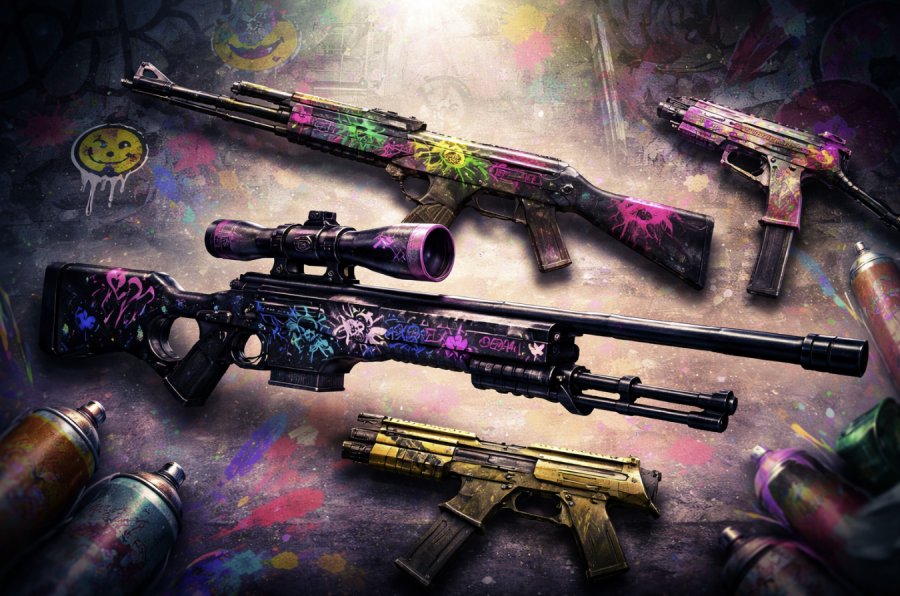
Guest Contribution – Look, I’m not going to pretend I haven’t spent an embarrassing amount of time inspecting a digital weapon while my teammates screamed at me to defuse the bomb. We’ve all been there. You hit the ‘F’ key, the character model twists the gun, the light catches the holographic sticker just right, and for a split second, you forget you’re in a tactical shooter. You’re in an art gallery. But then, there’s the other side of the coin. That same digital item, that collection of polygons and textures, has a price tag that could rival a used sedan.
It is a weird timeline we are living in, isn’t it? We have reached a point where owning a specific pattern on a virtual sniper rifle carries the same social weight—and financial burden—as owning a luxury watch. It is a collision of worlds that shouldn’t work, but somehow, it does. Whether you are looking at a hyper-expensive Dragon Lore or a budget-friendly AWP Duality, you are participating in one of the most fascinating tech experiments of the modern era. It’s technology, art, and finance all wrapped up in a package that lets you click heads at 144 hertz.
The Tech Behind the Texture
Before we dive into the cash and the clout, we have to respect the technology that powers this whole ecosystem. To the uninitiated, a skin is just an image file wrapped around a 3D model. But anyone who has gone deep into the rabbit hole knows it is way more complex than that. We are talking about float values, pattern seeds, and wear ratings. This is where the “general technology” part gets interesting.
The game engine doesn’t just slap a sticker on a gun. It generates a unique instance of that item. The “Float Value”—a number between 0 and 1—dictates exactly how scratched or pristine that item looks. Then you have the “Pattern Template,” a seed number that determines exactly how the texture is shifted on the model. This creates a scenario where two items can look identical to the naked eye but be distinct digital assets in the code.
This randomization tech is what fuels the obsession. It turns a standard game asset into a non-fungible item long before NFTs tried (and arguably failed) to crash the party. When you inspect an item on Steam or any third-party site, you aren’t just looking at a picture; you’re looking at a specific database entry with unique properties that can’t be replicated. That is the bedrock of digital scarcity.
From Pixels to Portfolios
Let’s be real: nobody saw this coming back in the early days of gaming. Remember when unlocking a camo meant you just had to get 50 headshots? Now, it involves market fluctuations, trading bots, and liquidity. The transition of skins from fun unlockables to genuine financial assets is a testament to how gamers value their digital identity.
When we talk about Market CSGO skins or the transition into the CS2 era, we are looking at a mature economy. It operates with the same principles as the stock market: supply, demand, panic selling, and market manipulation. But unlike stocks, you can actually use these assets. You can’t equip a share of Apple stock in a server and show it off to your friends.
This dual identity is what makes the market so resilient. If the price of an item crashes, you still have a cool-looking piece of art to play with. If the art style falls out of favor, the rarity might still hold the value up. It is a safety net that pure crypto assets just don’t have.
The Artist in the Machine
We often get so caught up in the “Asset” part of the conversation that we forget the “Art.” The community workshop is one of the most potent examples of crowdsourced creativity in the tech world. Independent artists spend hundreds of hours designing these textures, referencing mythology, pop culture, and abstract art.
Take the AWP Duality, for instance. It’s not just a cool snake design; it’s a replacement, a fix, a piece of history that had to be swapped in due to copyright issues with the previous skin, the Doodle Lore. That creates lore—pun intended. Every scratch, every design choice, every controversy adds a layer of narrative to the technology.
In CS2, with the Source 2 engine upgrade, this art has taken a massive leap forward. The new lighting engine interacts with materials in ways that simulate real-world physics. Gold reflects differently than plastic; wood grain has depth. This technological leap didn’t just make the game look better; it fundamentally changed the economy. Skins that looked dull in Global Offensive suddenly popped in CS2, causing market ripples that would make a Wall Street analyst sweat.
Navigating the Digital Bazaar
So, you have the tech, and you have the art. Now, where does the commerce happen? This is where things get messy—and interesting. The ecosystem has splintered into a massive network of trading hubs.
The most obvious entry point is the steam marketplace CS2. It is the walled garden. It’s safe, it’s integrated directly into the client, and it’s where most casual players live. But seasoned traders know the limitations. The fees are high, and the money is stuck in the Valve ecosystem. You can check in, but you can’t cash out—at least, not directly to your bank account.
This limitation birthed an entire secondary industry. Enter the third-party sites. If you are hunting for a specific float or a rare sticker combination, the general consensus is to look outside the walled garden. Players often hunt for the best CS2 marketplace to find deals that the Steam community market misses.
Why? Because liquidity matters. On a CS2 skin marketplace that operates outside of Steam, sellers are often looking for real cash. This desperation—or just the desire to liquidate assets for rent money—often drives prices down. This creates a dynamic where the “real” market price is often distinct from the Steam price.
The Hunt for the Best Deal
If you are new to this, the terminology can be overwhelming. You’ll hear people arguing over what constitutes the cheapest CS2 marketplace versus the safest. It is a classic tech trade-off: security vs. convenience vs. cost.
A marketplace CS2 veterans trust usually offers advanced filtering tools. We are talking about search engines that let you filter by specific paint seeds or float ranges. That is a database management feat in itself. Imagine querying millions of items in real-time to find one specific AK-47 with a float value of 0.0001. The backend tech required to run a smooth CS2 skins market is no joke.
When evaluating a CS2 marketplace steam integration is key, but so is the bot infrastructure. The trading bots—automated accounts that hold the items—are the unsung heroes (and occasional villains) of this story. They handle millions of transactions a day. When they go down, the economy halts. It’s a fragile, fascinating machine.
Finding the best CS2 skin marketplace often comes down to UI/UX design. Does the site load the inventory fast? does it show the 3D inspection view without crashing your browser? These are general tech problems applied to a niche gaming economy.
Market CSGO Items in a CS2 World
The transition from Global Offensive to CS2 was a massive stress test for this digital economy. There was genuine fear: would the skins transfer? Would they look the same? Valve’s decision to carry everything over was a masterclass in retaining user trust. It preserved the value of Market CSGO items while upgrading them to the new engine.
This continuity is rare in technology. Usually, when a new iPhone comes out, your old case doesn’t fit. When a new console drops, your old discs might be useless. But here, an item from 2013 is not only compatible with the 2024 engine, but it might also look better than ever. This longevity is what turns a skin from a consumable into an asset.
However, the volatility is real. A CS2 skins marketplace can be a rollercoaster. A weapon gets nerfed in a patch note? Price drops. A pro player makes an insane play with a specific skin? Price spikes. It is a reactive economy that moves at the speed of Twitter (or X, whatever we are calling it now).
The Psychology of the Collection
Why do we do it? Why do we care about a skin marketplace CS2 has spawned? It comes down to expression. In a digital world, your avatar is your presence. You can’t wear your new sneakers to a Discord server. You can’t park your car in a lobby. But you can inspect your knife.
The skin marketplace CS2 thrives on creates a hierarchy. It’s tribal. Seeing someone with a default pistol versus someone with a StatTrak masterpiece signals tenure, dedication, or sometimes just deep pockets. It adds a layer of social texture to the technological framework of the game.
And let’s not ignore the “investor” brain. There is a rush in scouring a skin marketplace cs2, finding an underpriced item, snagging it, and watching the value tick up. It gamifies the market itself. You aren’t just playing the shooter; you’re playing the economy.
Where Do We Go From Here?
As graphical fidelity improves, the line between art and asset will only blur further. We are already seeing creators push the boundaries of what is possible within the texture memory limits. The “best CS2 marketplace” of the future might not just be a list of items; it could be a VR showroom where you can hold the item before you buy it.
The tech is moving that way. With the rise of AR and VR, your CS2 skins might eventually leave the screen. Imagine projecting your inventory onto your coffee table through smart glasses. It sounds sci-fi, but the data structures are already there. The float values, the seeds, the ownership history—it’s all portable data waiting for the next display technology.
For now, though, we stick to the screens. We browse the CS2 skins market at 3 AM, looking for that one specific pattern that completes the loadout. We argue about whether the steam marketplace CS2 fees are too high (they are). We marvel at how a virtual coat of paint can fund a developer’s career or a player’s holiday.
It’s silly. It’s serious. It’s pixels. It’s profit. And honestly? I wouldn’t have it any other way. The dual identity of these items is what keeps the game alive long after the match is over. Whether you are in it for the art or the asset, you are part of a digital revolution that is quietly rewriting the rules of ownership.
So, next time you pick up an AWP Duality off the ground, take a second to look at it. Really look at it. You’re holding a piece of code that has traveled through servers, wallets, and databases to get to your screen. And then, please, for the love of the game, stop inspecting it and hold the angle. The terrorists are rushing B.
________________________________________________________________________________________________________________
Advertisements placed in our Guest Contribution sections are in no way intended as endorsements of the advertised products, services, or related advertiser claims by NewsroomPanama.com, the website’s owners, affiliated societies, or the editors. Read more here.