More than 700 Containers of Watermelon and Melon are Being Exported from Panama to Europe
Agro-export activity creates opportunities both on farms and in packing plants. Three exporting plants in the region plan to ship more than 700 containers of watermelon and melon in the next three months, representing 3,000 jobs.
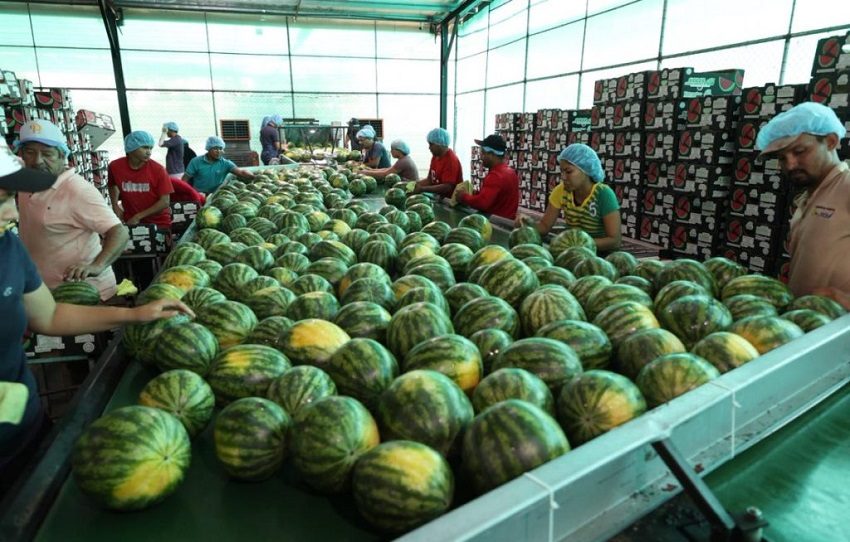
The Ministry of Commerce and Industries of Panama (MICI) participated in tours of watermelon and melon exporting plants in the province of Herrera, reinforcing the internationalization of Panamanian products and promoting the competitiveness of the sector. The event included the participation of the Minister of Agricultural Development (MIDA), Roberto Linares, and the Vice Minister of Foreign Trade, Astrid Ábrego, who highlighted the importance of coordinating efforts between the productive sector and state institutions to facilitate access for Panamanian products to international markets, especially those with high added value and potential for job creation.
“We have excellent quality products that, through the Made in Panama seal, we seek to promote and position in other countries,” he emphasized. During the tour of the APSECU para el Mundo SA and Agro Export Pacific SA plants , the start of the watermelon and melon export process to the European market, specifically the Netherlands, was highlighted, reflecting the country’s ability to meet international quality and logistics standards. Both companies belong to the Panamanian Non-Traditional Agro-Exporters Group (GANTRAP). Ricardo García Salas, manager of Agro Export Pacific SA and Terra Fruta SA, noted that the company has experienced sustained growth since its founding in 2010.
“That year we exported 26 containers, and 16 years later we are planning to send 300 containers to countries like the Netherlands, the United Kingdom, and Portugal. Our products, watermelon and melon, are grown through the efforts of Panamanian producers and are of excellent quality, recognized worldwide,” he emphasized. The businessman also highlighted the impact on local job creation, explaining that the agricultural export activity creates opportunities both on farms and in packing plants. “In our operations, we have 130 employees at the plants and 200 on the farms; it is an activity that generates a lot of employment and revitalizes rural communities,” he pointed out.
Josué Solís, ABSECO’s representative for El Mundo, explained that the company, founded in 2018, began selling locally and, with institutional support, started exporting agricultural products. “Currently, we export approximately 220 containers, generating between 700 and 800 jobs nationwide, from farm workers to transporters and plant employees,” he said. Solís also urged new entrepreneurs and producers to continue investing and seeking export markets. “
To everyone who has the desire to move forward, I say that with effort and dedication we can enter other countries and open new opportunities for our products,” he concluded. According to the information presented during the visit, three exporting plants in the region plan to ship more than 700 containers of watermelon and melon in the next three months, which represents the direct generation of about 3,000 jobs, contributing to the economic dynamism and development of the surrounding communities.