Beijing’s Hands May be Tied as US Scores a Win in the Panama Canal Ports Ruling
Panama’s Supreme Court on Jan 29 voided a 25-year contract held by a subsidiary of Hong Kong conglomerate CK Hutchison to run the ports in the Panama Canal.
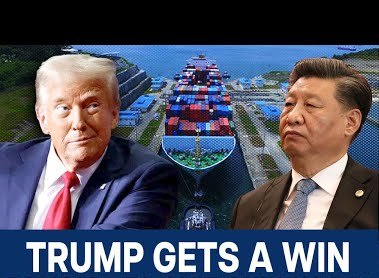
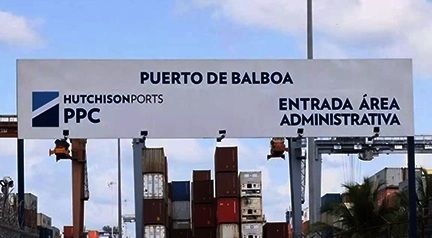
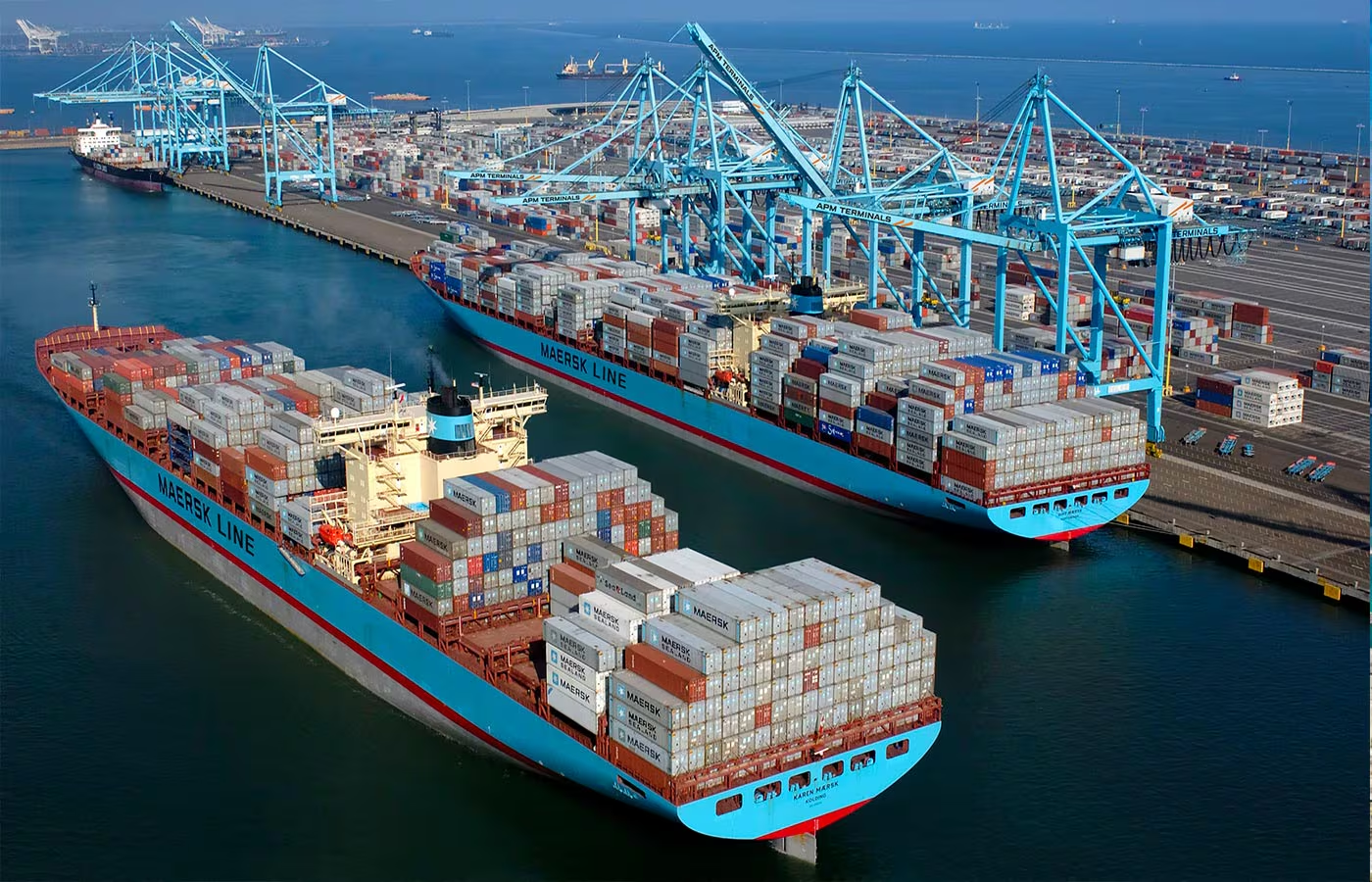
SINGAPORE/HONG KONG: A recent court ruling giving the United States a win over China in a tussle for control of the strategic Panama Canal threatens to throw a wrench in the stabilization of fragile ties between the two major powers – and Beijing might have limited options to regain the upper hand. Panama’s Supreme Court on Jan 29 voided a 25-year contract held by a subsidiary of Hong Kong conglomerate CK Hutchison to run the Balboa and Cristobal ports in the Panama Canal. Danish shipping giant Maersk pictured below will take over operations temporarily.
The ruling over the ports – which sit on both ends of the vital waterway for global trade – is seen as a victory for US President Donald Trump and his aim to assert American dominance in the Western Hemisphere and “reclaim” the Panama Canal from alleged Chinese control. “Beijing perceives this as an American ploy to rob it of bargaining leverage and challenge a strategic access point,” Dr. Isaac Kardon, a senior fellow for China studies at the Carnegie Endowment for International Peace, told Newsroom Panama.
The Chinese Foreign Ministry’s official response so far is a signal that Beijing will explore a range of measures to maintain its interests, including potential sanctions, Dr. Kardon said. “Beijing has no direct method to block a constitutional ruling in a foreign state – but that lack of legal standing did not prevent China from scuttling the BlackRock-MSC deal last year,” he added, referring to an agreement in March 2025 by CK Hutchison to sell its stake in 43 ports, including those in Panama, to an American-led investment group.
The US $19 billion to $24 billion deal was criticized by China and led to an invitation for state-owned Cosco Shipping to join the buying consortium. Since the ruling from the Panamanian top court, Beijing has vowed to take all necessary measures to “resolutely safeguard the legitimate rights and interests of Chinese enterprises”. It reiterated this stance at a regular Foreign Ministry press briefing on Feb 2. On Feb 4, the Hong Kong and Macau Affairs Office warned that Panama could pay a heavy price for the ruling.
It was “legally unfounded”, served only to sabotage Panama’s own credibility and business environment, and was “tantamount to shooting themselves in the foot”, the office wrote in a commentary on its WeChat account. Pro-Beijing newspapers Ta Kung Pao and Global Times have also slammed the decision, accusing Panama of ceding to US pressure. The Panama Canal was built in the early 1900s, mostly by the US, and handed back to Panama in 1999.
US President Donald Trump in December 2024 threatened to regain control of the waterway – by force if necessary – citing exorbitant shipping fees and claiming that the canal was “operated by China”. Some 5 per cent of global trade and 40 per cent of US container traffic pass through the canal. More than three-quarters of all vessels that transit through the 82km waterway are headed to or from the US. The legal tussle in Panama began in January 2025 when the government launched an audit that found US$1.2 billion in revenue losses since CK Hutchison began operating the two ports in the late 1990s.
This prompted a lawsuit against the Hong Kong Company from the country’s comptroller-general. Shanghai-based international relations scholar Shen Dingli suggested that the tussle over the Panama ports adds another layer of complexity to already tense US-China relations. “The US’ ‘Donroe Doctrine’ aims to expel China from the Western Hemisphere. Panama, Venezuela, Cuba, Iran and Palestine are all regions where intense geopolitical competition between China and the US is taking place,” he said.
After a tit-for-tat trade war in 2025, a one-year truce between the two powers was agreed upon in October that year, though ties have since begun to thaw. Mr. Mahesh Rai, director for dispute resolution at Singapore-based law firm Drew and Napier, said the Panama ruling was “a reminder that investments in strategic infrastructure are increasingly exposed to constitutional, political and public-interest scrutiny”.
“Such risks do not diminish simply with the passage of time,” Mr Rai added. Analysts said Beijing’s options to retaliate against the ruling and wrest back CK Hutchison’s control of the Panamanian ports are limited. Dr. Wilson Chan, director of policy research and co-founder of Hong Kong think-tank Pagoda Institute, said: “Realistically, the leverage that Beijing has over Panama is minimal.” Dr. Chan noted that China and Panama resumed diplomatic relations only in 2017, and that most Chinese firms’ investments in Panama are largely focused on infrastructure.
Moreover, Panama in 2025 ended its participation in projects under China’s Belt and Road Initiative. The projects were not well received by Panama’s local communities, said Dr. Chan. “The move was a demonstration of their diplomatic position in the US-China rivalry,” he added. While sanctions are an option, Dr. Shen does not foresee Beijing imposing them. “I estimate there aren’t many Panamanian assets in China to freeze. And it won’t benefit China’s other assets in Panama.”
Dr. Victor Teo, visiting senior research fellow at NUS’ East Asian Institute, said a loss of influence over the Panama Canal would deal a blow to China’s broader Latin American strategy and Belt and Road ambitions. “Beijing also faces a reputational cost. Other Latin American countries will be watching closely,” he added. Dr. Chan said the ruling marked “the beginning of the end” for CK Hutchison’s ports deal as the decision by Panama’s top court is final and cannot be overturned within the country.
CK Hutchison could take the case to a neutral international court like the Permanent Court of Arbitration in The Hague, he said, but its effectiveness “depends on whether Panama will voluntarily submit to the international court’s jurisdiction”. The conglomerate on Feb 4 said its subsidiary had started international arbitration proceedings against Panama over the ruling. Questions also remain over the other 41 ports that CK Hutchison hopes to sell in the deal.
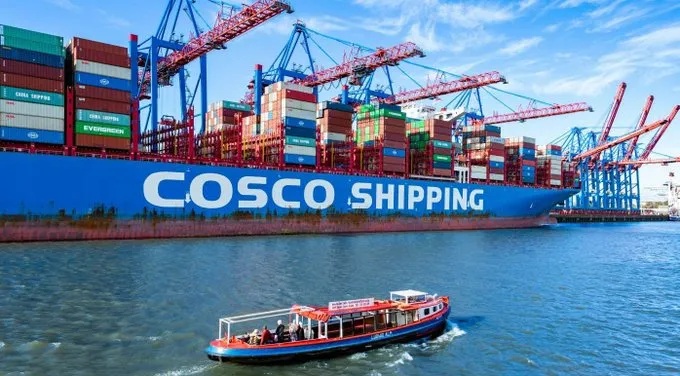
It is uncertain if Cosco Shipping is still interested in the deal; likewise, the BlackRock-led consortium will also be re-evaluating the deal in the light of the recent developments, Dr. Chan said. Dr. Kardon said that with CK Hutchison’s ports now clearly associated with Beijing’s geopolitical interests, it could mean the docks will go for less. “Its terminals in other countries operate under a cloud of suspicion that will likely depress their value and CK Hutchison’s desire to keep them,” he added.
Summary
- Panama’s Supreme Court voided CK Hutchison’s port contract, seen as a US victory over China’s influence in the Panama Canal, a vital trade route.
- China views this as a US ploy, threatening its strategic access. Beijing vows to protect its interests, possibly through sanctions.
- CK Hutchison initiated international arbitration. Analysts say China’s retaliation options are limited, impacting its Latin America strategy.