Demystifying the Vibrant Panama City: An International Perspective
By Tanya Goyal
Flying carpets, snake charmers, and lamps stuffed to the gills with genies. This is not a trip down memory lane for an intoxicating whiff of childhood nostalgia. Instead, this is the jagged manufactured reality of many a journalistic piece on Central America. On a recent visit from Canada, I found Panama City to be a place where skyscrapers and modern amenities coexist in harmony with traditional garb and food. Walking along Amador Causeway that was built using rock from the Panama Canal excavation and connects the mainland to 4 islands, taking in the city’s stunning skyline and the massive ships on either side of the path, encountering a jogger now and then, and passing by the famous Biomuseo, I marveled at this incredibly successful mix-use urban project. Even Panama City’s residents made a profound impact on me with their markedly easygoing demeanour.
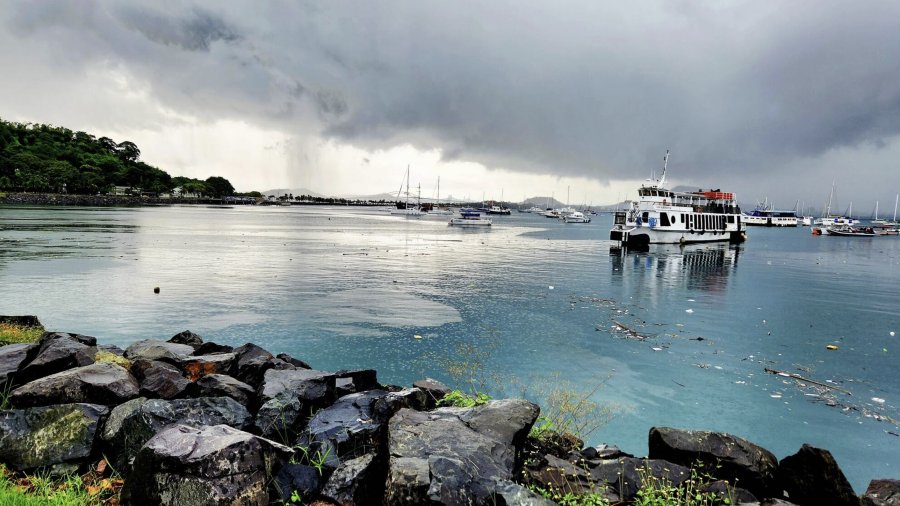
The blaring of celebratory horns deep into the still night after a World Cup football qualifier match victory against El Salvador, the tropical downpour coming seemingly out of nowhere that soaks one right to the bone, and the grind of daily life – the locals take these all in their stride. Like the ubiquitous palm trees still standing there despite torrential rain battering them every so often, the locals display a remarkably resilient spirit. A resident taking a break in the shade in Casco Viejo on a rather hot and busy afternoon and the owner of a souvenir shop along Amador Causeway on a contrasting day of heavy downpour informed me it is the Panamanian way; not a lot pierces the protective shield of resilience fortified over generations. In many ways, besides the melodic sound of Spanish instead of the familiar English, Panama City’s urban lifestyle with its immense charm was to me reminiscent of bustling Canadian cities.
Can you then imagine my surprise at reading an article about ethereal mysteries purportedly hiding just round the corner all over Panama City? Melodrama makes for exciting reading when picked from a library’s fiction section. But when real-world pirates, for instance, are subtly portrayed in a fashion evocative of caricature-like pirate imagery from the movies, one must ask – to what end? Pirates have been a reality of the seafaring world just as burglars in town neighbourhoods have since time immemorial. Pirates are not mythical creatures or unique to any one region. They are ordinary human beings grappling with the consequences of economic disparity. Also, taking casual conversations with people going about their everyday lives out of context can potentially misrepresent the city’s populace. For example, a rideshare driver’s offhand remark that the residents would be willing to resort to bloodshed, should Panama-US relations sour again, in a parallel drawn with two-century-old historic events, cannot be taken literally. Conversational nuance requires discernment. This journalistic distortion is also jarring when accounting for the distinctive Panamanian calm demeanour. At this rate, one might just expect Aladdin to swoop in on his magic carpet to rescue the locals from pirate and other foreign enemy attacks.
Why in this day and age is there still a fevered craving in the predominant journalistic narrative to exoticize the mundane? Reliance on trite motifs, such as the juxtaposition of glitzy shopping malls and dilapidated tin shacks sporting chipped paint, is distractive at best. Panama Canal is a key player in global shipping. I witnessed this renowned engineering marvel in action via the passage of 3 ships through the canal locks at the Miraflores Visitor Centre. Per the Morgan Freeman-narrated 3-D film at the visitor centre, the canal’s massive expansion project, finished in 2016, facilitates the passage of even larger ships. The canal removes the ships’ need to travel along the south of South America, reducing the time taken to traverse the Atlantic and the Pacific Oceans from several weeks to just 10-12 hours. It is too great a success story of the resilient nation to filter through mystical tropes. The reality is that Panama is an emerging nation with a high-income economy, a high literacy rate, and a booming services sector, making its exoticization mindboggling.
Like nature documentary-making in the jungle, journalistic pursuit in a cityscape requires observation of events as they are without tampering with them, holding any preconceptions at bay. A Central American city pulsating with life with its bright lights, skyscrapers, blaring horns, and residents leading busy lives is as delicate an ecosystem as the Amazonian rainforest that has its own rhythm of flora and fauna. Maintaining an unhealthy status quo risks articles flogging similar tropes continuing into the next century, tropes that carelessly paint places like Panama City as remote destinations shrouded in mystery.
I saw a very different Panama City from the one often found in lifestyle publications outside Central America. For every mention of mystical tropes, I recall instead the Panamanian youth sporting global clothing brands – dressed in sleek hoodies and sneakers, the families out dining in universally popular chain restaurants, or the professionals dressed in suits, talking into the latest smartphones on the market. I, for one, do not want to be misled into thinking everything I witnessed with my own eyes was but a mirage. In fact, my very first memory of Panama City is recalling the seamless booking of a rideshare service. Speaking of modern amenities, many travel blogs that publish destination guides often highlight the chic acclaimed Casco Viejo rooftop bars in lists of Top 10 Things to Do or Places to Visit in Panama City. Reconciling that reality with articles attempting to paint the city in outdated ways is impossible. Having had the privilege of visiting it, I can unequivocally say that Panama City is a vibrant city with traditions, modernity, and soul.
About the Author: Tanya Goyal is a Canada-based independent writer and narrative analyst focusing on the intersection of travel, media critique, cultural identity, and storytelling. https://tanyagoyal.carrd.co/