Odebrecht Case: Plea Agreement Details How Financial Scheme and Front Companies Operated to Benefit Martinelli Brothers
The Anti-Corruption Prosecutor’s Office reached a plea agreement with Francisco Pérez Ferreira, based on important information he provided that revealed his role as a front man.

Shortly before the start of the Odebrecht trial, which is now in its eighth day, the Anti-Corruption Prosecutor’s Office requested a hearing to validate a plea agreement reached with one of the defendants, Francisco Pérez Ferreira, who was sentenced to 40 months in prison for money laundering. It was revealed today that this agreement was based on testimony in which he admitted to opening bank accounts and establishing companies used to move money from the Brazilian construction firm. Anti-corruption prosecutor Ruth Morcillo, when presenting the agreement before the First Liquidation Court of Criminal Cases, headed by Baloisa Marquínez, said that, in the opinion of the Public Ministry, the collaboration of the accused has been decisive in proving the illicit origin of the funds and the financial scheme used, which supported the viability of the agreement.
“We arrived at this alternative solution because on June 19, 2017, formal charges were filed against the defendant for a crime against the economic order, specifically money laundering,” explained prosecutor Morcillo to the court, detailing the evidence presented in the case file. According to the prosecutor, Pérez Ferreira acted as the sole shareholder of the company Aragón Finance Corp, an entity used to open a bank account at Guayabi Bankers, identified with client number 4706-8752 and account 109300384-9, in the name of said company.
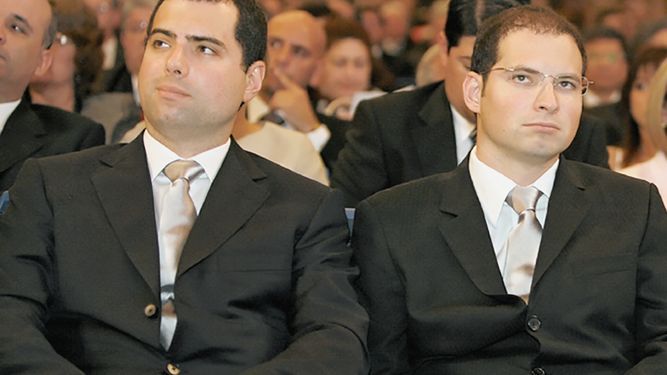
The Prosecutor’s Office was able to establish that the final beneficiaries of that account were Ricardo Alberto Martinelli Linares and Luis Enrique Martinelli Linares both pictured above, and that through it, funds of illicit origin were received from Odebrecht, specifically from the companies Innovation Research Engineering and Development LTD and Select Engineering Consulting Service. “It was proven that the funds transferred between December 23, 2010 and August 27, 2012 amounted to $4,195,223.85,” the prosecutor stated when presenting the plea agreement to Judge Baloisa Marquínez, detailing that these resources came from Odebrecht’s so-called “Box Two.”
The prosecutor also explained that Aragón Finance Corp was incorporated in the British Virgin Islands on August 13, 2010 , through the Blett & Core Group , and dissolved on December 17, 2013 , information confirmed by the authorities of that territory. Furthermore, the case file shows that the company was created at the request of lawyer Francisco Pérez Ferreira, who received the shares as the sole shareholder, as was the case with Ascona Management.
Regarding the mechanism used, it was detailed that Odebrecht collaborators, including Francisco Migliaccio and Luis Eduardo de Rocha Suárez, explained how the Structured Operations Division operated, responsible for making unrecorded payments through numerical sectors, with sector 500 being the one intended for the final beneficiaries of the bribes. They agree in explaining that these companies were used to channel illicit payments, and that Aragón Finance Corp was one of the legal entities used to receive funds from Caja Dos,” the prosecutor stated.
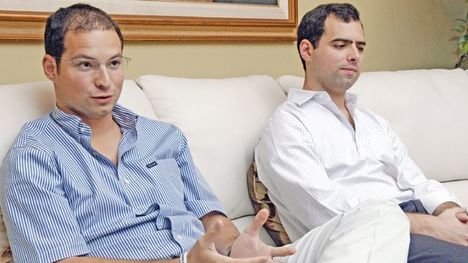
For his part, Francisco Pérez Ferreira, identified as a collaborator of the Anti-Corruption Prosecutor’s Office, decided to accept the agreement after providing relevant information and key documentation, including bank contracts and forms signed by himself for the opening of the Aragón Finance Corp account in a Swiss banking entity. The prosecution reached 23 plea agreements and effective collaboration agreements during the investigation period and prior to trial in Latin America’s most emblematic case, linked to a complex scheme of corporate stratification and bank accounts used for money laundering, specifically for “the payment of bribes and kickbacks” to officials, political operatives, and businesspeople, thus securing construction contracts with various states, including Panama. The construction company Norberto Odebrecht was involved.
Martinelli’s Lawyer Emphasizes the Legality of Political Donations from 2009
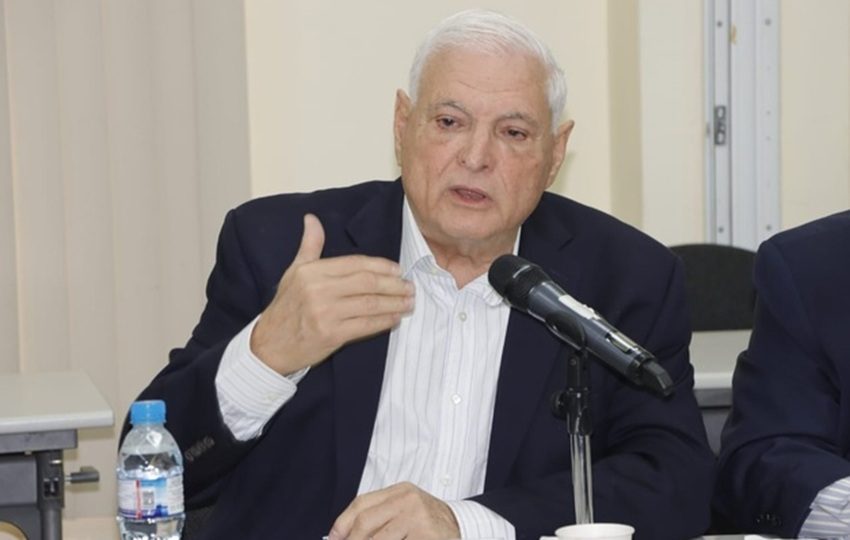
Lawyer Carlos Carrillo argued that there is no evidence directly linking Martinelli to the operations investigated in the Odebrecht case. Ricardo Martinelli says “I am innocent”.