The Year of the Woman Farmer, From a Small Farm in Panama
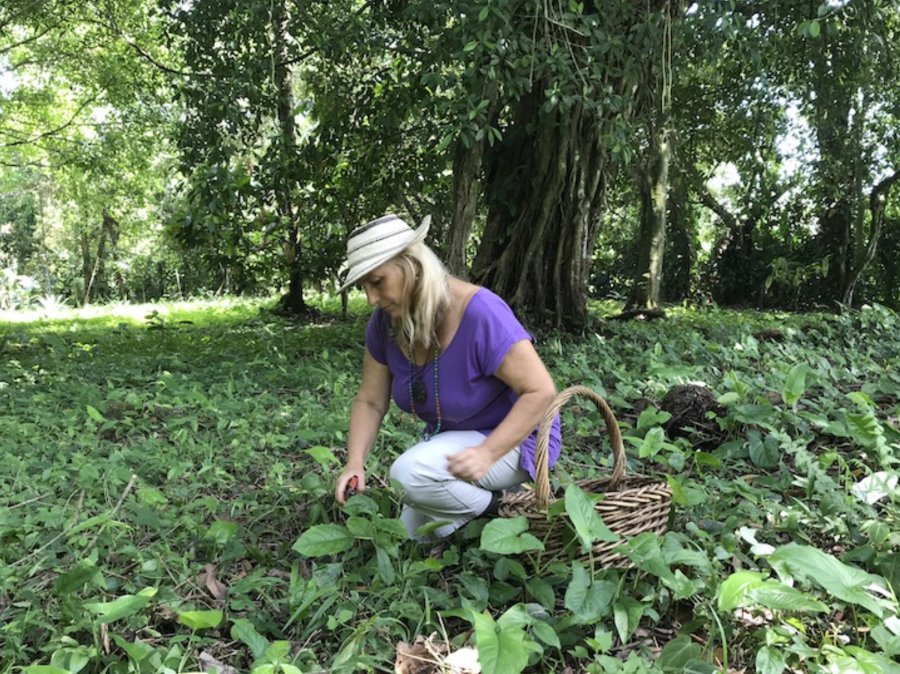
By Lyn Bishop
Founder, Quetzal Cacao
Certified Organic Farmer, Panama
When Global Recognition Meets Daily Work
The United Nations has named 2026 the Year of the Woman Farmer worldwide. Women grow a significant share of the world’s food and make up a large portion of the agricultural workforce, especially in small-scale and family farming systems. Yet they still face unequal access to land, training, credit, and decision-making power, despite clear evidence that supporting women farmers improves food security and long-term land health.¹ ²
Between global declarations and daily realities, there is often a gap that is harder to name than to feel. From where I work, on a small certified organic farm in Panama, these ideas are not abstract. Farming at this scale is shaped by soil, weather, labor, and time. Each day brings practical decisions about what to plant, what to wait on, and what not to push.
Here, the question is rarely how to grow more. It is how to grow well, without exhausting the land or the people tending it. Small farms survive by paying attention and working within limits. Care and restraint are not values layered onto the work. They are the work.
Where Farming and Nourishment Meet
Across food systems globally, women have often been the keepers of more than crops. They carry knowledge of how food moves from harvest to table, how it is preserved, cooked, and shared. This work is rarely counted, yet it shapes health outcomes as surely as what is grown in the field.
On a small farm, the boundary between farming and cooking doesn’t really exist. What is planted is chosen with preparation in mind. Turmeric and ginger become easy-to-use paste or wellness tinctures. Cacao is harvested with fermentation and drying already in view. Fruit is gathered with an eye toward what can be preserved when abundance arrives all at once.
This kind of decision-making isn’t about efficiency. It asks how food will support bodies over time, not just how it will move through a market. Practical, embodied, and often invisible, this is the kind of work that keeps households fed and landscapes cared for.
A Recipe Rooted in Place
In 2022, one of my recipes was selected for inclusion in The Cookbook in Support of the United Nations: For People and Planet, a collection of dishes contributed by cooks and food producers around the world.
The recipe I shared is called Stinging Nettle Tart with Breadnut Olive Oil Crust. It reflects how I cook at home, using what grows around us and what the land offers freely when you know how to look. The stinging nettles are wild foraged on the farm.
Breadnut (Brosimum alicastrum) is a tropical tree seed used as a staple food in parts of Central America. Often described as a tropical chestnut, it is valued for its nutritional density and reliability. It has long been considered a survival food because it is dependable.
Like much of the work women have done around food for generations, the recipe is simple and practical. It is not designed to impress. It is designed to feed.
What mattered most to me was not seeing my name in print, but seeing this kind of everyday food knowledge acknowledged as valuable. Recipes like this are rarely celebrated, yet they are part of how households stay well, how harvests are used fully, and how care is woven into daily life.
That recognition felt aligned with what the Year of the Woman Farmer is meant to point toward. Not recognition for its own sake, but attention to the systems and practices that have long carried people and land forward, often without being named.
Returning to the Hearth
On a small farm, all of this work eventually comes together in one place. Not in the field or the fermenting room, but where food is prepared, shared, and eaten. What was planted with care becomes nourishment. What was preserved becomes sustenance. What was gathered becomes part of daily life.
This is what I think of as the hearth. Not a concept or a metaphor, but a practical center. A place where farming, cooking, preservation, and care meet. Where limits are respected. Where food is valued for how it supports bodies and relationships over time.
If you would like to step a little closer, I’ve shared the recipe Stinging Nettle Tart with Breadnut Olive Oil Crust from The Cookbook in Support of the United Nations: For People and Planet.
You can find the recipe here:
lynbishop.com/nettletart/
It’s offered as a way to cook along, to taste what grows here, and to begin the year grounded in nourishment rather than noise.
Some things don’t need to be rushed. They just need to be shared.
Lyn
¹ FAO (Food and Agriculture Organization of the United Nations).
Women make up approximately 43 percent of the global agricultural labor force, with significantly higher participation in small-scale and family farming systems in many regions.
Source: FAO, The State of Food and Agriculture: Women in Agriculture.
² FAO & UN Women.
Research consistently shows that if women farmers had the same access to productive resources as men, farm yields could increase by 20–30 percent, improving food security and nutrition outcomes at household and community levels.
Source: FAO, Women in Agriculture: Closing the Gender Gap for Development.