Panama Canal Visit: China Hits Back at US Lawmakers
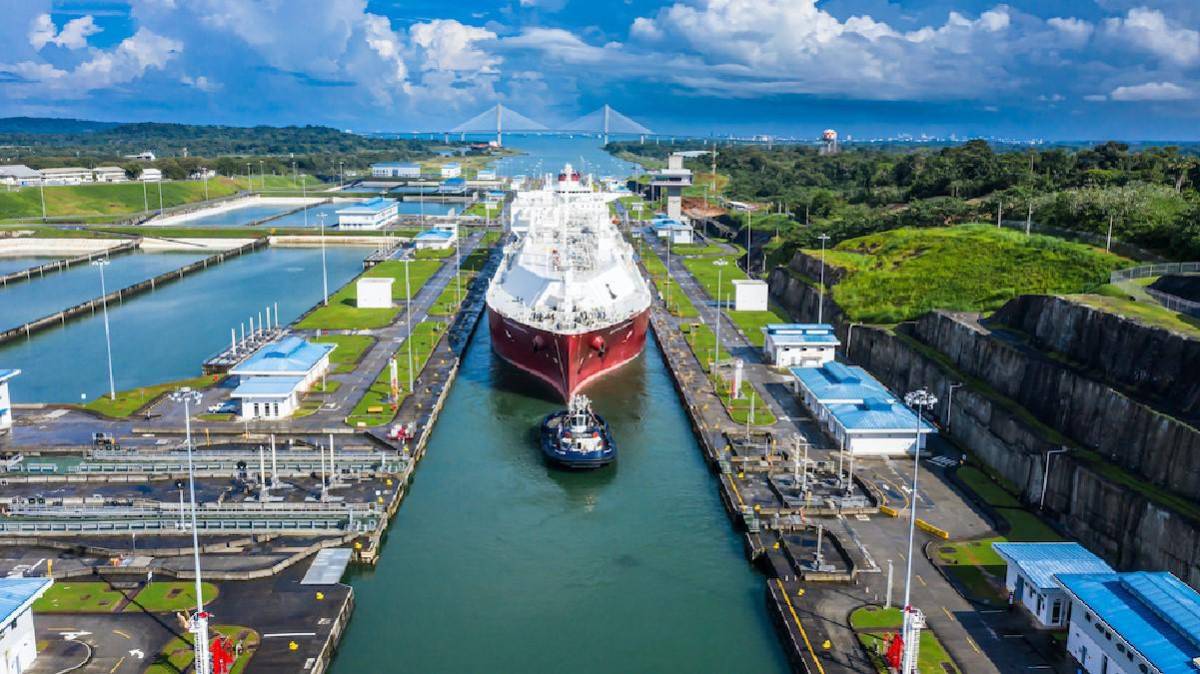
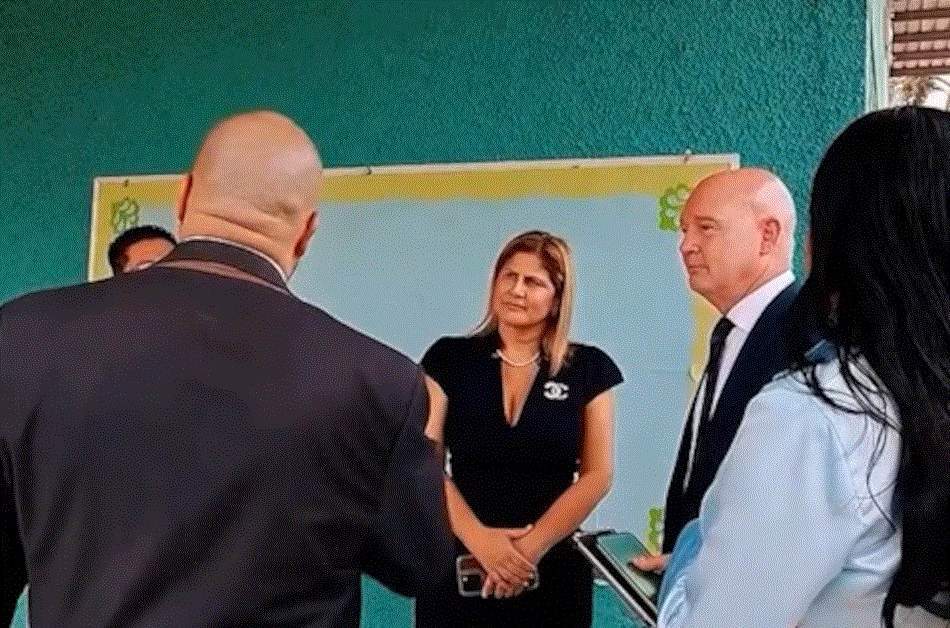
China’s Foreign Ministry on Monday issued a sharp rebuke over a U.S. congressional delegation to the Panama Canal last week as part of a three-nation tour aimed at countering Beijing’s influence in Central America.
Why It Matters
Shortly after taking office last year, U.S. President Donald Trump vowed to “take back” the Panama Canal, claiming, without providing evidence that it had fallen under Chinese control. The Chinese and Panamanian governments have denied this claim. Hong Kong-based conglomerate CK Hutchison later agreed to sell its majority shares in two port terminals on either side of the 50-mile waterway as part of a broader deal led by BlackRock following Trump administration efforts to force a sale. Newsroom Panama reached out to the U.S. State Department and CK Hutchison via email for comment.
What To Know
“China firmly opposes certain U.S. politicians pointing their fingers at the normal exchanges between Central American countries and China,” Foreign Ministry spokesperson Guo Jiakun told reporters Monday when asked about the delegation’s visits to Panama, Guatemala and El Salvador. He dismissed the lawmakers’ remarks about China’s activities as “disinformation” and “nothing but a mirror image of their own ideological bias and Cold War mentality.” Representative John Moolenaar (R-Mich.), chair of the U.S. House Select Committee on China, led the delegation of 12 House members and Senator Mike Lee, a Utah Republican, to meet with regional leaders.
“We cannot allow China’s influence to grow in the Western Hemisphere, and we must ensure it does not gain control over critical infrastructure,” Moolenaar was quoted in the committee statement. “The Panama Canal is an engineering marvel and a crucial part of the global economy, and our military must always have the right to transit the locks whenever it needs to.” Moolenaar took aim at the many Chinese-funded projects in the region, including El Salvador’s national soccer stadium, calling them part of an “extortive Belt and Road Initiative” that he said often leaves countries heavily indebted.
Lawmakers also met with Taiwan’s ambassador to Guatemala, Vivian Chiang. Guatemala is one of only a dozen countries that maintain diplomatic relations with Taiwan. China claims the self-ruled island as its territory and routinely protests official contacts with Taiwanese authorities. The congressional visit comes amid a growing U.S. foreign policy focus on the Western Hemisphere and just days before the Pentagon released its 2026 National Defense Strategy. Control of strategic waters, including the Panama Canal, was a major focus of the document.
What People Are Saying
The White House said in its latest National Security Strategy, released in December 2025: “Non-hemispheric competitors have made major inroads into our Hemisphere, both to disadvantage us economically in the present, and in ways that may harm us strategically in the future. “The terms of our alliances, and the terms upon which we provide any kind of aid, must be contingent on winding down adversarial outside influence—from control of military installations, ports, and key infrastructure to the purchase of strategic assets broadly defined.”
What Happens Next
The fate of CK Hutchison’s ports deal remains uncertain. Citing people familiar with the matter, Bloomberg reported Friday that the company is considering splitting the agreement into separate parcels, with larger stakes in certain ports in countries close to Beijing to be potentially sold to China’s state-owned COSCO Shipping. CK Hutchison renewed its concessions for the two Panama Canal ports in 2021 for another 25 years, but Panama’s Supreme Court is reviewing a legal challenge that could determine whether the contracts complied with constitutional requirements.