The New U.S. Pentagon Strategy is Moving Military to Panama and Greenland: Forget about China
The Pentagon’s new defense strategy shifts focus to homeland security and the Western Hemisphere, signaling reduced US military support for allies.
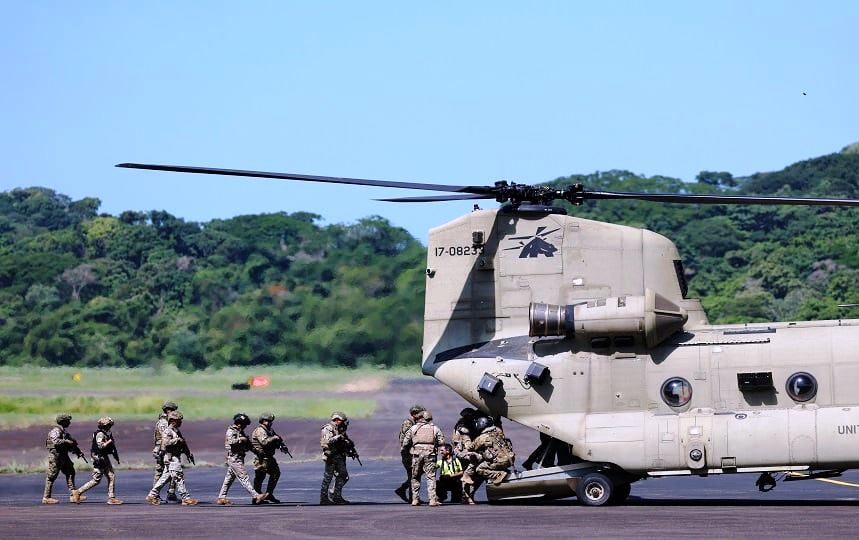
The United States military will refocus its priorities on defending the homeland and provide “more limited” support to allies in Europe and other regions, according to the Pentagon’s new National Defense Strategy. The strategy, published every four years, says Washington will now prioritize the security of the US homeland and the Western Hemisphere. This marks a major shift from earlier versions of the document that identified China as the primary threat. Instead, the report says China will be dealt with through “strength, not confrontation”. In 2018, the Pentagon had warned that so-called revisionist powers such as China and Russia posed a major challenge to US security. The new 34-page strategy reflects a change in tone and direction, aligning closely with President Donald Trump’s National Security Strategy released last year.
Pentagon to Reduce Overseas Commitments Focus on Regional Control
The new 34-page report states that the US plans to assert greater dominance in the Western Hemisphere, strengthen its military presence in the Indo-Pacific, and reassess its partnerships in Europe. Trump’s strategy had also argued that Europe was facing a civilizational decline and dismissed Russia as a direct threat to the United States. The Russian government later said the document was “largely consistent” with its own vision It also calls on American allies around the world to step up, claiming that its partners have been “content” to let Washington subsidize their defense. At the same time, it stresses that the US is not turning inward, but is instead recalibrating alliances to push partners to do more.

It states that the US has neglected the “concrete interests” of Americans and that it does not want to combine American interests “with those of the rest of the world – that a threat to a person halfway around the world is same as to an American.” Talking about Europe, the report says that the region “will take the lead against threats that are less severe for us but more so for them.” In 2022, Russia started its full-scale invasion of Ukraine. Now, the US says it is a “persistent but manageable threat to NATO’s eastern members. Taiwan, the self-governing island claimed by China, is not even mentioned in the report, but the document does mention that the US will “prevent anyone, including China, from being able to dominate us or our allies.”

For the Korean peninsula, the US says it will have a “more limited” role in deterring North Korea as South Korea is now capable enough to take “primary responsibility” for the task. The newly released strategy also features a section about the US no longer giving up key areas in the Western Hemisphere, and how its military will offer Trump “credible options to guarantee US military and commercial access to key terrain from the Arctic to South America, especially Greenland, the Gulf of America, and the Panama Canal.” The new report is likely to upset the United States’ existing allies, particularly the European Union, which revolted against the US takeover of Greenland and Trump’s claims that NATO troops weren’t there on the frontline in Afghanistan. In line with Trump’s national strategy released last month, the National Defense Security’s report puts Latin America at the top of the US agenda. The Pentagon claims it will “restore American military dominance” and “use it to protect our Homeland and our access to key terrain throughout the region.”