Tragedy in Spain: At Least 39 Dead – High Speed 200 KMPH Train Collision
The collision between two high-speed trains on Sunday night in southern Spain left at least 39 dead, a figure that “is not final,” authorities warned on Monday, describing the accident as “tremendously strange.” The disaster also left some 123 injured, five of them very seriously and 24 seriously. Broken Rail Track Identified as Possible Cause of Collision.

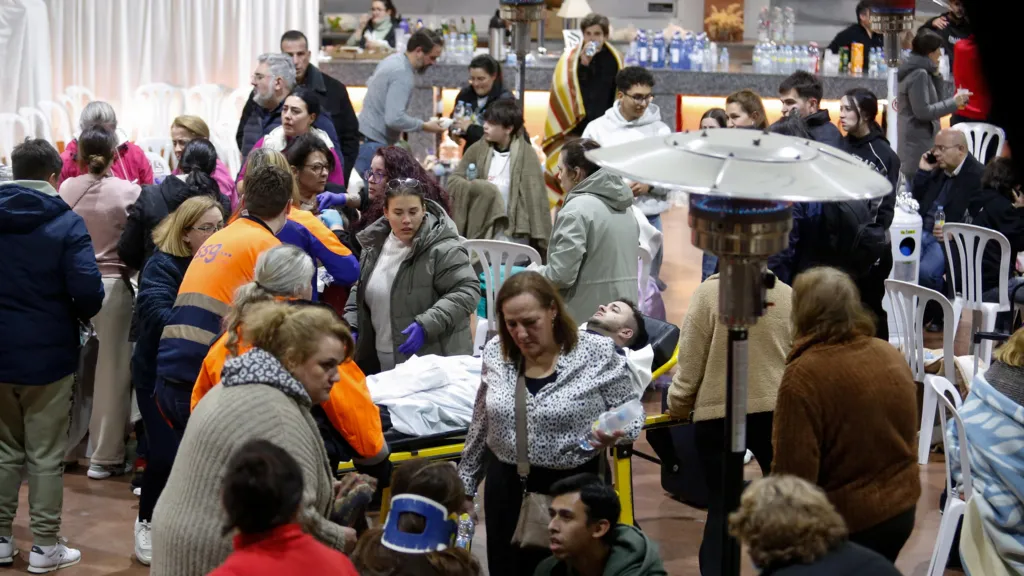
The death toll from the tragedy in the Andalusia region rose to 39 early Monday morning, according to a spokeswoman for the Interior Ministry. The previous death toll was 21. The figure “is not definitive,” warned Transport Minister Óscar Puente, who is heading to the accident site. The disaster also left some 123 injured five of them critically and 24 seriously, according to the latest Interior Ministry figures. All the injured have been evacuated from the area, Minister Puente confirmed last night.
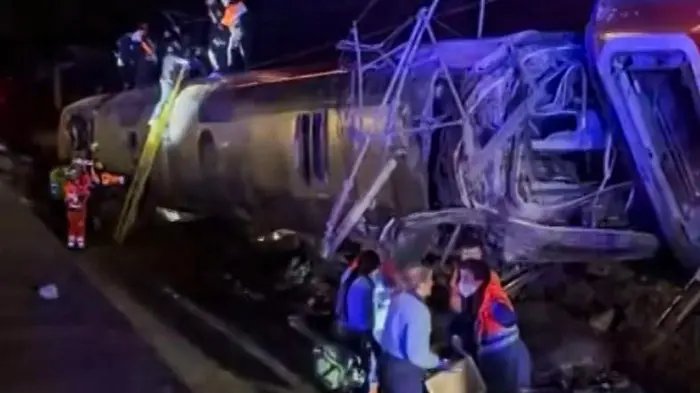
The Military Emergency Unit (UME) was deployed to support the rescue teams, and a field hospital was set up in the area. The accident site is difficult to access, as explained to public television by Íñigo Vila, director of emergencies for the Spanish Red Cross. “Access is difficult because it can only be done via a service road, a dirt road through which we were able to enter and where all the emergency services were working,” he explained. “With the first light of day, we will have a better view of exactly what happened and the magnitude of the accident,” he said.
What Happened?
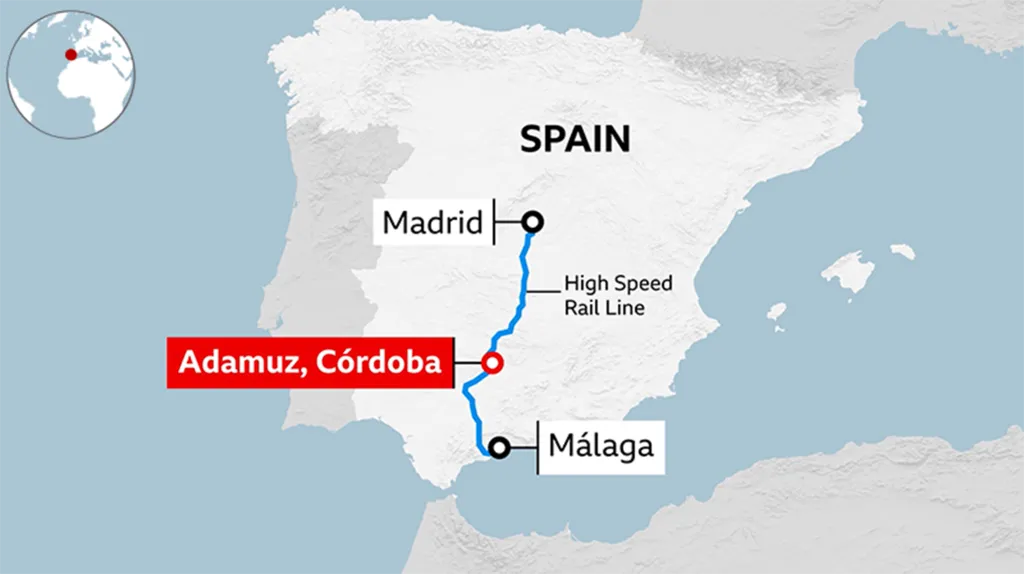
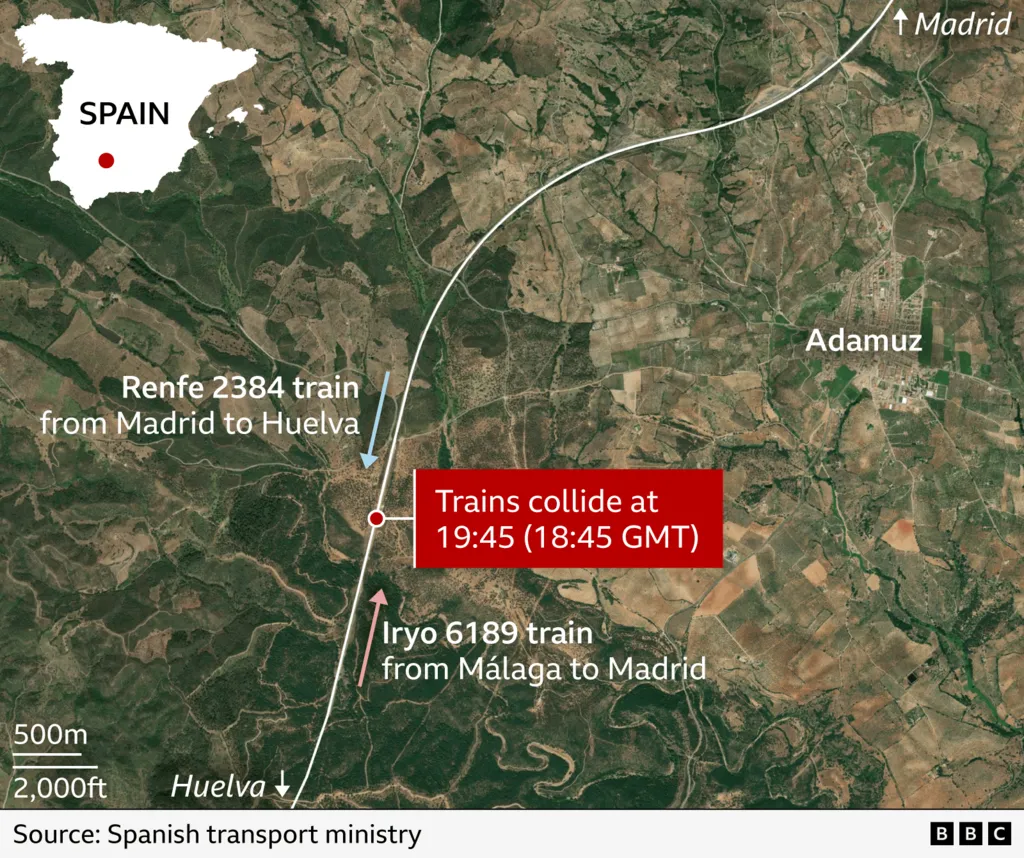
The collision occurred at 7:45 p.m. local time (6:45 p.m. GMT) near Adamuz, almost 200 km north of Málaga. A train operated by the private company Iryo derailed while traveling from Málaga to Madrid and collided with a train operated by the state-owned company Renfe, which was traveling from Madrid to Huelva. The initial findings of the investigation suggest that the last cars of the Iryo train derailed, and then the other train, which was coming in the opposite direction, collided with them. “The front of the train traveling from Madrid to Huelva collided, this is what we know at the moment, with one or more of the cars that had crossed the road,” explained Óscar Puente.
The impact was so violent that the first two carriages of the Madrid-Huelva train were thrown off their tracks, according to the minister. Images obtained by AFP showed two carriages of the same train, with red and navy blue stripes, completely off the tracks and tilted, with people working on the dirt ground next to the track. Another photo sent by Iryo shows a train completely overturned on the track. “It looks like a horror movie,” a passenger, Lucas Meriako, who was on board the Iryo train, told the La Sexta channel. “There was a very strong impact from behind and the feeling that the whole train was going to fall over. There were many injuries from the broken glass,” he added.
Causes Still Unknown
The Minister of Transport described the accident as “extremely strange”. Puente explained that the train was “practically new. I don’t know if it’s even four years old yet, and the track is also completely renovated.” He stated that some 700 million euros (about 813 million dollars) were invested in the track, and in May, “the work of replacing switches and turnouts” was completed. “All railway experts are extremely surprised by the accident,” he added. The Iryo company said the train was manufactured in 2022 and that its “last inspection was carried out on January 15th.” “Human error is practically ruled out,” said Renfe president Álvaro Fernández Heredia on public radio, describing the accident as occurring under “strange circumstances.” A commission investigating the accidents is on site gathering evidence, he added.
Spain Shocked
Spanish Prime Minister Pedro Sánchez cancelled his schedule for Monday to go to the site of the accident, his team announced. The Spanish Royal Household, for its part, indicated that it was following the development of the “serious accident” between two trains “with great concern”. Given the situation, high-speed rail traffic between Madrid and the Andalusian cities of Cordoba, Seville, Malaga and Huelva will be suspended “at least throughout Monday, January 19,” as announced on X by the network manager Adif. European leaders, such as French President Emmanuel Macron and German Chancellor Friedrich Merz, expressed their condolences for what happened. In July 2013, Spain already suffered a serious railway tragedy with the derailment of a train shortly before reaching the Galician city of Santiago de Compostela (northwest), which left 80 dead.