Maduro’s Abduction from Venezuela and the Perils of Power Politics – Machismo Explained
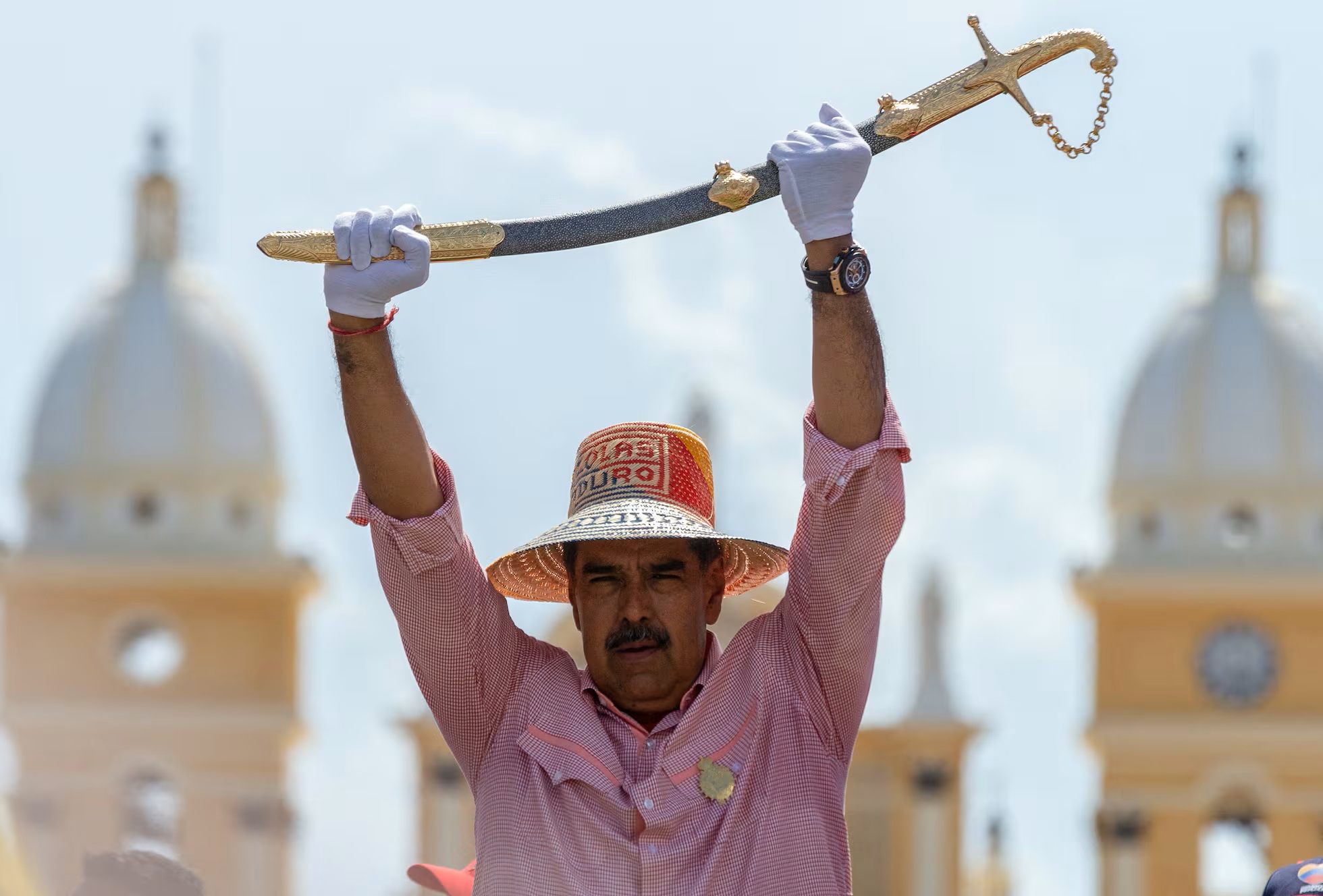
I am no supporter of President Nicolás Maduro. His authoritarian rule, the systematic repression of political opponents, and the catastrophic mismanagement of Venezuela’s economy have inflicted immense suffering on the Venezuelan people. These facts are well documented and morally indefensible. Yet the forcible abduction of a sitting head of state, however reprehensible that leader may be, is an extreme and dangerous act. Such actions do not resolve conflicts or advance justice. They erode international norms, inflame tensions, and render an already unstable world significantly more perilous.
All state leaders, however powerful, must exercise the utmost restraint when contemplating the use of force against foreign leaders. President Donald Trump has repeatedly behaved as though power itself confers immunity, as though strength authorizes action without restraint or consequence. At such moments, the international community must reaffirm clear boundaries and restate a fundamental principle of international order: might does not make right. The United States has set a precedent of this kind before.
In December 1989, under Operation Just Cause, the United States launched a large-scale military invasion of Panama, deploying approximately 24,000 troops in addition to the 12,000 already stationed there. The declared target was General Manuel Noriega, Panama’s de facto ruler, who had been indicted in US federal courts on charges of drug trafficking and money laundering. Washington justified the invasion on several grounds: the protection of American citizens in Panama, the killing of a US serviceman by Panamanian forces, and the need to combat narcotics trafficking.
Looming in the background was a strategic concern of immense importance—the security of the Panama Canal and the Torrijos–Carter Treaties of 1979. Noriega, once a useful if unsavory asset, had become a liability. Following the collapse of his regime, Noriega sought refuge in the Vatican embassy in Panama City. U.S. forces surrounded the compound, and on January 3, 1990, he surrendered. He was flown to Miami, tried in federal court, convicted on drug charges, and imprisoned for nearly two decades. Later extradited to France and then to Panama, he faced additional sentences until his death in 2017 at the age of 83.
In both cases — Noriega and Maduro — Washington advanced a similar line of justification: the leader in question lacked democratic legitimacy and could therefore be treated as a criminal rather than a political actor. This strategy of criminalizing rival leaders to justify extraordinary measures blurs the boundary between law enforcement and warfare. In Panama, the United States could at least point to specific treaty obligations and an acute security crisis involving direct harm to American personnel.
In Venezuela, no comparable treaty-based legal justification exists, nor is there an armed conflict involving U.S. forces that could plausibly ground a claim of self-defense. Both cases raise serious questions in international law, but the seizure of Maduro is far more troubling. It constitutes a clear violation of state sovereignty and of the prohibition on the use of force enshrined in the United Nations Charter. Moreover, unlike Panama, Venezuela is a large, strategically significant country with close ties to Russia, China, and Iran.
Any attempt at regime “decapitation” in such a context carries vastly higher risks of regional destabilization and global escalation. Panama’s small size, limited military capacity, and marginal international standing, combined with the unique strategic value of the Panama Canal, made post-Noriega stabilization feasible from Washington’s perspective. Venezuela presents an altogether different case. Normalizing the use of abduction or extrajudicial force to resolve international disputes in America’s so-called “backyard” would severely undermine the United States’ moral authority to criticize similar actions by other powers.
Russia could invoke analogous logic in Ukraine or Georgia; China could do the same in Taiwan or the South China Sea. The result would not be a rules-based international order, but a world governed by spheres of influence and coercion. Authoritarian regimes cannot be defeated by abandoning the very principles that distinguish democracy from tyranny. When the rule of law is so flagrantly violated, democratic values are hollowed out, and brutality masquerades as justice.
The appropriate response to regimes such as Maduro’s is not abduction or extrajudicial force, but sustained diplomacy, coordinated multilateral pressure, sanctions firmly grounded in international law, and resolute support for democratic movements within society. If the international community fails to raise a clear and convincing voice now, it risks ushering in an era in which brute force prevails over principle and coercion becomes the normalized language of global politics. In such a world, no state can enjoy genuine security, for the erosion of law in one place ultimately threatens stability everywhere.
Raphael Cohen-Almagor who wrote this story is a Professor of Political Science. We welcome anyone with a good story to send it to us for publication.
Chavismo
Chavismo is a left-wing populist political ideology in Venezuela, named after its founder Hugo Chávez, blending socialism, nationalism (Bolivarianism), and anti-imperialism, characterized by social welfare programs, nationalized industries (especially oil), participatory democracy, and strong anti-US rhetoric, continuing under successor Nicolás Maduro, though it faces significant political and economic challenges.
Core Tenets & Influences
- Hugo Chávez’s Vision: Based on Chávez’s policies from 1999-2013, it aimed to reduce poverty and inequality.
- Bolivarianism: Inspired by 19th-century liberator Simón Bolívar, emphasizing Latin American independence and unity
- Socialism of the 21st Century: A blend of Marxism, socialist ideals, and Latin American revolutionary thought.
- Anti-Imperialism: Strong opposition to US foreign policy and neoliberal capitalism, aligning with Cuba, Russia, and China.
Key Policies & Features
- Social Programs: Provided healthcare, education, and food security through community councils (Círculos Bolivarianos).
- Economic Policies: Nationalization of key industries, anti-neoliberal stance, and state control over resources like oil.
- Political Structure: Established the United Socialist Party of Venezuela (PSUV) and promoted participatory democracy through communal councils.
- Regional Integration: Formed bodies like the Bolivarian Alliance for the Americas (ALBA).
Supporters & Continuation
- Chavistas: Supporters of Chávez and his movement.
- Nicolás Maduro: Chávez’s successor who continues to lead the movement and state.
- Allies: Aligned with other left-leaning governments in Latin America and anti-Western powers globally.
Criticism & Challenges
- Often described as authoritarian, populist, or hybrid.
- Faced by deep economic crisis, political polarization, and international pressure.