Facts That You Might Not Know About January 9 of 1964 in Panama
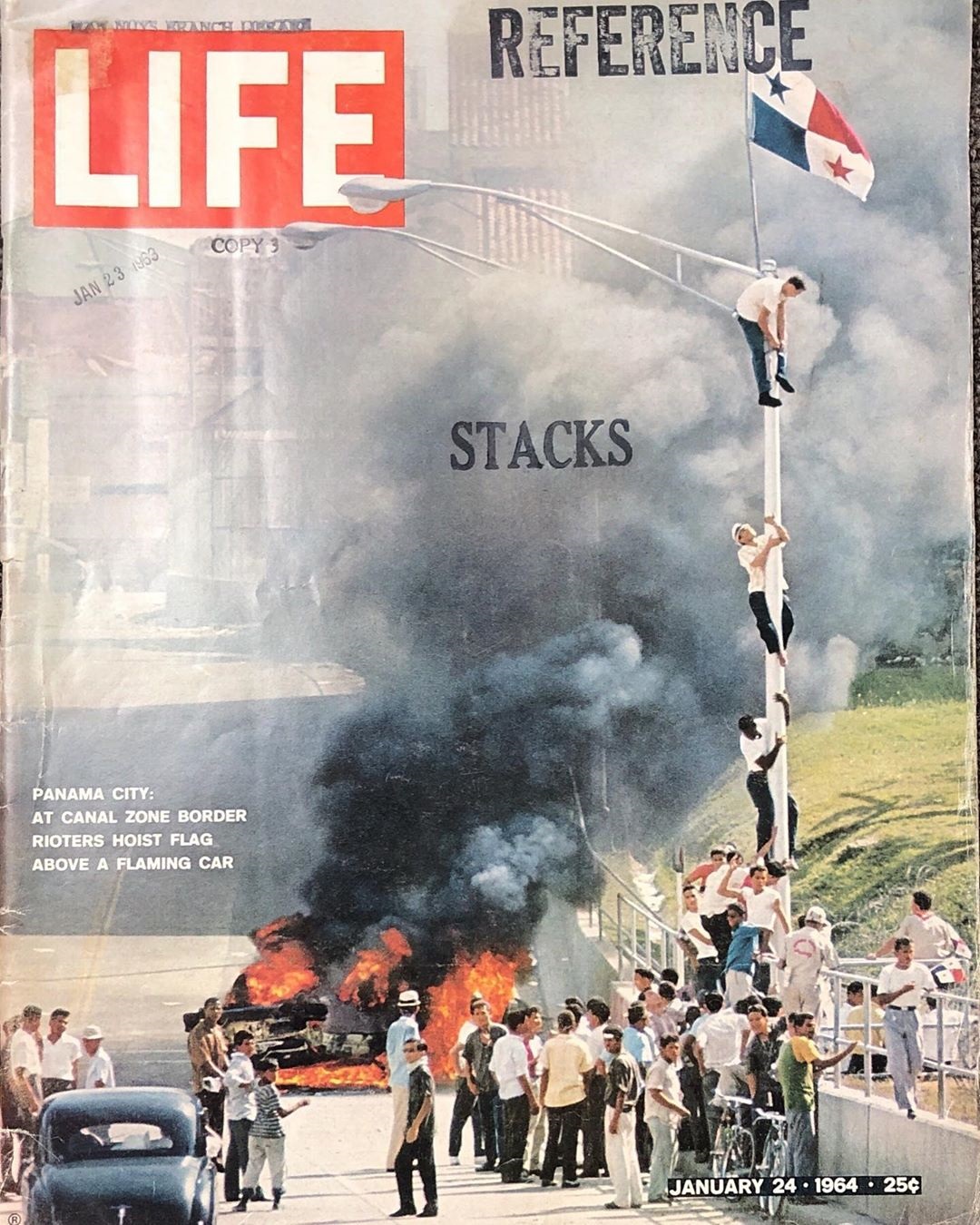
The Flag That Shouldn’t Be There
The American flag was flown daily at Balboa High School. This continued until the Chiari-Kennedy agreement between Panama and the United States established the requirement to fly both flags at 15 specific locations (later 17), but excluded schools. On January 2, the students at Balboa High School returned from vacation, but their flag was missing. And that’s where it all began. They organized and protested at their own school. They raised the flag themselves and stood guard at the flagpole, making sure no one took it down.
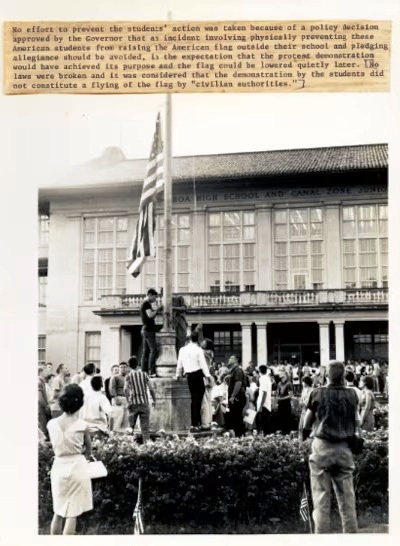
Local authorities and school administrators asked them to lower it, but they ignored them. Some parents even supported the students. One mother from the Canal Zone warned them: “What’s wrong with you adults who think you know everything? You’re creating ill will between Panama and the United States instead of courtesy and affection.” Even so, the news was amplified by radio and newspapers among the Panamanian population.
Why the Teachers?
The National Institute was and still is one of the most prestigious secondary schools in the country, with high-level teachers, where sovereignty and critical thinking were discussed in class. On January 8, three high school students went to the area to find out why the American flag was still flying. Authorities confirmed that it was illegal and that the only reason it was still there was the protest. They then went to speak with the students who were guarding the flagpole.
The girlfriend of one of the teachers attended Balboa High School, which helped with understanding. They explained that they didn’t care if both flags were flying; they just wanted theirs at the front of their school. That message was relayed to their classmates who were organizing the march. In January it was still school hours, but, after what happened, that fact became one of the reasons for the school schedule to change.
Who Were the Martyrs?
There are names on the list of martyrs that pain us deeply. Ascanio Arosemena who was shot while helping another student. Rosa Landecho, 13 years old, struck by a stray bullet fired by the U.S. Army in response to a Panamanian sniper shooting from the same building. Maritza Alabarca, a baby from Colón just a few months old, who died from asphyxiation caused by tear gas, rescued by her brother as they ran through the streets of Colón in search of a hospital.
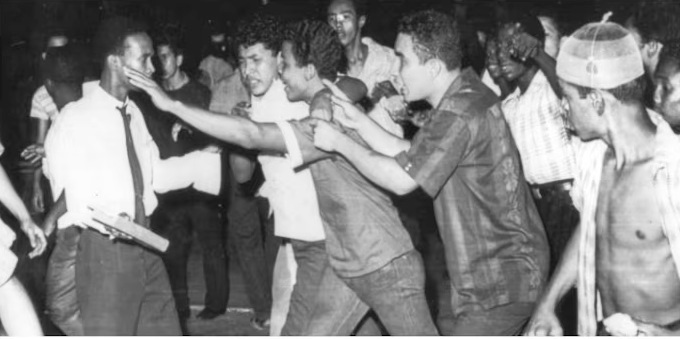
Photograph above of Ascanio (with his arm outstretched) just before the bullet that ended his life reached him. Taken from the book ‘January 9, 1964: What They Didn’t Tell Me’.
But there were more troubling cases. The archbishop at the time, Monsignor Marcos Gregorio McGrath, explained it this way: “The burial presented us with a great moral dilemma. Some of the dead were not patriots at all; they were thieves who died while robbing, like those who died in the Pan American building… I presided over the Mass in the Cathedral Church, and we had the problem that the coffins were brought into the Church without identification; we then had to accept the lesser evil and bury them all together as patriots and with honors, without being able to distinguish between them.” But this in no way diminishes the great heroism and bravery of the nearly 200 students, women and men, who risked everything marching to the area and who inspire us to this day.
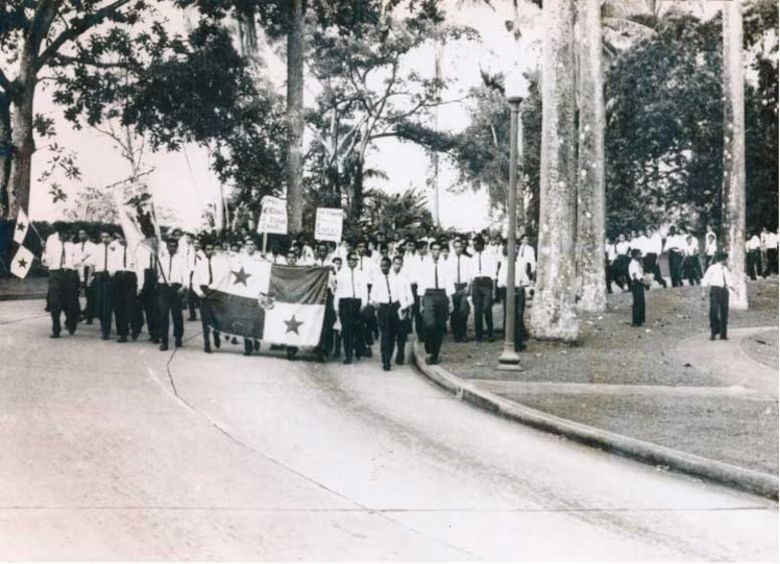
Panamanian students walking along Balboa towards Balboa High School. January 9, 1964
And What About Today’s Youth?
It’s often said that young people no longer value January 9th. The testimony of Rosemary García de Newball, part of the team that restored the flag in 2021, tells a different story: “While we were working, we heard a loud noise outside. We were worried about the reaction when we left the premises. When we went outside, we were surprised: the students of the National Institute had formed an honor guard while singing the school anthem. Many were crying. My team and I experienced firsthand the value of this flag and what it represented.”
|
This text is based on the book ‘January 9, 1964: What They Didn’t Tell Me’ by Wendy Tribaldos