Venezuelan Nicolás Maduro Spent his First Night Under Cold Lighting and Steel Doors. This is his New Home
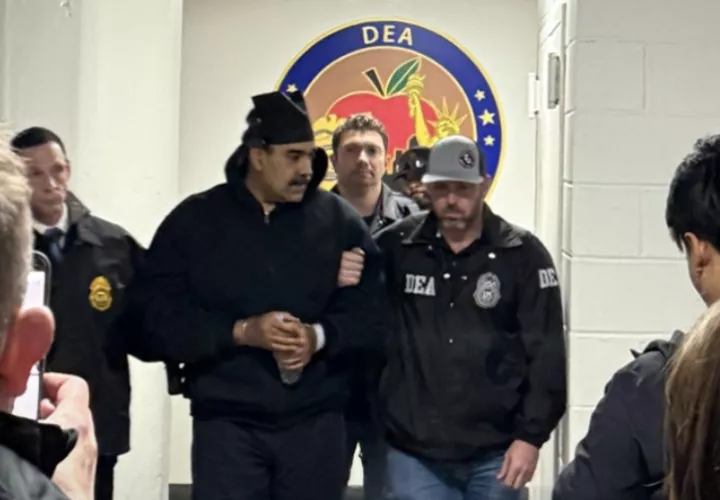
The image went viral without the need for fancy words or lengthy speeches. Nicolás Maduro, handcuffed, wearing sandals, escorted by US federal agents, walking down a DEA corridor in New York. This is how the man who ruled Venezuela for almost two decades spent his first night in detention, and who today faces charges of narco-terrorism, conspiracy to import cocaine and crimes with weapons of war before a federal court in Manhattan. It wasn’t just any transfer. It was a large-scale military extraction, with bombings in Caracas, nighttime operations, and a secret flight that ended in Brooklyn, at the Metropolitan Detention Center. There the former president spent the night, far from power, far from Miraflores Palace, far from the rhetoric.
Maduro’s New Home:
This is Maduro’s confinement in the Brooklyn federal prison. According to news reports, the Metropolitan Detention Center (MDC) is a federal jail located in the Brooklyn district of New York, known for housing high-profile inmates and for its strict isolation conditions. The space is cramped and cold. The cell measures barely two by three meters, with a steel bunk bed, a thin mattress, a small metal desk welded to the wall, and a built-in stainless steel toilet. There are no decorations, no privacy. The fluorescent light remains on for much of the day and night, which, according to former detainees, ends up disorienting the body and erasing the sense of time.
The routine begins early. At six in the morning, the first headcount is conducted, with sharp knocks on the door or visual checks to confirm that the inmate is still alive. The food arrives without words or human contact, through a slot in the steel door. It is a basic, repetitive, often cold meal, designed more for survival than for comfort. Access to hygiene is also limited. Showers are permitted only a few times a week, under strict supervision, especially in maximum security areas. The rest of the time, confinement is almost total. Isolation is a constant. Only one hour a day is allowed outside the cell, usually in a closed, cage-like space with little access to fresh air or sunlight. Communications are severely restricted and monitored.
In cases deemed to be matters of national security, such as this one, Special Administrative Measures (SAMs) can be applied, which virtually sever all ties with the outside world, except for contact with lawyers. Visits are not social or family-oriented. Only legal meetings are permitted, without physical contact, separated by glass or in supervised rooms. Although the isolation is extreme, silence is nonexistent. The MDC is described as a noisy and oppressive prison. Metal doors slamming shut, screams traveling through the ventilation ducts, and the constant echo of the concrete create an atmosphere of permanent psychological tension.
In the case of a political figure of this stature, the protocol is even stricter. Surveillance is constant, 24 hours a day, to prevent self-harm or any other incident. Thus, Maduro is never truly alone, but remains completely isolated, powerless, uncontrolled, and under constant observation. The man who ruled Venezuela for years now faces the weight of US federal imprisonment, far from the rhetoric, far from power, and under the harshest rules of the prison system.
Maduro’s Prison in the U.S. Alongside Drug Lords and Celebrities
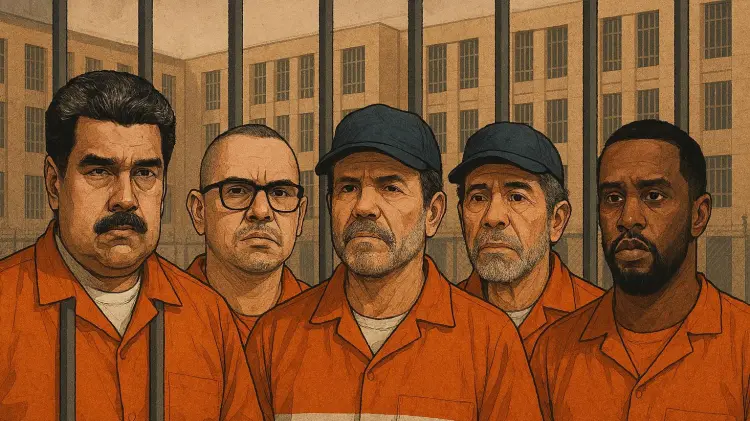
The biggest news story in the world right now is Nicolás Maduro and his new reality in New York, where he was taken after his spectacular capture in an unprecedented operation by the United States military. Now, questions are being raised about what his stay will be like at the Metropolitan Detention Center (MDC) in Brooklyn, a federal prison known for housing drug kingpins and media figures facing high-profile legal proceedings.
Among the inmates at the MDC are José Adolfo Macías Villamar, alias “Fito”, leader of the Ecuadorian organization Los Choneros ; Ismael “El Mayo” Zambada, historical leader of the Sinaloa Cartel ; Rafael Caro Quintero, founder of the Guadalajara Cartel ; and music producer Sean “Diddy” Combs , accused of federal crimes.
The truth is that Nicolás Maduro must appear this Monday, January 5, before the Southern District Court of New York, in Manhattan, under the supervision of federal judge Alvin K. Hellerstein. The Venezuelan dictator has been indicted since 2020 on charges of narcoterrorism, conspiracy to smuggle cocaine into the United States, and crimes related to the use of automatic weapons.
These charges were reaffirmed in a superseding indictment released now, following his capture, suggesting that U.S. authorities are prepared to come down hard on Maduro and seek an exemplary sentence.