Elite U.S. Navy SEALs and Panamanian Special Forces Carry Out Operation at U.S. Embassy in Panama
Key Points – A U.S.-Panama “crisis response exercise” at the U.S. Embassy in Panama City brought together Navy SEALs, Green Berets, embassy staff, and Panamanian special forces to rehearse securing a diplomatic facility, extracting personnel, and neutralizing threats under compressed timelines. The drill underscores Panama’s strategic importance as the steward of the Panama Canal and a key node in U.S. hemispheric planning. It also arrives amid renewed U.S. pressure over Chinese influence, canal access and fees, and talk of reintroducing U.S. military presence. Panama insists sovereignty and canal control remain non-negotiable.
U.S. SEALs Just Drilled an Embassy Crisis in Panama—Here’s Why It Matters
The United States and its ally, Panama, earlier this month worked together on what was described as a “crisis response exercise” at the U.S. embassy in Panama City. According to Army Recognition, the exercise on Dec. 5 involved U.S. Navy SEALs, Army Green Berets, U.S. Embassy staff, and Panama’s special forces (the Dirección Nacional de Fuerzas Especiales). “Officials familiar with the drill described it as a full-spectrum validation of how quickly partner units can synchronize communications, access sensitive areas, and stabilize a rapidly evolving threat within a diplomatic facility,” Army Recognition reported. The 56th Theater Multimedia Command released a video of the exercise, while the website of the U.S. Embassy posted photos to its X account.
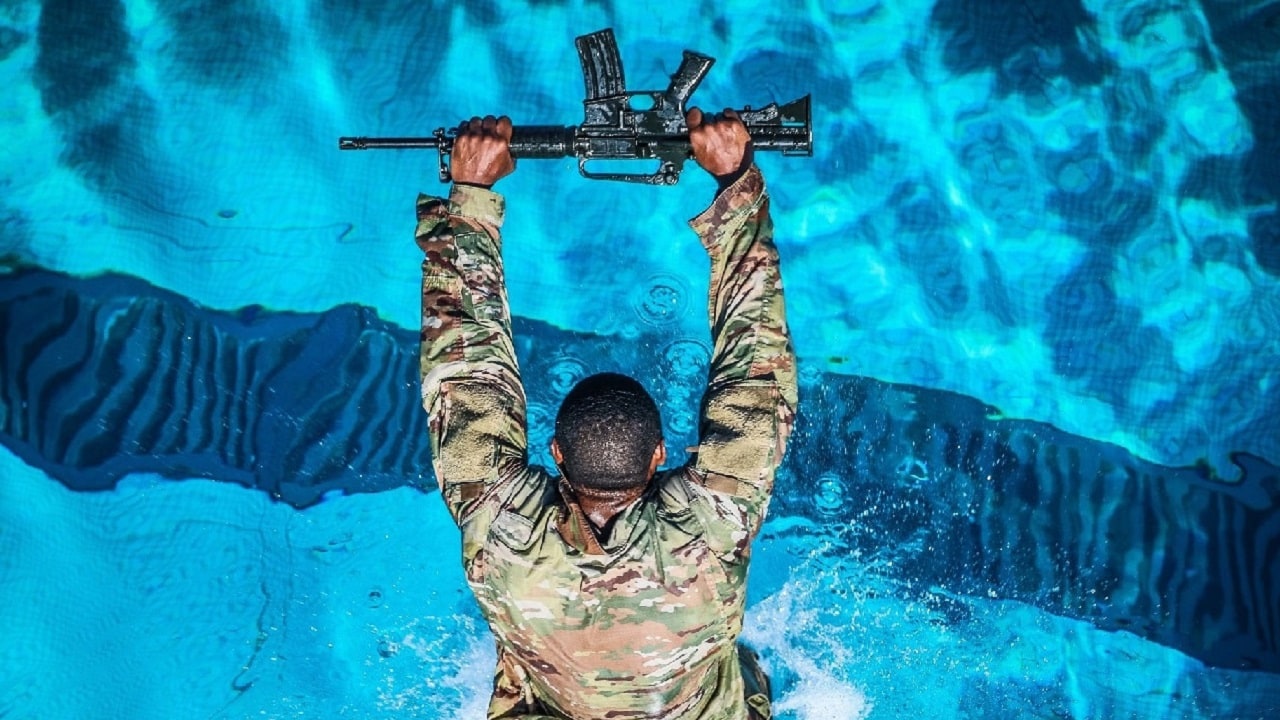
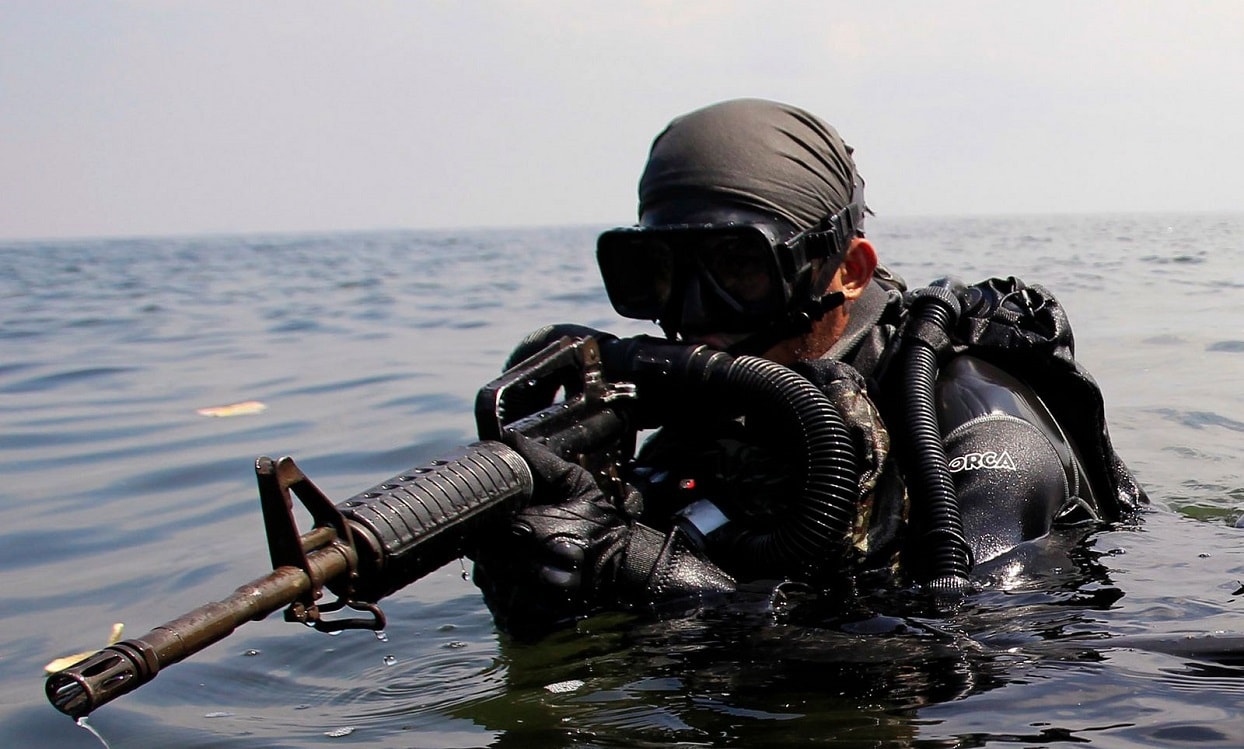
A Soldier completes a swim test, while practicing for an upcoming Jungle Operations Training Course.
Special Operations Command South posted a video to its X account and added that “this exercise validated crisis response actions, and improved bilateral coordination between U.S. and Panamanian special operations forces.” Army Recognition continued: “This embassy-based training was designed to test and refine response protocols in a simulated high-threat scenario, combining U.S. and Panamanian forces in a coordinated effort to secure diplomatic grounds, extract high-value personnel, and neutralize threats under compressed timelines. “Conducted within the actual U.S. diplomatic compound, the exercise offered a unique operational setting that enabled forces to practice under the jurisdictional, architectural, and logistical constraints that mirror real-world embassy crisis environments.”
Why the Navy SEALs?
“As the global security landscape shifts from prolonged counterinsurgency to strategic competition, Navy SEALs are placing greater emphasis on contingency response missions in politically complex, urban terrain. This includes embassy defense, noncombatant evacuation operations, and coordinated responses with partner forces under joint command structures,” Army Recognition reported. “Training in Panama delivers that mission realism in a forward-deployed setting that is operationally relevant and tactically irreplaceable.”
Why Panama is Important
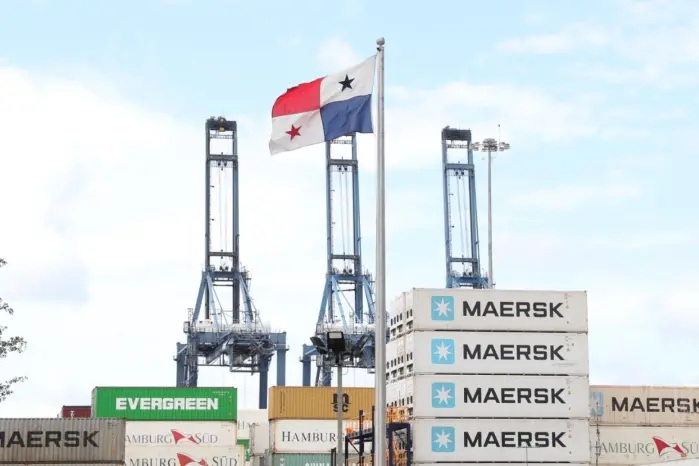
Panama’s geography makes it a key ally. “Panama’s role as host was not incidental. The country occupies a pivotal position on the global map, controlling access to the Panama Canal and serving as a strategic hinge between continents and oceans,” Army Recognition wrote. “Its security, particularly in urban centers like Panama City, remains critical to U.S. hemispheric defense posture. Any threat to U.S. diplomatic infrastructure or regional partners in Panama could trigger a rapid, coordinated military response. This exercise directly addressed that contingency.” Among those who have paid attention to Panama is U.S. President Donald Trump.
Retake the Canal?
In the opening weeks of his second presidency, around the same time he was speaking publicly about making Canada the 51st state and purchasing Greenland, Trump spoke several times about wanting the United States to retake the Panama Canal. “China is running the Panama Canal that was not given to China, that was given to Panama foolishly, but they violated the agreement, and we’re going to take it back, or something very powerful is going to happen,” Trump told reporters in early February, as reported by CNN. Soon after, Secretary of State Marco Rubio met with Panama’s President Raúl Mulino.

The Panamanian leader told Rubio that Panama’s sovereignty over the waterway was “not up for debate,” but Mulino assured the secretary that Panama would not renew its memorandum of understanding to join China’s Belt and Road Initiative. In March, Reuters reported that the Pentagon had asked for military options to ensure the U.S. maintained “full access” to the Panama Canal. “One U.S. official, who spoke on the condition of anonymity, said a document, described as an interim national security guidance by the new administration, called on the military to look at military options to safeguard access to the Panama Canal,” Reuters reported.
Trump later suggested that U.S. ships be given free passage through the canal, calling them “severely overcharged and not treated fairly in any way, shape or form.” In April, Secretary of Defense Pete Hegseth floated the idea of the U.S. bringing bases back to Panama, in order to “secure” the Panama Canal. The comments came during a visit to Panama, and Hegseth couched it as bringing the bases back “by invitation.” However, Panama’s government was cooler on the idea. “Panama made clear, through President Mulino, that we cannot accept military bases or defense sites,” Panama’s security minister, Frank Abrego, said during Hegseth’s April visit, per The Guardian.
Trump has not talked much about wanting to recapture the Panama Canal since the opening days of his presidency. However, Mulino in October said someone at the U.S. Embassy had been “threatening to cancel the visas of Panamanian officials” amid U.S. pressure for Panama to limit its ties to China. This, the Panamanian president said at the time, was “not coherent with the good relationship I aspire to maintain with the United States,” the Associated Press reported in October.
History of a Canal
The Panama Canal was completed in 1914 and was controlled by the United States for much of the 20th century. Control of the canal was given back to Panama in 1977, with the U.S. given the power to intervene militarily “if the waterway’s operations are disrupted by internal conflict or a foreign power,” per CNN. For many years after that, many politicians in the U.S., led by President Ronald Reagan, expressed their opposition to the Panama Canal Treaty—still, Reagan made no real attempt to undo the treaty during his presidency. In late 1989 and early 1990, under President George H.W. Bush, the U.S. launched Operation Just Cause, an invasion meant to depose the president of Panama, General Manuel Noriega. The strongman, who had past ties to U.S. intelligence, was wanted in the U.S. on drug trafficking charges, and ultimately surrendered to the U.S. in early 1990.