Panama’s Role in Tackling the Climate Crisis
In a world in which so much of what many of us once took for granted seems to be changing with every passing day, protecting what we have has never mattered more. You only have to turn on the 24/7 news channels to see that freak weather events, massive storms, and unseasonal weather are rapidly becoming the norm around the world.
While there are still those who argue about what precisely is causing climate change, and who is responsible for putting it right, the weather speaks for itself. Instability in the global climate leads to heavily localized overcorrections, causing unpredictable weather patterns that many around the world are being forced to come to terms with.
What is Panama doing to address climate change?
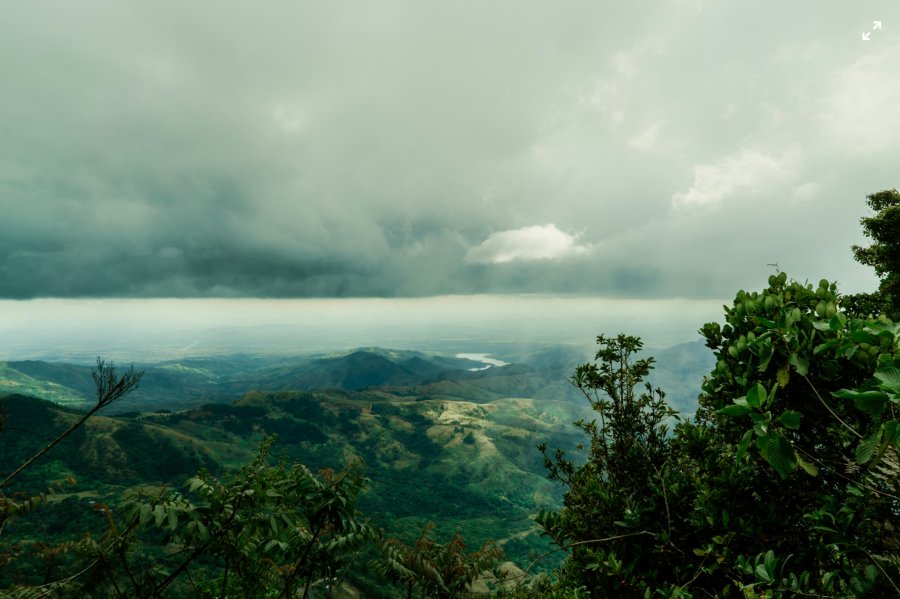
A small industrial base compared to much larger nations like America and China, a smaller population than many local countries, and a large rainforest make Panama a very rare case of a net-negative carbon economy. Because of how little we put out in the first place, and how effective the large areas of our rainforest are at capturing carbon, we actually have a cleansing effect on the atmosphere. That said, it’s by no means large enough by itself to counteract all of the man-made issues we are now facing as a species.
The Panamanian government knows this and has taken a proactive approach to combating climate change. Their “Nature Pledge” to restore wooded areas, push for global climate advocacy and global cooperation, as well as other cutting-edge eco initiatives based around the marine environment, are all making a difference.
Reforestation and environmental restoration
The Panamanian government has recently committed to restoring over 100,000 hectares of land to its natural state. This includes highly degraded mangroves that many environmentalists have been drawing attention to for some time. The plan is very ambitious, yet seen as achievable, with the stated completion date of 2035 providing a key point of focus.
There is also a nationwide initiative to reforest another one million hectares by looking at what can be done to protect and expand the existing rainforest. Because the authorities have been able to keep at least 30% of our land under protection, there is a sound foundation on which to build.
Expansion of marine conservation
Panama’s marine protected areas are going to be increased to more than 54% of its ocean territory to protect critical carbon sinks. At the same time, this initiative will enhance biodiversity, which will in turn support the wider environment. The idea is not just to capture carbon for the sake of it, but to restore much of the land and ocean to its natural state so that every aspect of the environment can return to a more natural balance.
The National Energy Plan
The plan states that up to 70% of the country’s energy has to come from renewable sources by 2050. To make this economically viable, the government is offering a series of progressive tax incentives for any company that chooses to start investing in clean energy projects. Examples that are looking to gain traction in the near future are wind power and tidal power, both of which many experts feel hold a great deal of promise.
The government is also working side by side with the World Bank in an effort to actively decarbonize much of the transport and energy sectors. By making these core industries self-sustaining and carbon neutral – rather than serving as net carbon contributors to a country that is net-negative when measured in its totality – the idea is that they can become more self-sustaining. After all, if they are greener and not exposed to the same level of energy price volatility, it’s better for everyone in the country.
Active waste reduction policies
Panama can be rightly proud to be the first country in Central America to ban the use of single-use plastic bags and disposable plastic straws. Doing so was essential to reducing the downward pressure being applied to the quality and health of marine habitats and the sharp rise in waterway pollution that has been seen over the last two decades.
Consumers and citizens embraced these initiatives with minimal fuss and virtually no resistance, showing that the people of Panama are ready to go further with more green initiatives. This is a good sign for a progressive administration that is looking to get full buy-in from the general population.
A greener financial system
The government is already pushing forward with a plan to integrate climate change criteria into the national public investment system. The idea is to guide and redirect decisions on public spending so that the money is spent in the most eco-conscious way possible. There is also a Nature Fund designed to explore the viability of market-based instruments, such as carbon bonds and debt-for-nature swaps that could one day finance a new wave of conservation projects.
A focus on green regulation
Whenever a government announces its intention to roll out a new set of green initiatives, there will inevitably be some degree of pushback from businesses and citizens. The same is true in Panama, but this isn’t to say that compromises can’t be found.
One of the most important things to realize about regulations of all sorts, not just those that relate to the environment, is that they’re actually put in place to help. Much like streaming services have to abide by content moderation rules, or a site can only advertise the best online casino bonuses by avoiding unlawful or misleading claims, environmental policy needs to be grounded in the law and acceptable to the majority of the public.
The fact that Panama has become a founding member of the Carbon Negative Alliance alongside Bhutan and Suriname is a good indicator that those in power are looking to build alliances. The manner in which they do so inside the country will be just as important in the years ahead.