Panama’s High Seas Treaty in Force in January to Monitor Areas Beyond National Jurisdiction
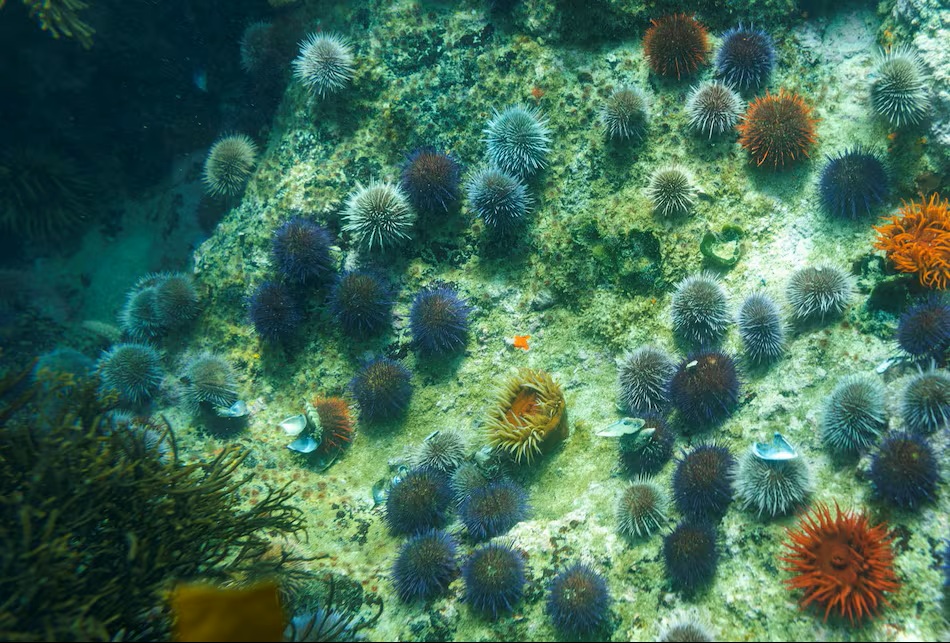
In this photo below, sea urchins and other marine plants live in a kelp forest. With the entry into force of the BBNJ, the creation of a broad global network of marine protected areas in the high seas is expected, which will promote the commitment to protect 30% of the ocean by 2030, better known as 30×30.
The High Seas Treaty will enter into force on January 17, after achieving ratification by 60 countries last September, a document of great importance for monitoring activities outside national jurisdictions, at a time when several actors are scrutinizing the possibility of starting mining on the seabed. Officially known as the Agreement on the Conservation and Sustainable Use of Marine Biodiversity beyond National Jurisdictions (BBNJ), it was approved on June 19, 2023, after a long process of negotiations between United Nations member countries dating back to 2015.
In that year, a Preparatory Committee recommended the development of a text that would serve as a legally binding international instrument under the United Nations Convention on the Law of the Sea (UNCLOS), for the conservation and sustainable use of marine biological diversity in areas beyond national jurisdictions of the ocean (200 miles). In 2017, the United Nations General Assembly convened an Intergovernmental Conference to analyze the document, followed by periods of annual meetings that were interrupted by the pandemic, between 2019 and 2022. Finally, in the fifth period of talks, the Conference approved the BBNJ Agreement by consensus in June 2023.
Importance of the Agreement
The agreement outlines the principles for the conservation and sustainable use of all marine biodiversity beyond national boundaries, that is, an area of approximately 190 million square kilometers (km2), half of the ocean surface on the planet which reaches more than 361 million square kilometers. The entry into force will mark “the beginning of implementation and a significant change in how the international community should protect and manage the global ocean,” says the High Seas Alliance.
The High Seas Treaty addresses four key issues: ensuring the conservation of marine genetic resources, including a “fair and equitable” distribution of benefits; the creation or expansion of marine protected areas (MPAs); environmental impact assessments; and capacity building and transfer of marine technology. This means that this tool will regulate human activities on the high seas, through the development of environmental standards contemplated in the United Nations Convention on the Law of the Sea, equivalent to a “constitution for the oceans”. In addition, the treaty provides for the creation of a Conference of the Parties (COP) and several dependent bodies, an information exchange mechanism and a secretariat, as well as a financing mechanism.
BBNJ Headquarters
Chile was the first country to ratify the BBNJ and has requested to host its Secretariat, which would be located in the port city of Valparaíso, as explained to EFE in Athens by the Director of Environment, Climate Change and Oceans of the Chilean Ministry of Foreign Affairs, Julio Cordano. Spain signed the BBNJ in September 2023, during its presidency of the Council of the European Union, and was the first European country to deposit the ratification agreement at the United Nations headquarters in New York on February 4, 2025, an initiative followed a day later by France.
In addition, among the first countries to ratify the Treaty were Bangladesh, Barbados, Belize, Cuba, Maldives, Mauritius, Micronesia, Monaco, Palau, Panama, Seychelles, Singapore, St. Lucia, East Timor and other Small Island Developing States (SIDS), whose economies, communities and climate resilience depend on marine ecosystems. For its part, the United States signed the BBNJ, but has not ratified the document at the United Nations headquarters.
First Steps
Once in force, the Preparatory Commission, which has met throughout this year and will hold another meeting in early 2026, will continue working to lay the foundations for the treaty institutions, including the Secretariat, the Scientific and Technical Body and the Committee on Access and Benefit-Sharing, among other subsidiary bodies. Furthermore, with the entry into force of the BBNJ, the creation of a broad global network of marine protected areas in the high seas is expected, which will promote the commitment to protect 30% of the ocean by 2030, better known as 30×30.