Venezuelan Opposition Leader María Corina Machado Says She Received Help From the U.S. to Escape
Her reappearance comes amid a crisis between Venezuela and the United States, which has been deploying a naval flotilla since August, officially to fight drug trafficking in the Caribbean and the Pacific, unofficially for regime change.
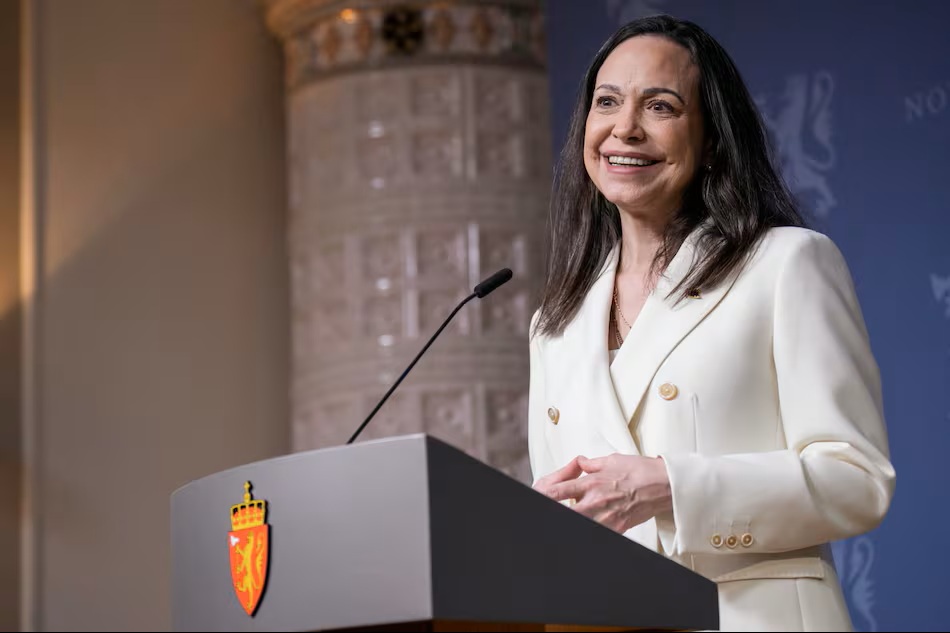
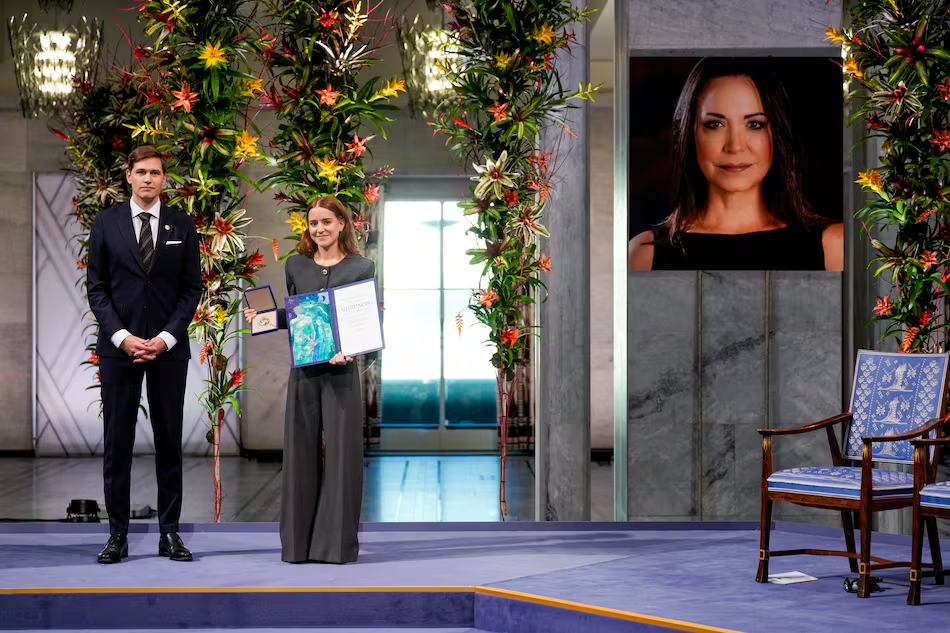
Venezuelan opposition leader Maria Corina Machado said Thursday in Oslo that she received help from the United States to leave Venezuela, where she has been living in hiding since August 2024, to travel to Oslo to receive the Nobel Peace Prize. “Yes, we received help from the United States government,” Machado said, responding to a question from the media at a press conference with the Nobel Institute in Oslo, where she arrived early Thursday morning after a secret trip. The 58-year-old opposition leader was unable to attend the Nobel Peace Prize ceremony on Wednesday, and it was her daughter pictured below, Ana Corina Sosa, who accepted the award on her behalf.
Also on Thursday, during a visit to the Norwegian Parliament, she thanked “all those men and women who risked their lives” so that she could travel to Oslo. Machado confirmed that she would do “everything possible” to return to Venezuela despite the risk of being arrested. “I came to receive the award on behalf of the Venezuelan people and I will take it to Venezuela at the appropriate time,” she said in English. “I will not say when or how it will happen, but I will do everything possible to be able to return and also to put an end to this tyranny very soon,” she continued, in her first public appearance since January, when she participated in a march rejecting President Nicolás Maduro ‘s swearing-in for a third term.
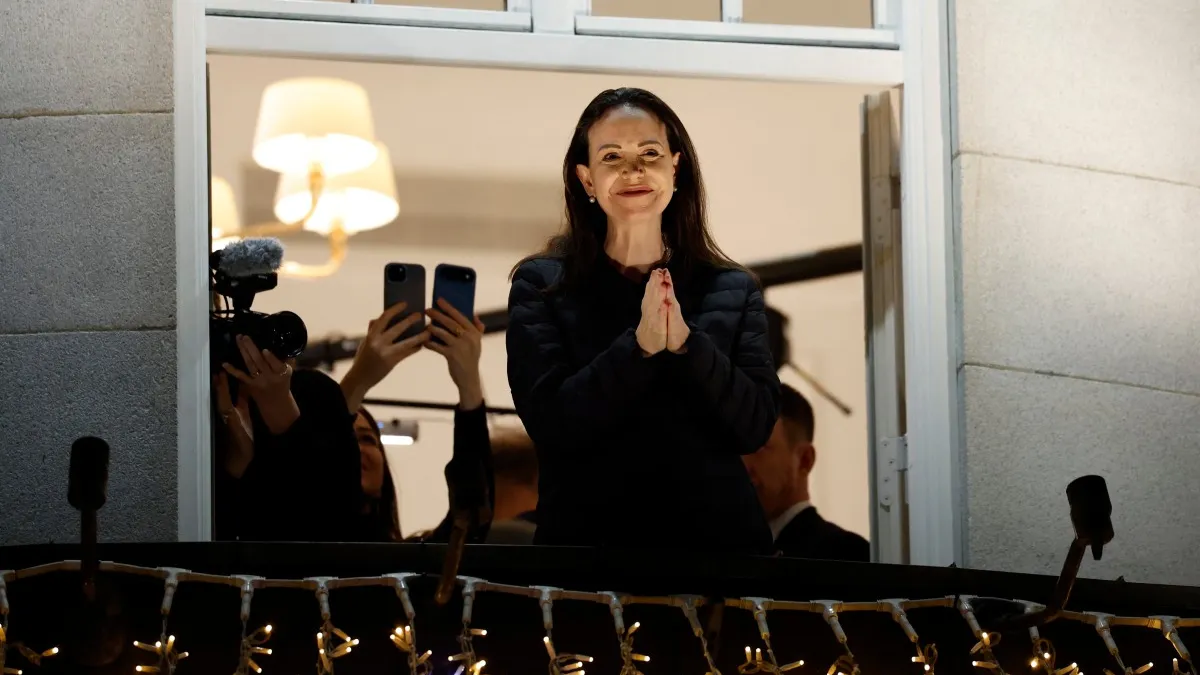
Her reappearance above comes amid a crisis between Venezuela and the United States, which has deployed a naval flotilla since August officially to fight drug trafficking in the Caribbean and the Pacific, where it has caused 87 deaths. Maduro accuses Washington of wanting to overthrow him in order to seize his country’s oil. Shortly after 02:00 (01:00 GMT) this past Thursday, the opposition leader came out to greet from the balcony of the hotel where she was staying, the Grand Hotel in Oslo, and was cheered by her supporters, with whom she sang the national anthem of Venezuela. When she stepped onto the street, she was greeted like a rock star with shouts of “Freedom!” and “Brave!”. “Maria, help us get back!”, they pleaded, shattering the calm of the peaceful Norwegian capital. Many sang traditional songs accompanied by the cuatro, a typical Venezuelan instrument, and shouted slogans for a “free Venezuela”.
“Fight for Freedom”
In the speech read on Wednesday by her daughter, the opposition leader called for “fighting for freedom”. At the awards ceremony, the chairman of the Norwegian Nobel Committee, Jørgen Watne Frydnes, sent a message to the Venezuelan leader. “Mr. Maduro: You must accept the election results and resign from your position,” Frydnes said, interrupted by applause from the audience. Machado’s speech denounced the “crimes against humanity, documented by the United Nations” and a “state terrorism, used to bury the will of the people.” “If we want to have democracy, we must be willing to fight for freedom,” he said.
María Corina Machado Met with Mulino and Thanked him For his ‘Extraordinary’ Support
Machado reiterated that Panama President José Raúl Mulino was one of the first supporters she had. The 2025 Nobel Peace Prize laureate and Venezuelan opposition leader, María Corina Machado, held her first high-level meeting upon arriving in Oslo, Norway, after nearly a year in hiding. This meeting took place early Thursday morning with the President of Panama, José Raúl Mulino, whom she thanked for being the first international support she received. Machado told President Mulino, who was accompanied by the First Lady, Maricel Cohen de Mulino, that his support and that of all of Panama has been extraordinary for her and for all Venezuelans.
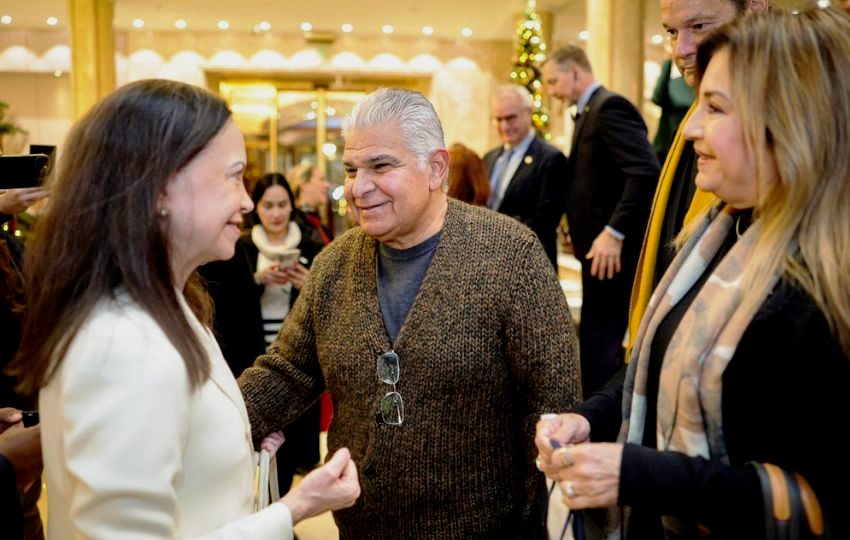
“Thank you to all of Panama. The support has been extraordinary for all Venezuelans, starting with the fact that our records (from the past elections in Venezuela) are being safeguarded in Panama. This has been a demonstration for Venezuelans of the deep trust that exists between our nations. It is a shared past and a shared future,” the Nobel Peace Prize laureate stated during her meeting with Mulino. Machado reiterated that President Mulino was one of the first supporters he had, “and now, when the whole world is supporting us, imagine what this means. We are very grateful to all the people of Panama and of course to President Mulino.” Dozens of exiled Venezuelans, political allies of Machado, and the presidents of Argentina, Panama, Ecuador, and Paraguay traveled to the Norwegian capital for the ceremony. This is not the first time a Nobel Peace Prize winner has been unable to attend the awards ceremony. It happened with Iran’s Narges Mohammadi (2023), China’s Liu Xiaobo (2010), and Myanmar’s Aung San Suu Kyi (1991). Last month, Venezuela’s attorney general told news media that Machado would be considered a “fugitive” if she left her country, where she is accused of “acts of conspiracy, incitement to hatred and terrorism.”
“I wouldn’t like her to be arrested, I wouldn’t be happy,” US President Donald Trump pictured below left told reporters at the White House on Wednesday. According to Benedicte Bull, a professor specializing in Latin America at the University of Oslo, Machado “risks being arrested if she returns, although the authorities have shown more restraint with her than with many others, because an arrest would have a very strong symbolic meaning.” Machado went into hiding after the July 2024 presidential elections that granted Nicolás Maduro a third term. The results were not recognized by the United States, the European Union, or several Latin American countries.
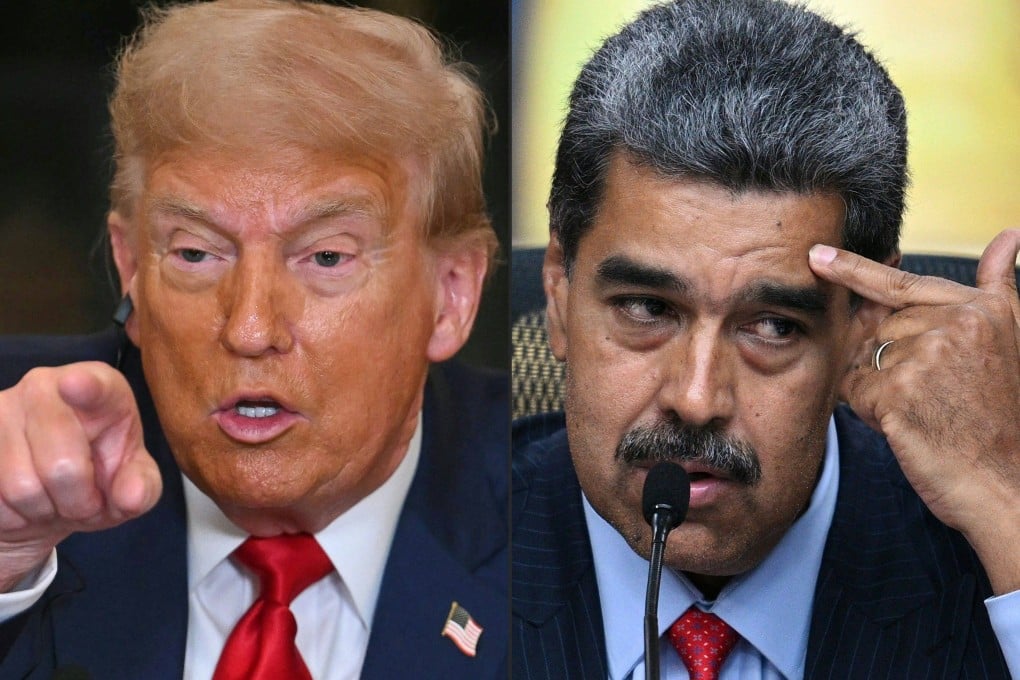
The opposition leader maintains that Maduro stole the election from her candidate, Edmundo González Urrutia, and published copies of the voting records as proof of fraud. The Chavista regime denies the accusations. Praised for her efforts in favor of democracy in Venezuela, her adversaries criticize her affinity with Trump, to whom she dedicated her Nobel Prize. Last month, Venezuela’s attorney general told news agencies that Machado would be considered a “fugitive” if she left her country, where she is accused of “acts of conspiracy, incitement to hatred and terrorism.” “I wouldn’t like her to be arrested, I wouldn’t be happy,” US President Donald Trump told reporters at the White House on Wednesday.
According to Benedicte Bull, a professor specializing in Latin America at the University of Oslo, Machado “risks being arrested if she returns, although the authorities have shown more restraint with her than with many others, because an arrest would have a very strong symbolic meaning.” Machado went into hiding after the July 2024 presidential elections that granted Nicolás Maduro a third term. The opposition leader maintains that Maduro stole the election from her candidate, Edmundo González Urrutia, and published copies of the voting records as proof of fraud. The Chavista regime denies the accusations. Praised for her efforts in favor of democracy in Venezuela, her adversaries criticize her affinity with Trump, to whom she dedicated her Nobel Prize.
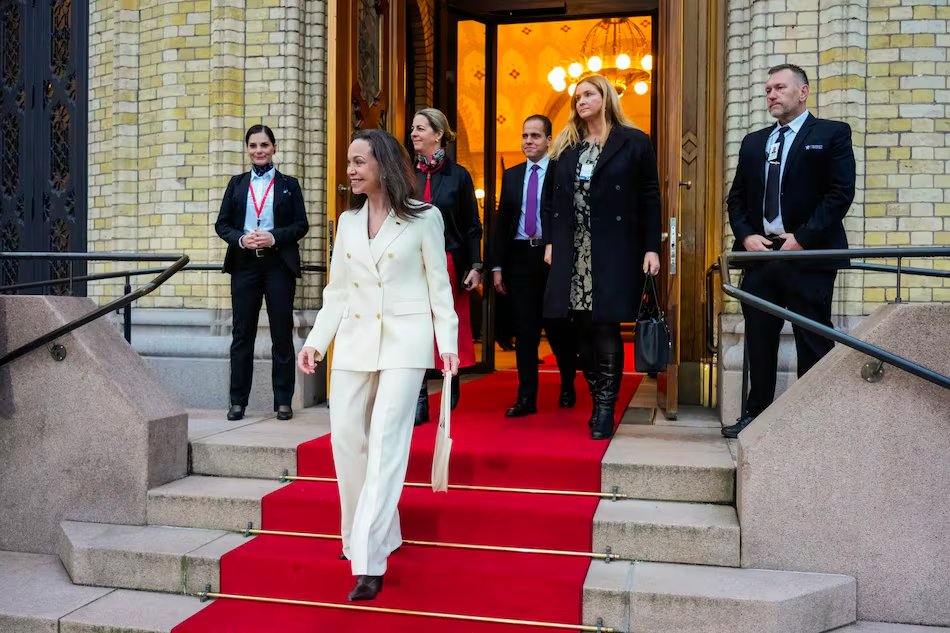
Machado thanks the United States for its support in helping her leave Venezuela and asks for the world’s help against Maduro
Venezuelan opposition leader and Nobel Peace Prize laureate María Corina Machado thanked the United States on Thursday from Oslo for its support both in her departure from Venezuela and against the “regime” of Nicolás Maduro, and asked for help from the “democracies of the world” to block the income that allows the president to maintain his structure. In a press conference the day after the Norwegian Nobel Committee held the award ceremony, which she was unable to attend in time, the opposition leader appeared as combative against Maduro as she was convinced that they would succeed in “liberating” the country.
“Decisive” Support from Donald Trump
For Machado, the actions of the US president in the Caribbean have been “decisive in reaching the point we are at now, where the regime is weaker than ever.” She declined to speculate, however, on the strategy of Washington and other countries in defending their national security, in which she said they are involved. “Every country has its own right to self-defense,” she emphasized, while also admitting that they are working “diligently” with the United States to explain their transition plans to both the Trump administration and others. Machado said she didn’t know if the Republican leader had issued an ultimatum to Maduro, but she did emphasize, alluding to a regime change in Venezuela, that the opposition is proceeding “step by step” but “to the very end.” In her opinion, it is the Maduro regime that has declared war on Venezuelans.
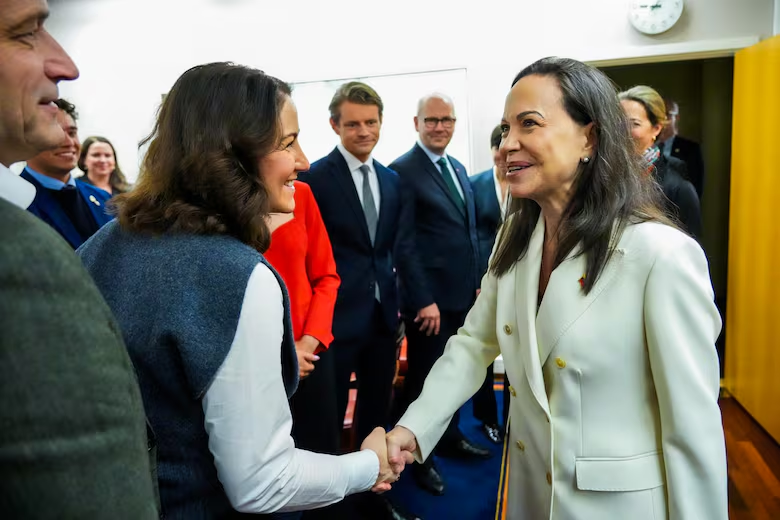
Nobel Peace Prize laureate María Corina Machado (right) greets Tonje Brenna (second from left), parliamentary leader of the Labor Party and member of the Storting’s Foreign Affairs Committee, during her visit to the Norwegian Parliament.
Transition Plans
Venezuela, she emphasized, will once again be free and “the envy of the world.” Currently, in her view, the country “faces a multidimensional crisis”: not only a humanitarian crisis, but also a financial, public services, and security crisis. Machado stated that the first thing to do is to liberate Venezuela. She affirmed that she and her team are prepared to form a government in Venezuela from day one, with Edmundo González Urrutia as president, and that the country’s institutions must be rebuilt so that free elections can be held, in which citizens can vote without fear and with confidence.
Return to Venezuela “As Soon as Possible”
Machado asserted that it was her “duty” to go for the prize “to bring it back to the Venezuelans,” and stressed that she would return “soon” to her country, where she had been in hiding for more than a year due to persecution by the Venezuelan government. This return “will be as soon as possible,” although there is still no date or details of how it will be carried out or whether the United States will also support her in this endeavor. But it will be “when the conditions are right” for her safety, which does not depend on Maduro remaining in power. For now, the Venezuelan opposition leader revealed that she will take advantage of the time to spend “a few hours” with her friends and family, to go to the doctor, and also to hold “some meetings that will be very useful before returning.”
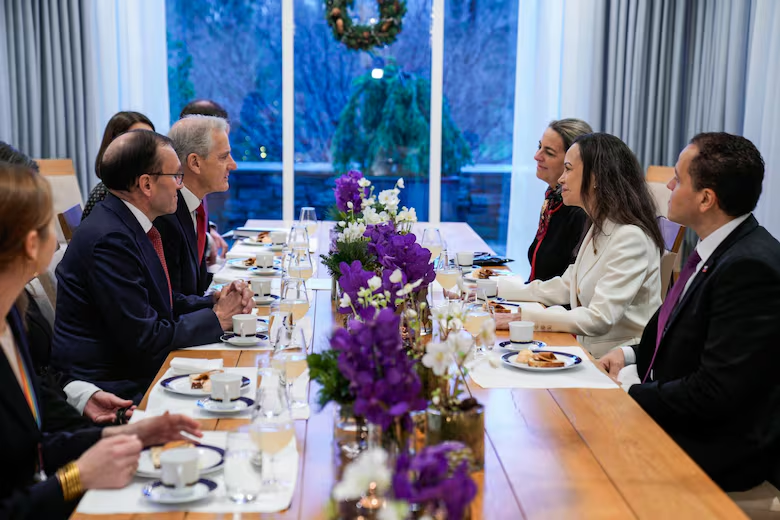
Norwegian Prime Minister Jonas Gahr Store (3rd from left), accompanied by Norwegian Foreign Minister Espen Barth Eide (2nd from left), meets with Nobel Peace Prize laureate María Corina Machado (2nd from right) at the Norwegian government’s representative office in Oslo, Norway
A Generation Willing to Give Their Lives for Venezuela
Machado insisted once again that the prize is for all Venezuelans, but alluding to the younger generation “who have not known democracy or lived in freedom, but have learned from their fathers, mothers and grandparents what is needed.” “These children of ours are willing to give their lives for something they have never known. That is why I am convinced that we have the best generation of Venezuelans in history, ready to complete our task, not only to liberate our country, but to build a nation with solid pillars, ethical pillars, that will represent the new democratic institution for centuries to come,” she said.
Recognition from the Norwegian Nobel Committee
The president of the Norwegian Committee, Jorgen Watne Frydnes, thanked the opposition leader for her struggle and stressed that democracy is the path to peace. In his opinion, Venezuela is going through “one of the most repressive periods in years,” in which “the goal is no longer to fill prisons, but to silence those who can mobilize others.” In his opinion, Machado “is one of the most extraordinary examples of civic courage in recent Latin American history,” and he conveyed a collective gratitude that the threats she received had not stopped, silenced, or prevented her from being present in Oslo.