Venezuelan Airline Passengers are Improvising Routes by Land and With Local Airlines Due to the Flight Crisis
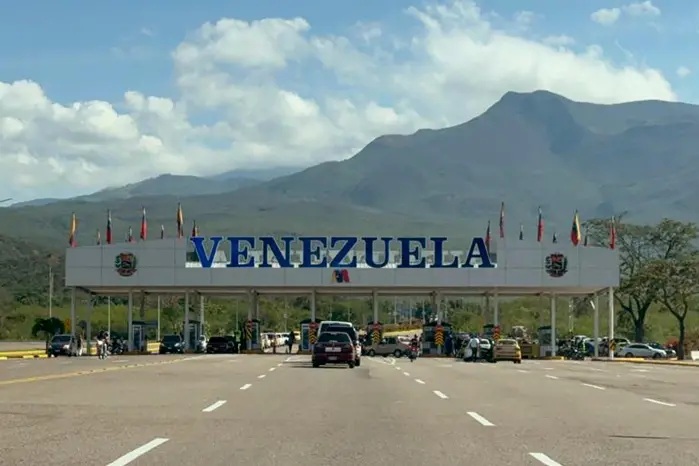
Video footage shows vehicles crossing the bridge known as ‘Tienditas’ this Sunday in San Antonio de Táchira, Venezuela. The cascade of cancellations has left Venezuela temporarily without international airlines offering flights.
Passengers in Venezuela have had to improvise journeys by land and on local flights – making up to five trips – to reach border areas from where they cross into Colombia, in search of air connections due to the suspension of itineraries by international airlines. In the state of Táchira (west), bordering Colombia, the General Cipriano Castro airport, located in San Antonio del Táchira, and the Mayor Buenaventura Vivas Guerrero airport, in the parish of Santo Domingo, have become the arrival point for travelers passing through to the Colombian border city of Cúcuta. One of these passengers was José Castro, who told EFE that he began his journey in the island state of Nueva Esparta, from where he flew to Caracas. There, he took another plane to San Antonio del Táchira to travel overland to Cúcuta, where he planned to board a flight to Bogotá and from there to his final destination: Madrid.
The cascade of cancellations has left Venezuela momentarily without international companies offering travel. During his journey, this traveler navigated the closure of the main land crossing between the two countries, the Simón Bolívar International Bridge, due to a protest by relatives of Colombians detained in Venezuela, who chained themselves together and blocked pedestrian and vehicular traffic through that border crossing to demand answers to the cases of their relatives. Castro had to take a taxi to another bridge, known as ‘Tienditas’, about 10 kilometers from Simón Bolívar, to continue towards Colombian soil. At ‘Tienditas’ were José and Paola, a Venezuelan couple who had arrived at the border from the state of Miranda (north), near Caracas. They were traveling to Cúcuta to reach the city of Medellín—in western Colombia—a journey they were making for the first time and which cost them around $540.
“I tried to find direct flights from Caracas to Medellín and couldn’t. I had to come to the border. It’s a bit more complicated, it takes longer and you get more tired,” José told reporters.
Castro said he bought a ticket to Spain for 900 euros, a decision that many passengers have made after being stranded following the cancellation of flights to and from Venezuela by 12 airlines in the last two weeks. This comes after US authorities warned of the danger of flying over the country and the southern Caribbean, amid a US military deployment off the coast of the South American nation. For his part, Orlando Méndez, a taxi driver at the General Cipriano Castro Airport in Táchira, said that passenger transfers have increased since the cancellation of trips, but also -he stressed- due to the increase in routes of Venezuelan companies to the border.
“An airline that used to arrive only in the morning now flies and arrives in the afternoon and vice versa,” Méndez told news reporters.
He specified that he charges $20 “from airport to airport” to transport people from Venezuela to the “air bridge of Cúcuta”, something that is possible -he pointed out- through alliances made by Venezuelan and Colombian taxi drivers, who are in charge of the crossings on both sides. Following the cancellation of flights, Venezuelan airlines are focusing on opening new routes to destinations such as Bogotá and increasing the frequency of flights to border cities.
According to the president of the Chamber of Commerce and Industry of the state of Táchira, Yionnel Contreras, from December 8th until January 18th, 2026, the airline Estelar will activate four new frequencies from San Antonio to Caracas – on Mondays, William Gómez, an expert on border issues, indicated, citing information provided by workers at the Cipriano Castro Airport, that at that air terminal all 26 flight schedules for this week were already full, with an average of 6,000 passengers traveling.
Gómez estimated that in the coming days the flow of travelers could reach between 12,000 and 14,000 people, since Táchira is one of the preferred entry and exit points between Venezuela and Colombia, and taking into account that this terminal is located only 15 minutes from the Camilo Daza Airport in Cúcuta.