Panama Offers to Mediate in Receiving Maduro’s People from Venezuela
Panama reiterates its role as mediator and does not rule out temporarily hosting figures from the Venezuelan regime to help resolve the crisis.
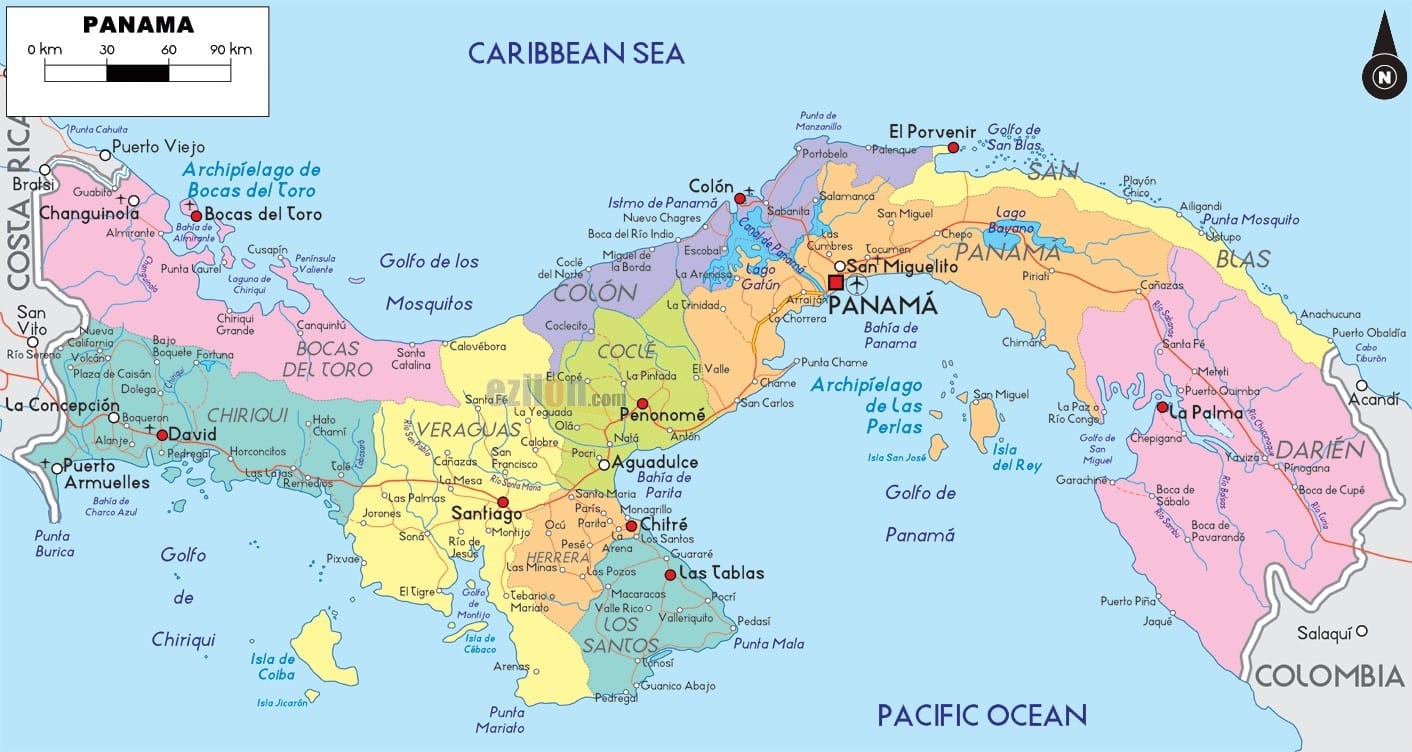
Panama is positioning itself as a mediator between the United States and Venezuela at a time of high tension between the two countries and in the face of possible action by Washington against Venezuelan President Nicolás Maduro, for which it could “welcome certain people from the Venezuelan regime,” Panamanian Vice Foreign Minister Carlos Hoyos stated in an interview with News Media. “Panama has always been a mediating country par excellence, and President (of Panama, José Raúl) Mulino has even said that if, in order to resolve the situation in Venezuela, it is necessary to host certain people from the Venezuelan regime, we would be willing to do so temporarily,” he stated on the sidelines of the Doha Forum, which ends this Sunday in the Qatari capital.
Panama announced this September that consular relations with Venezuela were restored only for migration issues , after they were suspended last year following Mulino’s questioning of the results of the 2024 presidential elections in the Caribbean country, in which Maduro was proclaimed the winner amid allegations of fraud by the opposition. The United States maintains a military deployment in the Caribbean, near the border with Venezuela, under the pretext of combating drug trafficking, but which Caracas has denounced as a “threat” that seeks to bring about a change of government. Furthermore, the Caribbean country is suffering an air connectivity crisis stemming from the warning issued on November 21 by the US Federal Aviation Administration (FAA), which urged “extreme caution” when flying over this country and the southern Caribbean due to what it considers ” a potentially dangerous situation ” in the area.
The Panama Canal in the Spotlight
Given the possibility of US action in Venezuela and Washington’s reinforced military presence in the Caribbean, the deputy foreign minister expressed “great concern that something could happen” both in his country and in the region, as it could “destabilize and affect everyone.” According to the deputy chancellor, the Canal is the world’s greatest “asset” and therefore “the whole world must ensure its protection,” should it be affected in any way by tensions in the Caribbean. “With respect to the Panama Canal, I believe the United States is perhaps the country most interested in ensuring there is no disruption whatsoever to the Panama Canal.
And it is our job to make sure that we continue working within the Canal with the neutrality that we are obligated to uphold and about which we have a very deep conviction,” he asserted. He noted that he does not believe there will be “any kind of disruption due to an armed conflict,” given that “the consequences of a limited, closed channel are felt everywhere.” In fact, for Panama – to which the Canal contributes “close to $3 billion to the state coffers every year” – it is a “very important source for financing our own projects,” so any “potential interruption in that would be extremely complicated for us.”
The “Impasse” With the US Has Been Overcome
At the beginning of the year, the good relations between the United States and Panama became strained after Trump promised to “take back” the Panama Canal. “This initial impasse that we saw in the (Trump) administration seems to me to have been largely overcome, and right now the conversations are focused on all kinds of collaboration, mainly on trade, immigration and security issues,” Hoyos said. Therefore, he is sure that they are already “much better aligned” with President Trump’s administration and that “what’s coming in the next few years is going to be fabulous,” he concluded.