
A Gringo Gave Antony Blinken a Tip: Annette Planells Wasn’t as ‘Saintly’ As She Was Portrayed
The former intelligence agent (Gringo) advised Blinken to exercise caution when interacting with the La Prensa newspaper due to its history and gave Blinken a tip: Planells wasn’t as ‘saintly’ as she was portrayed.
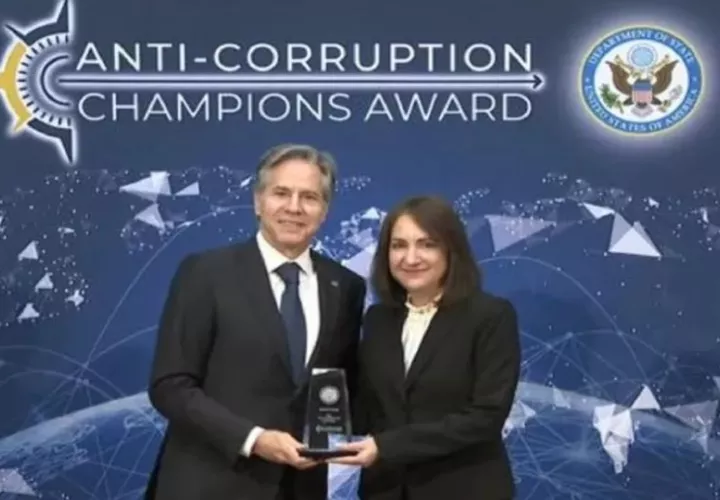
Before attorney Karisma Karamañites revealed the modus operandi of Annette Planells, the former director of Corporación La Prensa SA, the chairman of the Federal Maritime Commission (FMC), Louis E. Sola, was already aware of her tactics. He alerted the U.S. government about her methodology and credibility in a letter to then-Secretary of State Antony J. Blinken. In the letter, Sola expressed his concerns about Planells, who had been recognized as an “Anti-Corruption Champion” in December 2023, stating that a review of her conduct and the newspaper she represented was necessary. “While I acknowledge that she was honored with the International Anti-Corruption Champions Award on December 7, 2023, I have serious concerns about her reporting methodology and credibility,” the high-ranking U.S. official wrote.
The former intelligence officer advised Blinken to exercise caution when interacting with the newspaper due to its history of making unsubstantiated accusations for personal and political gain. “I respectfully urge you to reconsider the decision to award Ms. Planells the International Champion of the Fight Against Corruption Award, as her conduct appears to undermine ongoing investigations and obstruct justice. She has used this recognition to spread disinformation about a U.S. official, without regard for accuracy, and I advise all officials to exercise extreme caution when interacting with La Prensa while she remains in a leadership position,” he reiterated.
He maintained that an individual who interferes with federal investigations, promotes Chinese development in areas critical to U.S. national security, and publicly attacks the relatives of U.S. officials could be in violation of the Federal Codes. Sola’s request was repeated, this time by former President Ricardo Martinelli, who believes that the facts revealed by Karamañites demonstrate Planells’s lack of merit in receiving the American distinction. “It would seem that this undeserved recognition as a staunch fighter against the rampant corruption that prevails in Panama should be promptly reevaluated; it should be maintained or not,” he stated on social media.
The former president believes that an “anti-democratic” person cannot be worthy of such an honor because it would send the wrong message to the world. Karamañites told local media that Planells was aware of the ruling that this would disqualify Martinelli’s presidential candidacy before the Electoral Tribunal made it public. Furthermore, the digital media outlet FOCO allegedly orchestrated campaigns against certain political figures to obtain financial gain.
Lawyer: Planells Had a Direct Line to María Eugenia and Magistrates
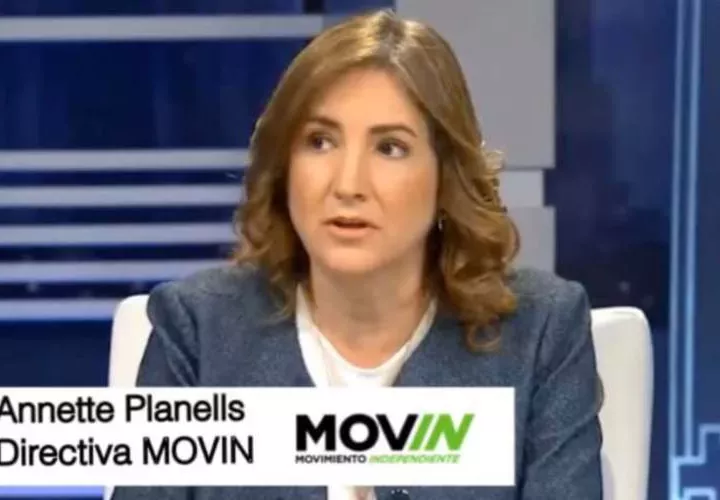
Planells learned of Martinelli’s disqualification the day before, and was happy that the collaborator’s lawsuit fell to the diligent magistrate Arrocha. If before there was a suspicion that Annette Planells had a powerful informant within the Electoral Tribunal and direct contact with María Eugenia López de Arias, president of the Supreme Court of Justice (CSJ), now this would be a certainty, and if you will, even dangerous for the health of democracy and justice in Panama.
This comes from other revelations made by lawyer Karisma Karamañites on the Metro Libre podcast, where she provided context to the conversations she had via WhatsApp with Annette Planells, who was an executive at Foco and La Prensa, prior to filing the lawsuit challenging the constitutionality of the candidacy of current President José Raúl Mulino. The leaks published in some media outlets include conversations with other people from Foco and with a lawyer from the firm Morgan & Morgan.
Furthermore, the lawyer revealed that one of the ways the digital media outlet Foco is financed is through extortion of politicians and companies by doing what is known in journalism as “rehashing old stories,” which is simply taking old information and giving it a contemporary feel. She also said that the public face of Foco, Mauricio Valenzuela, is “delusional,” someone capable of punching a woman and abusing Xanax, “six a day.”
Contexts
The plaintiff recounts that Planells learned of the disqualification of the former president, Ricardo Martinelli, one day before (March 3, 2024), and said she did not know who leaked the ruling of the Electoral Tribunal to her, a decision that left the Realizando Metas and Alianza parties orphaned, since their top leader and clear winner was removed, overnight, from his presidential aspiration. It is very important to remember that the ruling against Martinelli was not without controversy, since it had been announced that his case would follow the same path as all other candidates in the race who were challenged, meaning it would have a first instance.
However, the case of the then presidential hopeful was decided by the magistrates Eduardo Valdés, Luis Guerra, and Alfredo Juncá in a deliberation that took them a couple of hours , in what should have been the second instance, and consequently, they left RM without the legitimate right to appeal. After this, the speculations began of those who were not happy that Martinelli, or anything or anyone that smelled of the Realizando Meta party, had any chance, even, of aspiring to the presidential seat. This is demonstrated by the plaintiff’s statement that Annette Planells, then director of Foco, consulted her legal opinion on the Electoral Tribunal’s decision to nominate Mulino as a presidential candidate.
She believed the Electoral Tribunal magistrates should deliberate on the candidacy, but her boss thought the “Supreme Court was the appropriate course of action.” According to the account, Planells wanted more information and called a meeting. He summoned an unidentified lawyer and also contacted Valenzuela, who was in Colombia at the time. The plot was beginning to unfold.
Subsequently, Carlos Ernesto González, one of the lawyers from the firm Morgan and Morgan, contacted her and provided her with the template that the lawyer should follow to draft her unconstitutionality claim. “Time is of the essence,” was the response González gave to the plaintiff when she asked him about the qualifications of the other lawyers who had promised to accompany her on this adventure at the Gil Ponce Palace.