SMOKE AND MIRRORS By W. E. Gutman
This is Telly, news director at Newsroom Panama. Let me do a setup. For readers in Panama, some of you may remember a Blog or Newsletter written by an American journalist Eric Jackson. The last time that I saw writings was more than a year ago, perhaps much longer. Eric was living in Penonomé at the time and was complaining that his website was constantly being attacked and was asking, literally begging, for readers to send money to keep his Newsletter alive. The Blog was mainly political and always controversial. Occasionally there would be guest commentary from a journalist by the name of W.E. Gutman. A retired Mr. Gutman, who reported from Central America from 1994 to 2006 contacted me recently and wondered if I would be interested in publishing some of those writings and perhaps new articles. I agreed and am happy to present the first of possibly many stories……
SMOKE AND MIRRORS By W. E. Gutman
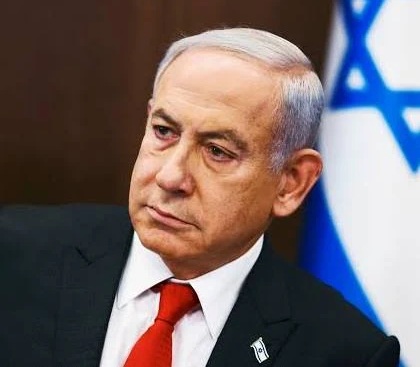
In an editorial published 25 years ago, I called for Israeli Prime Minister Netanyahu’s resignation. Describing his governance as “myopic, truculent, and regressive,” I lamented the expansion of settlements in occupied areas of Palestine and petitioned for the immediate cessation to the expropriation of Arab lands, a practice condemned by the international community and seen as an invitation to unrest and violence.
I also denounced his scandalous dalliance with religious zealots in Brooklyn and Jerusalem designed to force a theocracy on a largely secular society. I questioned the Likud Party’s habit of scuttling peace negotiations, its scorn of world censure, and its hostility toward the Palestinian people—all hallmarks of an administration oscillating between tactlessness and aberration—and posing grave danger to peace and stability in the Middle East.
In short, Mr. Netanyahu’s regime, I asserted, was a calamity and a recipe for disaster. Roundly denounced, my views would be validated by ensuing events. Mr. Netanyahu’s stern governance brought not one iota of security—perceived or actual. Instead, as successive political crises between his administration and the Palestinian leadership deepened, Jews and Arabs found themselves mired in endless conflict. Bitterness and rancor deepened with every stroke of Mr. Netanyahu’s ministerial pen, every hostile decree, every calculated vacillation, every broken word, every rubber bullet fired at stone-throwing youths. Invoked in the name of “national security,” this pernicious alchemy has yielded confusion, anxiety, sorrow and, yes, insecurity, hopelessly tainting Mr. Netanyahu’s alleged vision of peace and security.
Twenty-five bloodstained years later, Mr. Netanyahu, who would be reelected to an unprecedented sixth term amid charges of bribery and fraud, was pushing Israel on a new collision course with the Palestinians and its steadfast and forbearing U.S. ally. His ghoulish hostility toward Palestinians would invigorate the ultra-religious Right, whose enormous financial resources and gluttonous territorial expansionist objectives are now the hallmarks of Israel’s apartheid policies. Issued from the sword and resting on some of the Bible’s less than endearing exhortations, these strategies have daunted attempts to bring about stability and peace.
Mr. Netanyahu never intended to make peace. His actions and words demonstrate that his administration, from the beginning, was bent on breaking the spirit of the Palestinian people. It was all smoke and mirrors. As I write this, I am reminded of what a hawkish bureaucrat at Israel’s Consulate General in New York (where I worked for a time as a press attaché), said at a staff briefing on the prospects of peace. I did not know at the time whether he was stating policy or relishing a moment of wishful thinking:
“It is not in Israel’s strategic interests to make peace with the Palestinians. To ensure Israel’s hard-fought hegemony, we have no choice but to weaken the resolve of Palestinians by attrition, provocation, psychological warfare, the expropriation and colonization of occupied parcels of land and, ultimately, the absorption of Palestinians into a one-nation Jewish state.” This astounding declaration, I later learned, was of more ancient vintage:
Writing in his acclaimed, The Ethnic Cleansing of Palestine, distinguished Israeli historian, Prof. Ilan Pappé recalls that: “On 19 March 1948 eleven men—Zionist leaders and young Jewish military officers, put the final touches to a plan for the ethnic cleansing of Palestine. That same evening, military orders were dispatched to the units on the ground to prepare for the systematic expulsion of the Palestinians from vast areas of the country. The orders came with a detailed description of the methods to be employed to forcible evict the people: large-scale intimidation; laying siege to and bombarding villages and population centers; setting fire to homes, properties and goods; expulsion, demolition; and finally planting mines among the rubble to prevent any of the expelled inhabitants from returning.”
Israel’s subsequent stance and deeds seem to validate the bureaucrat’s avowals. I later learned that he was echoing the same Zionist mantra recited by Zev Jabotinsky, David Ben Gurion, Menachem Begin, and Golda Meir. Nothing has changed. Israel’s governing right fiercely opposes a two-state solution. Foreign Minister Gideon Sa’ar, declared, “There is no two-state solution; there is at most a two-state slogan. It would be a mistake to return to the idea of establishing a Palestinian state in Judea and Samaria as a solution to the conflict.”
We Jews won’t save the future by forgetting our past. Chastening Palestinians, stealing their dunams, bulldozing their homes, razing their olive groves and fruit orchards, erecting settlements on confiscated property, ignobly equating the legitimate criticism of Israel with antisemitism, and pursuing a one-state policy that will see Palestinians divested of their rights and ethnic identity will not endear us to posterity. The proposition that certain people have a right to a certain piece of land by “divine decree” is a sinister aberration, especially when that piece of land is wrested from its occupants by force of arms. Unchecked, all power lurches toward tyranny. Meanwhile, as the Palestinians, outgunned, marginalized, strangers in their own land, are struggling to preserve fragments of their shrinking patrimony, new synagogues are rising on confiscated land.
Born in Paris, W. E. Gutman is a retired journalist. A former press officer at Israel’s Consulate General in New York, he reported from Central America from 1994 to 2006. He is the author of 19 books, including, Where is “God: When Men Weep?