Without Water or Electricity While Everything Continues to Shake in Panama. Near the Epicenter of the Earthquake.
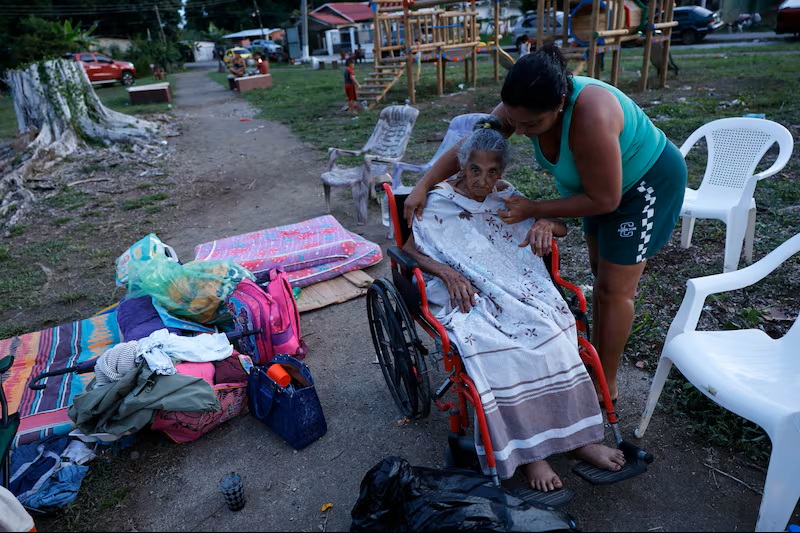
Pictured below, a woman serves food to people in a park this Saturday in downtown Tonosí.
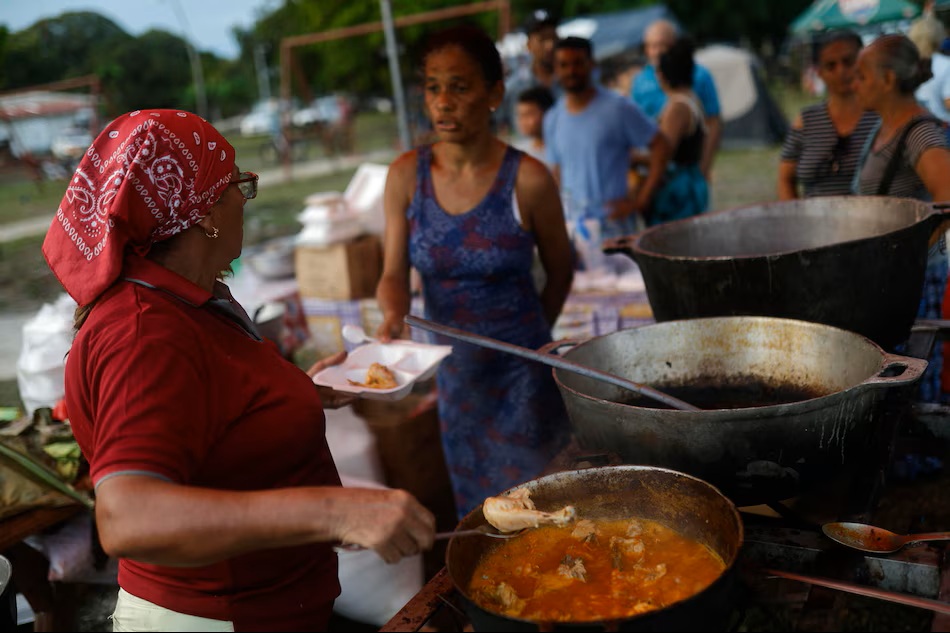
There is no water, nor electricity for more than 24 hours in Tonosí, the town closest to the epicenter of the 7.7 magnitude earthquake that occurred on Friday in Panama, which continues under constant aftershocks, leaving residents desperate, many of them now homeless. What there is in one of the parks is an improvised pot cooking slowly by three women, staff from the health center, who have been serving three meals – breakfast, lunch and dinner – to the victims of the small town. Locals in Tonosí line up for Argelis Ortega to give them something to eat in a disposable container. Some have lost their homes, and many are living in fear.
“There have been quite a few. Breakfast, lunch and dinner for more than a hundred people,” Ortega tells news media while seasoning the pork with gusto. The park in that town, far from the Pan-American Highway, the main road that crosses Panama, has become a camp, dining hall and makeshift hospital all at once since at 12:56 local time on Friday a magnitude 7.7 earthquake −according to data from the United States Geological Survey (USGS)− occurred near Tonosí, the town closest to the epicenter.
The Institute of Geosciences of the University of Panama lowered the magnitude to 7.5. The food was donated by neighbors while local authorities distributed water and patients found shelter as best they could under a couple of old tarpaulins, suffering from anxiety or injuries from falls during the earthquake. The main roads to reach that small town in southern Panama are damaged: a landslide has cut off one of them and the other has cracks, fallen trees and rocks, so the Executive has come by helicopter to assess the damage.
Trembling Uncontrollably.
While the medical staff inserts IV lines and Ortega stirs the cauldron, the ground continues to tremble beneath his feet with the more than one hundred aftershocks recorded since Friday’s earthquake. The neighbors are sitting on plastic chairs, although the youngest children are sleeping on mattresses. That’s the case for Cristal Reyes, originally from Tonosí, who is sitting in a circle with her family in the middle of the park trying to calm her children. “I didn’t even dare go home. My husband sent me a video and everything is on the floor,” she told reporters when another incident forced her to stop the interview.
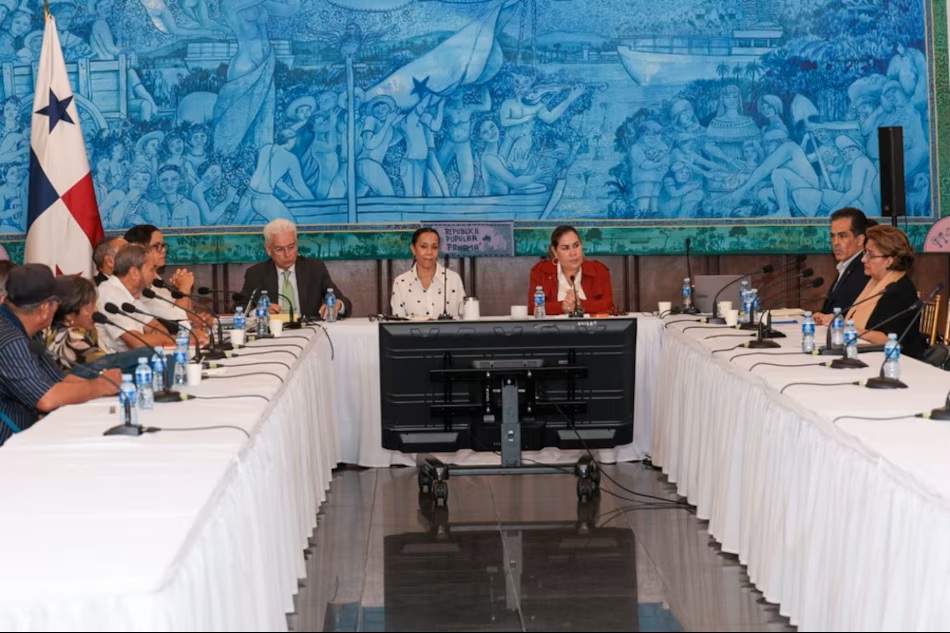
Reyes works near that park and the medical center. When the shaking started, she ran outside, but the force was so great that it knocked her and her coworkers down. The discomfort and nervousness are compounded by the constant aftershocks reported throughout Saturday as they await the restoration of basic services. Panamanian authorities have not yet released a figure for material losses from the earthquake, but have already declared a national state of emergency to channel up to $100 million to address the situation.